|
|
EFMC YEARBOOK 2025 IS AVAILABLE
The official EFMC Yearbook 2025, "Medicinal Chemistry and Chemical Biology in Europe" is a valuable resource for those interested in quickly finding information on all things related to EFMC, such as the activities and composition of Member Societies, Corporate Members and the activities and events of EFMC and its working groups.
The Yearbook is available as an electronic version only.
READ THE PDF VERSION
CHEMMEDCHEM & CHEMBIOCHEM, THE OFFICIAL JOURNALS OF EFMC
MEET THE EFMC-YSN BOARD ELECT
We are happy to announce that the EFMC Young Scientists Network (YSN) has a new board elect for the period 2025-2027.
- Chair: Sean McKENNA, Leiden University, The Netherlands
- Secretary: Laia JOSA-CULLERE, Institute for Advanced Chemistry of Catalonia (IQAC-CSIC), Spain
- Treasurer: Etienne J. DONCKELE, Monte Rosa Therapeutics, Switzerland
New members also joined the Young Scientists Network, and we are happy to welcome:
- Shiao CHOW, University of Strathclyde, United Kingdom
- Katerina BARMPIDI, University of Barcelona, Spain
- Alex HALLATT, University of Dundee, United Kingdom
- Maria KORPIDOU, InnoMedica, Switzerland
- Noemí MARTÍNEZ CONDE, University of Barcelona, Spain
We look forward to some fruitful collaborations, and many new activities!
CHEMBIOCHEM SPECIAL COLLECTION "ADVANCES IN CHEMICAL PROBING CONCEPTS FOR CHEMICAL BIOLOGY APPLICATIONS"
We are pleased to present the recently completed ChemBioChem – EFMC Special Collection on "Advances in Chemical Probing Concepts for Chemical Biology Applications" (Arimondo, Essig, Schopfer & Rufer, 2023), which features 14 contributions exploring the design and application of chemical probes to a wide array of biological systems. Chemical probes have become indispensable tools for elucidating biological mechanisms and biochemical pathways at the molecular level. They are particularly valuable for target identification, target occupancy and target engagement studies in cells, as well as for biomarker studies in whole organisms. Especially in combination with modern chemical biology, imaging and OMICs approaches, chemical probes facilitate the characterization of bimolecular function and drug-target interactions along the drug discovery value chain.
Chemical Probes and Target Engagement:
Chemical probes are essential for understanding protein-ligand interactions and their biological implications. For instance, Hoare et al. introduced the ThermoBRET assay, which uses fusion proteins with a thermostable luciferase to report on changes in target protein stability upon ligand binding (Hoare et al., 2024). Chen et al. (2023) developed the dual-concentration ratio method to efficiently quantify the binding affinity of fluorescent probes to human serum albumin facilitating studies concerning HSA binding and, in an adapted form, drug-target interactions.
Photo-affinity and Metabolic Labeling Probes:
Duque et al. designed photo-affinity and metabolic labeling probes derived from opioid alkaloids to study the localization and protein interactions of morphine derivatives in various cell lines (Duque et al., 2024). Their work identified key acylation targets of the heroin-derivative dialkynyl-acetyl morphine, such as the mitochondrial phosphate carrier protein SLC25A3 and histone H2B, demonstrating the utility of these probes in cellular context studies.
PROTACs and Cellular Morphology:
Goebel et al. applied Proteolysis Targeting Chimeras (PROTACs) to degrade the mRNA-binding protein YTHDF2 (Goebel et al., 2024). They developed a dual-targeting approach and used the unbiased cell painting assay (CPA) to study the cellular morphological changes induced by these PROTACs. Their findings revealed an association between YTHDF2 and the aurora kinase signaling network, highlighting the potential of CPA in evaluating PROTACs.
High-Content Screening and Epigenetic Modifiers:
Barbachowska et al. describe the design of a high-content imaging screening assay to screen for compounds able to inhibit the epigenetic modifications induced in the infection by the gram-negative bacteria Legionella pneumophila of human cells (Barbachowska et al.). Potential starting points for inhibitors were identified in a pilot screen, opening a path for the identification of novel antimicrobial agents to fight resistance.
Neurodegenerative Disease Mechanisms:
Campagne et al. reviewed the latest advances in the intricate relationship between the dynamics of U1 small nuclear ribonucleoproteins (U1 snRNP) and the health of neuronal cells, shedding light on potential avenues for understanding and addressing neurodegenerative disorders. The article highlights snRNP biogenesis defects in neurodegenerative diseases, emphasizing the connection between disrupted U1 snRNP homeostasis and conditions such as Spinal Muscular Atrophy and Amyotrophic Lateral Sclerosis (Campagne, 2024). This review underscores the importance of understanding spliceosome dynamics in neuronal health.
Protein-Protein Interactions and Structural Dynamics:
Gerbaud et al. used applied continuous-wave and pulse EPR spectroscopy to investigate the structural dynamics of the bacterial nanomedicine type 2 secretion system (T2SS) endopilus tip heterocomplex (Gerbaud et al., 2023). The data are in line with the endopilus model and demonstrate the advantage of the integration of different labelling strategies and EPR experiments.
Small Molecule Inhibitors and Enzyme Targets:
Gorenflos López et al. developed a high-throughput screening of small molecule inhibitors targeting human UDP-GlcNAc 2-epimerase, a key enzyme in the sialic acid biosynthesis pathway (Gorenflos López et al., 2023). The subsequent validation studies revealed potent inhibitors that could modulate sialic acid biosynthesis.
PET Tracers and Neurodegenerative Diseases:
He et al. characterized a novel MAGL PET tracer, (R)-[11C]YH132, which demonstrated high specificity and selectivity for MAGL in vivo (He et al., 2024). This tracer has potential applications in drug development and the study of neurodegenerative diseases.
GPCR Dimerization and Bivalent Ligands:
Payne et al. synthesized and evaluated bivalent and dicovalent ligands for the adenosine A1 receptor, providing new chemical tools to study GPCR dimerization (Payne et al., 2024). Their work demonstrated the potential for achieving subtype selectivity with dual occupation by bivalent ligands.
ADP-Ribosylation and PARP Targets:
Rieth et al. developed a desthiobiotin-labeled NAD+ analogue to uncover protein targets of Poly(ADP-ribose) polymerase 1 (PARP1) (Rieth et al., 2024). Their approach, based on the "bump-and-hole" strategy, enabled the identification of PARP1-specific protein targets, advancing our understanding of ADP-ribosylation.
Histamine Receptor PET Radioligands:
Song et al. synthesized and evaluated [18F]H3–2404 and [18F]H3–2405 as PET radioligands targeting the histamine subtype 3 receptor (Song et al.). Although these radioligands showed non-specific distribution in rodent brains, their study provides valuable insights for optimizing 18F-labeled radiotracers.
Protein-Protein Interactions in Cardiac Muscle:
Stehle et al. investigated the interaction between the titin UN2A domain and the cardiac ankyrin repeat protein (CARP) (Stehle, Fleming, Bauer, Mayans, & Drescher, 2023). Their EPR spectroscopy studies confirmed the stable, non-polymorphic scaffold nature of UN2A in binding to CARP, contributing to our understanding of sarcomeric stiffness regulation.
Phosphatase Probes and Specificity:
ter Brake et al. evaluated the utility of previously published phosphatase probes and found that many suffered from unspecific reactivity (ter Brake et al.). Their study highlights the need for alternative strategies or chemistries in phosphatase research and probe development.
This special issue showcases the diverse and innovative approaches in chemical probing, highlighting their critical role in advancing chemical biology and drug discovery. Each contribution provides valuable insights and methodologies that will undoubtedly inspire further research and development in the field.
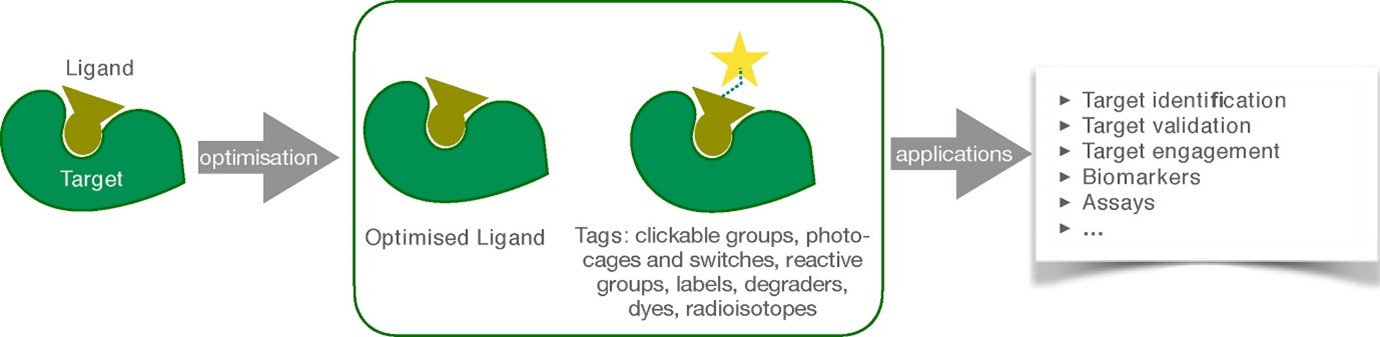
Chemical probes allow us to identify, validate and confirm novel targets for therapeutic applications, enable the development of drug candidates, and open the way to new therapeutic strategies, vaccines and diagnostic tools.
[License 5953021216711 by Wiley to EFMC Chemical Biology working Group for reusing the above graphical abstract for EFMC material LITERATURE SPOTLIGHT
The “literature spotlight” section of the newsletter will bring you a summary of recently published research in a concise and accessible way. Multiple thematics from different journals will be highlighted thanks to the valuable contribution of members of the EFMC working groups.
This contribution focuses on the recently published article on “Carborane Conjugates with Ibuprofen, Fenoprofen and Flurbiprofen: Synthesis, Characterization, COX Inhibition Potential and In Vitro Activity” by Sonam et al., published in ChemMedChem.
Cancer is the second leading cause of premature death in most countries, and it might become the top cause of death over the course of this century. Chemotherapeutic agents have demonstrated considerable efficacy as anticancer drugs in treating a variety of tumors. Unfortunately, chemotherapy can damage healthy, fast-growing cells, leading to significant side effects. Thus, there is the urgent need for the discovery of novel anticancer drugs.
Sonam et al. combined two different pharmacophores in a single molecule aiming to develop innovative agents with a dual mode of action and boosted efficacy. They merged non-steroidal anti-inflammatory drugs (NSAIDs) with carboranes. NSAIDs inhibit COX (cyclooxygenase) enzymes which are overexpressed in some tumors, while carboranes are promising candidates in medicinal chemistry due to their ability to deliver a high concentration of boron selectively to cancer cells.
The NSAIDs - ibuprofen, flurbiprofen, and fenoprofen - were connected with 1,2-dicarba-closo-dodecaborane via a variety of spacers (e.g. methylene, ethylene or propylene). Three sets of carborane-NSAID conjugates were synthesized and the conjugates with methylene spacers turned out to have the highest COX inhibition potential and were able to suppress the growth of cancer cells. The carborane-flurbiprofen conjugate, featuring an ethylene linker, was the most the most potent and selective across a panel of cell lines. These cell lines originated from tumors and were associated with inflammation. However, the compound effect was observed in the COX-2-negative cell line, HCT116, highlighting that the antitumor activity does not involve COX inhibition. The authors proposed that the compound acted via a cytostatic mode of action related to low ROS (reactive oxygen species) production.
Sonam S, Jelaca S, Laube M, Schädlich J, Pietzsch J, Maksimovic-Ivanic D, Mijatovic S, Kaluderovic GN, Hey-Hawkins E. Carborane Conjugates with Ibuprofen, Fenoprofen and Flurbiprofen: Synthesis, Characterization, COX Inhibition Potential and In Vitro Activity. ChemMedChem. 2025 Jan 2;20(1):e202400018. doi: 10.1002/cmdc.202400018.
Read the article! 20th EFMC-YSN MEDCHEMBIOONLINE | EMERGING STRATEGIES IN PEPTIDE DRUG DISCOVERY
In this edition, the EFMC and the Young Scientists Network will tackle the exciting topic of “Emerging Strategies in Peptide Drug Discovery”.
Peptides are highly promising sources for new therapeutics due to their unique properties and ability to engage traditionally “undruggable” targets. Advances in peptide synthesis and modification, as well as innovative screening approaches, have significantly propelled peptide drug discovery in recent years. This edition of MedChemBioOnline highlights the strategies being harnessed by research leaders to identify peptide hits and translate them into potential new medicines.
Our experts will be Prof. Christian Heinis (EPFL, CH), Dr Isabell Kemker (Bayer, DE) and Dr Sebastian Pomplun (Leiden University, NL).
The event will take place on March 4 between 16:30 and 18:30 CET and we kindly invite you to register on https://www.medchembio.online/.
Registration to the event is free and open to all.
GET TO KNOW JOHANNA HUCHTING (FRAUNHOFER INSTITUTE FOR TRANSLATIONAL MEDICINE AND PHARMACOLOGY ITMP, GERMANY)
Our MedChemBioConversations is with Johanna Huchting from the Fraunhofer Institute for Translational Medicine and Pharmacology (ITMP) in Germany.
Get to know her better by reading the interview below:
How did you get interested in Medicinal Chemistry?
During my university studies in Chemistry, my early interest in (Bio)Organic Chemistry led me to pursue a PhD in synthetic organic chemistry in the field of carbohydrates. The group had a strong focus on nucleosides and nucleotides, and my project centred around synthetic methods to produce phosphorylated sugars in a highly controlled manner. These structures are found, for instance, on the surface of parasites that cause divers pathologies, and they may have potential in vaccine development. Building on the chemical synthesis skills I had developed during this time, I then moved into the field of antiviral nucleotides for my postdoc. There, I expanded my skillset and got the opportunity to evaluate the compounds I had synthesized in cell-based infection models. It has always been my interest to truly work at the interface of chemistry and biology, and the idea to drive pharmaceutical innovation is a great motivation. I am deeply thankful for the opportunities that I got during these early steps of my career which I consider a great privilege.
What are your current research interests?
With my background in Chemistry and my experience in cell-based assays, my current work encompasses the development of innovative assays and screening, as well as compound library design and the continuous development of our small molecule screening collection for various drug discovery projects at Fraunhofer ITMP.
To be more specific, my main projects evolve around new drug modalities. Targeted protein degradation, for instance, is a novel pharmaceutical paradigm that promises to overcome some of the critical limitations of traditional drugs. Unlike the classical enzyme inhibitors or receptor (ant)agonists, small molecule degraders don’t modulate the biochemical function of their target protein but instead, they induce a “chemical knock-down”. This means that upon degrader treatment, the target protein is depleted. Thus, the effect reaches beyond blocking, e.g., an enzymatic activity, and covers protein scaffolding functions etc.
Regarding my work environment, the Fraunhofer-Gesellschaft is Europe’s leading applied research organization and has ~75 institutes covering diverse areas in research and engineering. We typically team up with academics and companies in projects to facilitate the translation of basic research findings into innovative technologies. Having been trained in Chemistry and Biology, I continue to expand my knowledge-base by closely working with Cheminformaticians and Data Scientists. Additionally, I greatly enjoy working with academics as well as the industry sector and contributing to the innovation process at this critical intersection.
What do you consider your greatest achievement in your scientific career?
Generally, I find it hard to rank. Of course, there are obvious achievements, and I am proud and thankful to have been awarded generous prizes and prestigious grants. But of no less importance for me are the less visible - or less measurable - achievements: I feel highly rewarded by mentoring young scientists during part of their journey and seeing them push forward and thrive in their career.
Overall, and at the complete danger of sounding all too cliché, I consider science a team sport and I am highly motivated by the process of “doing science”, achieving goals and celebrating the wins as a team.
What advice would you give to someone who wants to know more about your field?
Depending on your background – and personal preference – one possible resource might be the Dana-Farber Targeted Protein Degradation webinar series, that you can follow on their YouTube channel. The Ciulli lab at the Centre for Targeted Protein Degradation (CeTPD) in Dundee publishes a Journal Club that you can access openly via their website and that is intended for the wider scientific community. Both resources, and there surely are many more options, may give you an idea of important or recent work in the field and you could take it from there to dig into the primary literature.
What is the most embarrassing thing you have done in the lab while doing experiments?
Well, there might have been once a very small-scale fire during the quenching of some very minor amount of residual sodium hydride… But again, and I’m not getting tired of this: science – and lab work – is a team sport and I have been lucky to work in great teams where during such a (did I say very small-scale?) lab accident there were immediately great colleagues by my side giving a helping hand (with a bucket of sand).
Which field of medicinal chemistry do you consider the most promising for the future?
Novel drug modalities. Yes, I am biased. But I also truly believe that to achieve the goal of modulating biology beyond what is possible now – i.e., therapeutic innovation - requires to expand into novel mechanisms. Exciting examples are proximity-inducing compounds or RNA-targeted therapeutics. SPOTLIGHT ON PORTUGAL!
The Portuguese Young Chemists Group (GQJ) is pleased to highlight a paper titled “Non-Natural MUC1 Glycopeptide Homogeneous Cancer Vaccine with Enhanced Immunogenicity and Therapeutic Activity” recently published in Angewandte Chemie.
For years, glycopeptides derived from MUC1, a molecule often altered on the surface of cancer cells, have been explored as promising candidates for cancer vaccines. However, they’ve faced two critical obstacles: low immunogenicity, which means they fail to effectively trigger the immune system, and the inconsistent way they are attached to carrier proteins, leading to variable and often suboptimal results. These limitations have significantly hindered the clinical potential of MUC1-based vaccines.
In this paper, the authors tackle these issues head-on with a precisely engineered solution. They designed a synthetic MUC1 glycopeptide containing two non-natural amino acids and an α-S-glycosidic bond, which replaces a key oxygen atom with sulfur. This chemical modification not only enhances the stability of the glycopeptide but also boosts its ability to elicit a strong immune response.
To ensure consistent vaccine production and optimal performance, the glycopeptide is attached to CRM197, a safe and widely used protein carrier, via a highly selective disulfide re-bridging strategy enabling the attachment of a single glycopeptide. The result is a chemically defined and homogeneous vaccine that retains both the structural integrity and immunogenicity of the protein carrier.
The vaccine’s impact has been demonstrated in preclinical studies with mice, where it successfully triggered a robust Th1-like immune response, a type of immunity critical for fighting cancer. The antibodies generated specifically recognized cancer cells displaying MUC1, leading to a significant delay in tumor growth in colon adenocarcinoma and pancreatic cancer models. Notably, the vaccine showed both preventive and therapeutic benefits, with even better outcomes when combined with an immune checkpoint inhibitor (anti-PD-1).
By addressing the challenges of low immunogenicity and inconsistent manufacturing, this approach sets a new standard for glycopeptide-based vaccines. It also challenges the traditional belief that multivalent antigen displays are essential for effective cancer vaccines, proving that a single, precisely displayed antigen can drive powerful immune responses.
https://doi.org/10.1002/anie.202411009 THE EFMC-YSN REVIEWER ACADEMY IS BACK!
Organised by the EFMC’s Young Scientists Network and led by professional editors from Chemistry Europe / Wiley-VCH, this program is designed to train future referees. It focuses on teaching best practices in peer review, particularly for early-career researchers.
The academy operates year-round, featuring a live one-hour workshop and Q&A session four times a year, an online course hosted by Wiley Research/Reviewer Academy, and opportunities for hands-on peer review assignments and evaluations.
The first Live Workshop and Q/A Session will take place on February 20th - 17:00-18:00.
More information and application on www.efmc.info/reviewer-academy.
MEDICINAL CHEMISTRY & CHEMICAL BIOLOGY CONFERENCE 2025 (MCCB 2025)
The MCCB 2025 Conference is the national meeting of the RACI Medicinal Chemistry and Chemical Biology Division.
The program will showcase the very best research and innovations from the Australian academic and industry sectors on drug discovery and chemical probes, including methods for hit and target identification, development of new biologically active entities, probing complex biology, and new approaches to tackling diseases.
Have a look at the speakers and programme and join the RACI in Darwin, the capital of the tropical north and the gateway to Kakadu National Park and the Australian outback.
More information about the event on https://mccb2025.com.au/.
#MEDCHEMCASES - SEMINAR BY THE DIVISION OF MEDICINAL CHEMISTRY OF THE GERMAN CHEMICAL SOCIETY (GDCH)
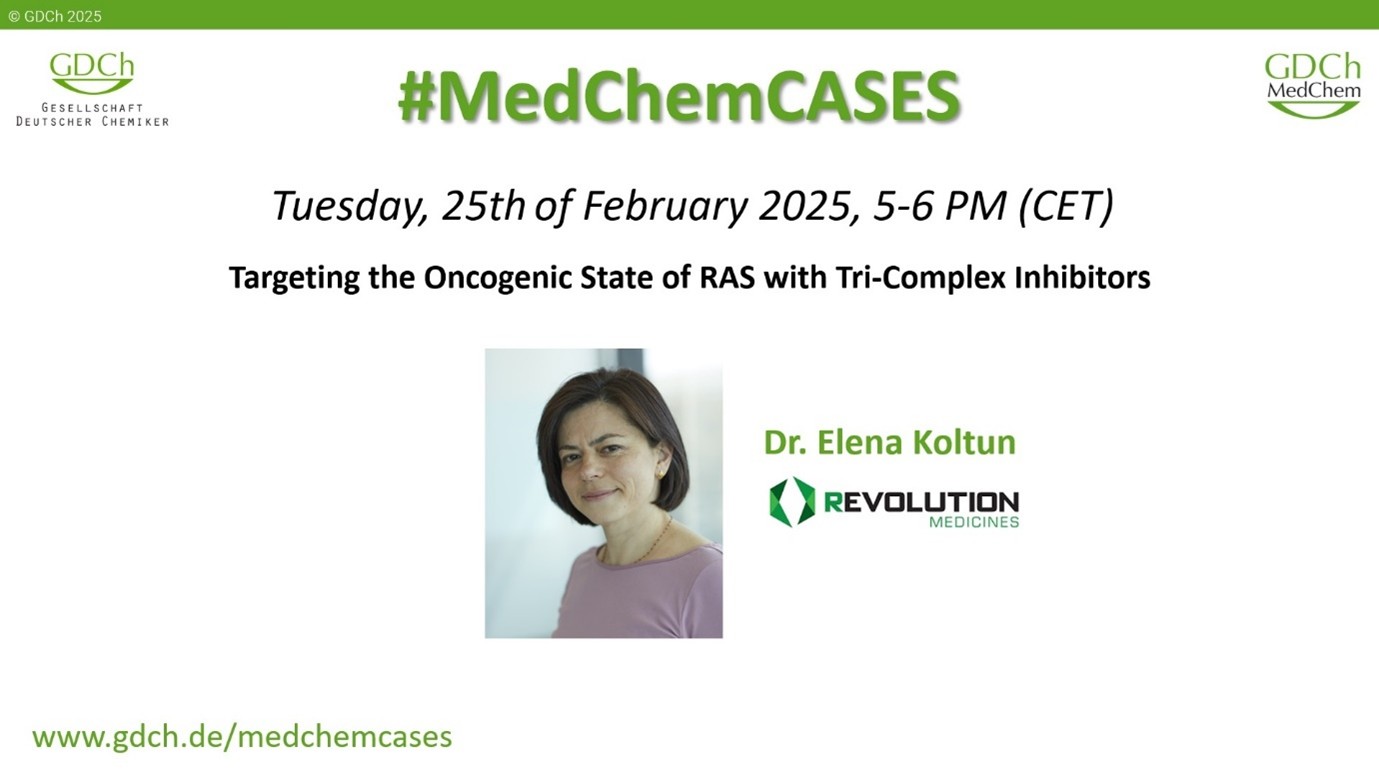
The MedChem Division of the German Chemical Society (GDCh) would like to invite you to the next #MedChemCASES online seminar which will be held on February 25 by Elena Koltun.
The topic of the webinar is “Targeting the Oncogenic State of RAS with Tri-Complex Inhibitors”.
The talk describes the identification, optimisation work and preclinical characterisation of a highly selective, first in class positive allosteric modulator (PAM) of the muscarinic M2 acetylcholine receptor. The M2 receptor is mainly expressed within the heart and is the key component of the parasympathetic nervous system. Beta-blockers have been used successfully to target the sympathetic nervous system, however there is no drugs targeting the parasympathetic branch of the autonomic nervous system. Impaired parasympathetic tone has been associated with higher mortality in heart failure, independent of beta-blocker treatment. We describe the ultra-high-throughput screening (uHTS)-based discovery of a novel class of naphthyridine carboxamides as M2 PAMs. The extensive optimisation of the screening hit in terms of potency, permeation, metabolic stability and solubility ultimately led to the discovery of the clinical candidate BAY 2413555. The compound shows a very high selectivity towards all other muscarinic receptors and long-lasting pharmacological effects and is suitable for once-daily dosing. This modulator showed no clinically relevant safety findings in a first phase 1 study. With an excellent pharmacokinetic profile, BAY 2413555 could be an ideal treatment option for heart failure patients to increase parasympathetic tone and thus restore autonomic balance.
Register for free here.
#GDCh (MedChem Division), #NextGenMedChem. NEWS FROM THE BIOLOGICAL AND MEDICINAL CHEMISTRY SECTOR (BMCS) OF THE ROYAL SOCIETY OF CHEMISTRY (RSC)
The BMCS is happy to announce several upcoming events:
BMCS 2nd Conformational Design in Drug Discovery 2025
Monday 3rd March 2025, AstraZeneca, Cambridge, UK
Registration open!
Poster and flash oral presentation abstract submission closing Friday 31st January 2025!
Website: https://www.rscbmcs.org/events/conformationaldesign25/
Synopsis: Conformational Design plays a key role in the medicinal chemistry of small molecule drug candidates. The emergence of generative AI models to assist molecular design and free-energy-perturbation techniques critically depend on accurate prediction of 3D ligand conformations. Here we bring together cutting-edge computational methods with experimental free ligand NMR solution conformations and protein-ligand X-ray and CryoEM structures to craft the medicines of tomorrow. We will discuss ligand rigidification and physicochemical optimisation strategies for protein-protein interaction inhibitors, PROTACs, molecular glues, antibody-drug-conjugate payloads and other new modalities. This RSC-BMCS event aims at building a community that shares conformational design strategies, technologies, and successful case studies. It will complement other rational drug design events and promote more successful research into future medicines.
9th RSC-BMCS Symposium on Mastering Medicinal Chemistry
Friday 14th March 2025
Registration is open!
Website: 9th Mastering Med Chem - RSC BMCS
Synopsis: Mastering Medicinal Chemistry IX is the latest in an ongoing series of conferences intended to provide expert advice and guidance to new practitioners in the field of drug discovery. It has been said that “there are two types of drug discovery programmes: those that hit serious problems and those that are going to hit serious problems”. Anticipating and preparing for such problems thus accelerates the delivery of new medicines: this event will feature presentations from experienced ‘drug-hunters’ in both industry and academia, who will talk about the challenges faced in modern drug discovery, and will share best practice common to all successful medicinal chemists.
8th RSC-BMCS / SCI Symposium on Ion Channels as Therapeutic Targets
31st March – 1st April, 2025, Hinxton Hall Conference Centre, Cambridge
Registration and abstract submissions are now open! Poster Abstract extended Tuesday 14th January!!
Website: https://www.rscbmcs.org/events/ionchannels25/
Synopsis: Ion channels are important targets for therapeutic intervention due to their extensive roles in human physiology and the pathophysiology of disease. Many successful drugs targeting this gene family have been discovered for diseases such as hypertension, epilepsy, and neuropathic pain. This symposium, the 8th in an ongoing series, will showcase the most recent advances to aid the design of new ion channel therapeutics and promote interaction between scientists with a shared interest in the field of ion channel drug discovery.
36th BMCS Spring Symposium on Medicinal Chemistry
Thursday, 24th April 2025, Fielder Centre, Hatfield, UK
Registration and poster abstract submission open! Poster deadline is Friday 7th February 2025.
Website: https://www.rscbmcs.org/events/hatfields25/
Synopsis: Known colloquially as the “Hatfield MedChem” meeting, this is a highly successful, long-standing, one-day meeting that runs annually. The scientific program will comprise presentations showcasing medicinal chemistry case studies from tools to candidates, across a range of modalities, therapeutic areas and target classes, as well as covering more general topics at the forefront of drug discovery. The meeting aims to be informal and interactive, and is ideal for all those working in medicinal chemistry and drug discovery more widely.
11th RSC/SCI Symposium on Kinase Inhibitor Design
Monday 12th – Tuesday 13th May, 2025, Royal College of Physicians of Edinburgh, Edinburgh
Registration and abstract submissions are now open! Early bird registration deadline: 14th March 2025.
Website: https://www.rscbmcs.org/events/kinase2025/
Synopsis: With more than 100 clinically approved small molecules, the field of kinase modulation continues to attract significant investment from the drug discovery community and attention from academia. The 11th RCS-BMCS/SCI symposium on kinase inhibitor design will encompass plenary lectures on emerging topics and case studies of ongoing programmes as well as successful past programmes. A range of topics including brain penetrant and inhaled kinase inhibitors, kinase chemical probes, allosteric modulators, targeted kinase protein degradation and kinase inhibition for non-oncology indications will be covered, along with views and perspectives on the future of kinase modulator research.
BMCS Hot Topics: PROTACs and Glues 2025
Wednesday 28th May 2025, Virtual
Registration is open!
Website: https://www.rscbmcs.org/events/hottopicsprotacsandglues2025/
Synopsis: The BMCS Hot Topics online meetings are intended to highlight breaking areas of research in fields of science relevant to drug discovery. They run as stand-alone half-day virtual events, 2-3 times per year. The programme will be targeted towards researchers working who would like to enhance their understanding of these nascent or developing fields.
While conventional small molecule drugs typically inhibit or activate proteins, PROTACs and glues offer new strategies to modulate biological pathways by either removing proteins entirely or enhancing their interactions to elicit a pharmacological effect. This meeting will feature presentations on the application and development of PROTACs, glues, and bifunctional molecules in chemical biology and drug discovery, highlighting their roles in both protein degradation and the modulation of new and existing protein-protein interactions (PPIs).
BMCS 5th Synthesis in Drug Discovery and Development
Tuesday 3rd – Wednesday 4th June, 2025, Virtual
Abstract submission and registration now open!
Website: https://www.rscbmcs.org/events/sddd25/
Synopsis: Synthesis is at the heart of drug discovery and development. The industry has increasingly demanded higher quality clinical candidates and has sought to exploit less druggable biological targets. Densely functionalised small molecules with a high degree of synthetic complexity are often the result of these demands. Successful programmes therefore require the application of innovative synthesis in all stages of discovery and development. The medicinal chemist’s toolbox is also enhanced by the introduction of novel bioisosteres, often made available only through the application of new synthetic methods. This symposium aims to celebrate the crucial role of synthesis in the success of drug discovery and development.
4th RSC Anglo-Nordic Medicinal Chemistry Symposium
10th-13th June 2025, Hotel Comwell Borupgaard, Snekkersten, Denmark
Registration and abstract submissions are now open! The deadline for oral abstracts is Friday 31st January 2025.
Website: https://www.rscbmcs.org/events/anmc-4/
Synopsis: This 2.5 day symposium is the fourth in the very successful series of biannual meetings started in 2017 containing high quality international speakers from industry and academia on topics of Medicinal Chemistry and related enabling technologies. Organised by the Biological and Medicinal Chemistry Sector of the Royal Society of Chemistry, together with Nordic affiliates, the meeting promises to be an exciting and invigorating gathering packed with fantastic opportunities to disseminate knowledge and expand networks.
RSC-BMCS / SCI 23rd Medicinal Chemistry Symposium
Sunday – Wednesday, 14th-17th September, 2025, Churchill College, Cambridge
Registration is now open! Abstract submission will be open soon!
Website: https://www.rscbmcs.org/events/cammedchem25/
Synopsis: The organisers invite you to the 23rd SCI-RSC Medicinal Chemistry symposium, Europe’s premier biennial Medicinal Chemistry event, focusing on first disclosures and new strategies in Medicinal Chemistry.
8th RSC-CICAG / RSC-BMCS Artificial Intelligence in Chemistry
Monday-Wednesday, 22nd – 24th September 2025, Churchill College, Cambridge
A date for your diary!
Website: https://www.rscbmcs.org/events/aichem8 /
Synopsis: Artificial Intelligence is experiencing a renaissance in the development of new methods and practical applications to ongoing challenges in Chemistry. Following the successes of six annual “Artificial Intelligence in Chemistry” meetings starting in 2018, we are pleased to announce that the Chemical Information & Computer Applications Group (CICAG) and Biological & Medicinal Chemistry Sector (BMCS) of the Royal Society of Chemistry are once again organising a conference to present the current advances in AI and machine learning in Chemistry. The meeting will be held over two and half days and combine aspects of artificial intelligence and deep machine learning methods to applications in chemistry. The programme will include a mixture of keynote talks, panel discussion, oral presentations, flash presentations, posters and opportunities for open debate, networking, and discussion. This year meeting will follow 2024 with two and half days and will include workshop on first day, please keep checking website for updates. |
|
|
|
|
|
EFMC ORGANISED EVENTS
April 6-9, 2025
Oegstgeest (near Leiden), The Netherlands
19th EFMC Short Course on Medicinal Chemistry
May 12-15, 2025
Chicago, USA
ACSMEDI-EFMC Medicinal Chemistry Frontiers 2025
August 31 - September 4, 2025
Porto, Portugal
X EFMC International Symposium on Advances in Synthetic and Medicinal Chemistry (EFMC-ASMC 2025)
September 4-5, 2025
Porto, Portugal
12th EFMC Young Medicinal Chemists' Symposium
EFMC SPONSORED EVENTS
March 3rd, 2025
AstraZeneca, Cambridge, United Kingdom
BMCS 2nd Conformational Design in Drug Discovery
March 14, 2025
Burlington House, London, United Kingdom
9th RSC-BMCS Symposium on Mastering Medicinal Chemistry
31st March – 1st April 2025
Hinxton Hall, Wellcome Genome Campus, Cambridge, United Kingdom
8th RSC-BMCS / SCI Symposium on Ion Channels as Therapeutic Targets
April 3-5, 2025
University of Ioannina, Karolos Papoulias Conference, Greece
20th Hellenic Symposium on Medicinal Chemistry (HSMC-20)
April 24, 2025
Fielder Centre, Hatfield, United Kingdom
RSC-BMCS 36th Medicinal Chemistry in Eastern England
JOB PORTAL
PhD Chemistry, Chemical Biology, Proteomics
Leiden University, THE NETHERLANDS
Read more
Junior research group leader
Institut Pasteur, FRANCE
Read more
Doctoral scholarship holder in the field of proline-specific proteases
University of Antwerp, Belgium
Read more
Postdoctoral scholarship holder in the field of Medicinal Chemistry
University of Antwerp, Belgium
Read more
Postdoctoral researcher in chemical biology and drug discovery in the area of protease research
University of Antwerp, Belgium
Read more
|
|