|
|
REPORT OF THE INTERNATIONAL SYMPOSIUM ON CHEMICAL BIOLOGY (EFMC-ISCB 2025)
Jointly organized by the Division of Medicinal Chemistry and Chemical Biology (DMCCB) of the Swiss Chemical Society (SCS) and the European Federation for Medicinal chemistry and Chemical biology (EFMC), the 2nd edition of the EFMC International Symposium in Chemical Biology (EFMC-ISCB) took place in Basel, Switzerland, from the 29th to the 31st of January 2025. The latest advances and current state of research in chemical biology were presented to more than 250 attendees, among which included students, academics, and industry-affiliated researchers from all over the world.
Have a look at the event report below, as well as a comprehensive conference report published in CHIMIA.
A program including seven sessions, composed of keynote and invited lectures, as well as short oral communications was given to the attendees. The symposium started with the EFMC-WuXi AppTec Award for Excellence in Chemical Biology award ceremony, chaired by Dr. Luc Van Hijfte (EFMC President) and Dr. Dave Madge (WuXi AppTec, UK). The 2025 awardee, Prof. Peng Chen (Peking University, CN) gave the first plenary lecture, “Deciphering Spatial-Temporal Biology with Bioorthogonal Cleavage Reactions”.
Additional plenary lectures by Prof. Ben Davis (Oxford University, UK) and Prof. Cynthia Burrows (University of Utah, USA) featured among the numerous highlights of the event. Two poster sessions took place, in which more than 100 posters were presented by researchers. Three of them were awarded an EFMC/Chemistry Europe poster prize, and two received the joint EMFC/ISCB prize. A career panel on the second day gave to younger researchers the opportunity to learn from more experienced speakers about different possible career paths. A WuXi AppTec workshop also took place on the second day, over the lunch break.
The social program included a welcome reception on the first day, as well as a symposium banquet on the second evening. The dinner took place at the restaurant, Safran Zunft, of which the historical dining hall provided an exceptional atmosphere for all the attendees to connect and share impressions in an informal setting.
The three-day symposium was a great success in all aspects, marked by numerous scientific contributions shared, high-level scientific presentations on chemical biology as well as valuable networking opportunities, all taking place in a positive and dynamic atmosphere.
Have a look at the full conference report: https://www.chimia.ch/chimia/article/view/2025_458
Written by:
Aliénor Jeandin, University of Zurich, Switzerland THE NEWSLETTER IS KINDLY SPONSORED BY COLLABORATIVE DRUG DISCOVERY - CDD
LUNCH & LEARN: A NEW INITIATIVE BY THE EFMC YOUNG SCIENTISTS NETWORK
The Lunch & Learn initiative is designed to be a valuable knowledge sharing resource for early-career scientists in medicinal chemistry and chemical biology. Foundational presentations outlining key topics and techniques in drug discovery will be delivered by PhD students, postdoctoral researchers, and their industry peers.
Each Lunch & Learn session will take the form of a short lunchtime webinar (max.1 hr), covering background theory, practical techniques and case study applications.
Our first edition, hosted on July 16, will tackle Chemical Probes to Map Protein Targets through Affinity-Based Proteome Profiling (ABPP) and will be delivered by Dr. Massimiliano Runfola, Dr. Amrita Date, Mr. Joshua Mealing-Stott.
Register!
This Lunch & Learn webinar, led by Dr. Massimiliano Runfola (University of Oxford) explores the use of Affinity-Based Proteome Profiling (ABPP) in chemical biology and drug discovery. The session will introduce the core principles and practical aspects of ABPP as a game-changing strategy for target deconvolution, followed by two case studies presented by Dr. Amrita Date (University of Leeds) and Mr. Josh Mealing-Stott (University of Oxford), highlighting its diverse real-world applications. Topics will include probe design, experimental workflows, data interpretation, and common challenges. This webinar is aimed at PhD students and early-career researchers seeking practical insights into chemical probe development and proteomics-based protein profiling. EFMC GRANTS 2025
In our continuous effort to support the attendance of early career researchers to scientific conference, the EFMC proudly announces that, in 2025, the following grants have been distributed:
2nd EFMC International Symposium on Chemical Biology (EFMC-ISCB 2025)
- Pilar Maria LUQUE NAVARRO, University of Granada, Spain
- Guilia NORDIO, University of Padova, Italy
- Roman BELLE, Newcastle University, United Kingdom
- Yan LIU, Max Planck Institute for Molecular Physiology, Germany
- Laszlo PETRI, HUN-REN RCNS, Hungary
19th EFMC Short Course in Medicinal Chemistry
- Anna KAPELIUKA, University of Kyiv, Ukraine
- Elena CABALLERO, CSIC, Spain
ACSMEDI-EFMC Medicinal Chemistry Frontiers 2025
- Blanca Laura BERNARDONI, University of Pisa, Italy
- Hanna Maria FRANZ, Goethe University, Germany
- Sakshi SHARMA, University of Oxford, United Kingdom
X EFMC International Symposium on Advances in Synthetic and Medicinal Chemistry (EFMC-ASMC 2025) & 12th EFMC Young Medicinal Chemists’ Symposium (EFMC-YMCS 2025)
- Federico RIU, Insituto Italiano Tecnologia, Italy
- Jelena BOSKOVIC, University of Belgrade, Serbia
- Anna SAMPIETRO, University of Barcelona, Spain
- Camilla SCARPELLINI, University of Antwerp, Belgium
- Mark WEVER, Helmholtz Zentrum München Dt. Forschungszentrum f. Gesundheit + Umwelt GmbH, Germany
We would like to congratulate all the worthy winners, as well as the numerous applicants. Stay tuned to EFMC Grants in the coming months to hear about the grant opportunities for 2026!
LITERATURE SPOTLIGHT
The “Literature Spotlight” section of the newsletter offers concise and accessible summaries of recently published research. It highlights a range of themes drawn from various journals, with this edition’s contribution provided by Noemí Martínez Conde (University of Barcelona, Spain).
This contribution focuses on the recently published article “Advancing the Exploration of the Ubiquitin-like Protein FUBI with Synthetic Chemical Tools” by Francesca D’Amico, Cami M. P. Talavera Ormeño, Shivanganie Poeran, Jimmy Akkermans, Rayman T. N. Tjokrodirijo, Bharath Sampadi, Peter van Veelen, Aysegul Sapmaz, Monique P. C. Mulder (ChemBioChem 2025, DOI: 10.1002/cbic.202500321).
The ubiquitin-like modifier FUBI, implicated in apoptosis and cancer, remains poorly understood. To address this, the authors developed a modular solid-phase peptide synthesis (SPPS) platform to generate full-length FUBI and tailored probes with chemical handles.
Using this platform, they designed two activity-based probes to profile FUBI-related enzymes. These tools successfully identified known deFUBIylases (USP16, USP36) and revealed energy-dependent conjugation machinery via chemoproteomics.
A synthetic Di-FUBI mimic was also created using click chemistry, enabling the identification of unique interactors like UCHL3 and IMPDH1/2, suggesting distinct roles for FUBI chains. Functionally, Di-FUBI inhibited UCHL3 activity, hinting at regulatory cross-talk between FUBIylation and deubiquitinases.
Overall, this study provides powerful tools to decode FUBI signaling with implications in cancer biology.
Read the full article! MEET CHRISTIAN HEINIS, ECOLE POLYTECHNIQUE FÉDÉRALE DE LAUSANNE, SWITZERLAND
In this edition, our MedChemBioConversations is with Christian Heinis from the EPFL in Lausanne, Switzerland. Get to know him better by reading the interview below:
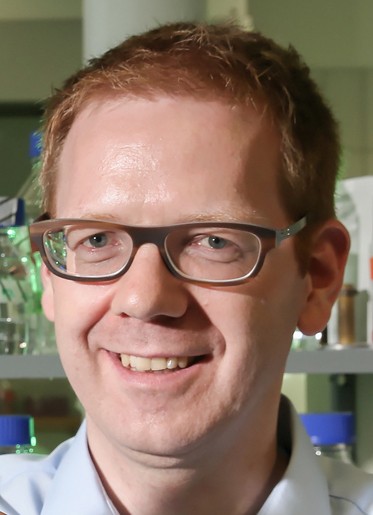
How did you get interested in Medicinal Chemistry?
I had just returned to ETH Zurich from an exchange semester at Imperial College London to complete my studies at ETH and had to catch up on exams, including one for a course by Prof Dario Neri. Someone gave me a folder with his teaching material and publications, and I was totally fascinated by the topics. Directed evolution, protein engineering, combinatorial synthesis, antibody therapeutics etc. I then contacted Dario Neri for a master project and later for a PhD which was when I became interested in drug development.
Where did you have your postdoc position?
I first did a post-doc with Prof Kai Johnsson at the EPFL in Lausanne and a second with Sir Greg Winter at the MRC-LMB in Cambridge. They are both incredibly good and creative scientists and great mentors from whom I learned a lot.
Where are you currently working and what is your current position?
I am a professor at the Institute of Chemistry and Chemical Engineering of the EPFL, leading a research team of about 15 post-docs, PhD students or master students. We are developing and applying new methods for drug discovery. An important part of my work is also the training of students by teaching courses, mentoring students and coordinating teaching activities.
What are your current research interests?
I am interested in developing new strategies and drugs for the treatment of currently untreatable diseases. We are working with cyclic peptides, a class of molecules that are able to bind to challenging targets such as proteins with flat and featureless surfaces or to inhibit protein-protein interactions. We are working on the long-standing challenge of developing membrane permeable cyclic peptides to target intracellular proteins or to administer them orally.
What do you like best about your work?
What I enjoy most is coming up with ideas for new methods and projects and testing them in the lab. We have a super creative, motivated team of post-docs, PhD students and master's students. It's incredible fun to make plans for experiments together, carry out experiments, analyse results and to exchange with other researchers through meetings, reports, or talks at conferences.
What do you consider your greatest achievement in your scientific career?
I would say the innovation and development of the bicyclic peptide phage display method. A second and more recent achievement is the generation of membrane-permeable and orally available cyclic peptides by developing high-throughput peptide synthesis methods.
What are the features of a successful PhD student or postdoc?
I see students with very different abilities and strengths doing very well, so it is not an easy question to answer. The most important thing is certainly a keen interest in and enjoyment of research and development. Other very useful skills are creativity, teamwork, thoroughness and perseverance.
What advice would you give to someone who wants to know more about your field?
Best may be attending a conference in the field, for example one of the EFMC conferences, or a peptide symposium such as EPS or APS, or the CHI Drug Discovery Chemistry. If you have less time, I can recommend a recent review of our lab on the development of cyclic peptide drugs (Ji, X., et al., Cyclic peptides for drug development, Angewandte Chemie Int. Ed., 2024).
What is the most embarrassing thing you have done in the lab while doing experiments, e.g. explosions?
Fortunately, I haven't had any accidents while experimenting. But I have certainly tried or suggested many experiments that, in retrospect, make no sense and are even embarrassing. It's always fun to talk about the pointless endeavours later: “Do you remember when we tried this silly...”
What are your recommendations for a book, podcast, website, blog, YouTube channel or film?
I find it interesting to read the stories of important discoveries and or developments, or even better to watch them as films. For example, I enjoyed reading the book ‘The Double Helix’ or watching the film ‘Hidden Figures’.
What would you expect to be the next major breakthrough in medicinal chemistry?
Very difficult question! Important breakthroughs will often be made where there is an overlapping area of ‘major medical needs’ and ‘new technological opportunities’ or ‘unexpected discoveries. Perhaps a magical strategy on how to get DNA much more efficiently into cells for gene therapy? Or an ingenious method to make orally available ligands for any disease target, no matter how difficult the target looks? JOIN THE EFMC SESSSION AT AIMECS 2025
The 15th AFMC International Medicinal Chemistry Symposium (AIMECS 2025) will take place from September 25th to 27th in Hangzhou, China.
The EFMC is happy to organise a session on “Advances in Covalent Drug Discovery or Covalent Binders in Drug Discovery”. Chaired by Prof. Gianluca Sbardella (University of Salerno, Italy), it will gather three expert speakers in the field.
- Dr Marc Grundl, Boehringer Ingelheim, Austria
- Dr Robert Pulz, Novartis, Switzerland
- Dr Uwe Grether, F. Hoffmann-La Roche, Switzerland
We look forward to meeting you at AIMEC 2025!
SHOWCASING THE YOUNG SWISS CHEMICAL SOCIETY (YOUNGSCS)
The youngSCS is fostering a sense of community in the young scientists in Switzerland. By promoting science and especially chemistry through diverse activities, the youngSCS is reaching a broad audience of young scientists. Here are some examples of the activities of the youngSCS:
Current activities of our group are:
Swiss Snow Symposium:
The Swiss Snow Symposium is the flagship event of the youngSCS and takes place each year at the end of January. The conference aims to provide a platform for young researchers to present their research as a poster or short communication in a friendly setting to practice their communication skills and showcase their science. Through invited talks from academia and industry, participants get in touch with different leaders in chemistry and are able to expand their networks. Furthermore, there are workshops on specific topics, such as publishing, science policy etc, which are most often not covered in university studies.
Where do you see Chemistry?:
This initiative is a social media campaign, which tries to highlight the omnipresence of chemistry to the broader public. By taking everyday pictures, the youngSCS tries to cover a variety of different topics that are explained in simple terms to introduce the public to chemistry, and aim to improve chemistry’s image in the general public.
Industry visits:
Jointly with the companies, the youngSCS promotes visits. The aim is that students will be able to look behind the curtain of industrial research and get in touch with the many opportunities industry offers for graduates. This is also an option to get a better understanding of how different companies from pharmaceutical industry to manufacturers of instruments works.
Mentoring program:
The youngSCS is heavily involved in supporting the SCS Mentoring Program, by providing managers of the different local clusters and promoting the program among the members. The program aims at supporting the personal and professional development of students by providing guidance, advice, and feedback from senior professionals from industry, academia, higher education, and governmental agencies. SPOTLIGHT ON SWITZERLAND!
The youngSCS is pleased to highlight a paper entitled “Structure–Affinity Relationship Analysis and Affinity Maturation of a Calprotectin-Binding Peptide’ by Lluc Farrera-Soler, Che-Wei Hu, Benjamin Ricken, Cristina Díaz-Perlas, Christian-Benedikt Gerhold and Christian Heinis (ChemBioChem 2025, DOI: 10.1002/cbic.202500071).
Calprotectin is a calcium-binding protein, which is a target for inflammatory bowel disease (IBD) and irritable bowel syndrome (IBS). It gets secreted by activated monocytes and neutrophils and its elevation in fecal samples is used as marker for IBD and IBS.
In their work, Heinis and co-workers intensively studied ‘Peptide 3’, an 18-amino acid linear peptide, that is known for its sub-micromolar binding affinity to the inflammation marker calprotectin.
Systematic mutations allowed for a clear structure-affinity relationship analysis. Their results highlight the key binding sections and optimization of Peptide 3. Subsequently, they elongated the Peptide 3 core to engage additional contacts for binding affinity improvement. And in a last step, they improved binding affinity by including non-canonical amino acids to obtain Peptide 4, leading to a five-fold improvement of binding affinity.
Read the article! NEWS FROM THE SOCIETY FOR MEDICINES RESEARCH (SMR)
Information about the Society for Medicines Research can be found on the website: https://www.smr.org.uk/default.asp
Please see the section on student bursaries for attendance at the Society’s meetings. One bursary of the five offered for each meeting is available to an applicant from mainland Europe: https://www.smr.org.uk/Bursaries/
Upcoming Events: 2025
Target Identification and Validation in Drug Discovery
Friday 24 October 2025, The Discovery Centre (DISC), AstraZeneca, Cambridge, UK
SMR
A date for your diary!
Website: https://www.smr.org.uk/Meetings/20251024/
Overview: The Society for Medicines Research (SMR) is pleased to announce an upcoming meeting focused on the topic of Target Identification and Validation in Drug Discovery.
This one-day event, to be held on Friday 24 October 2025 at the DISC (AstraZeneca) in Cambridge, will bring together experts from industry and academia to share the latest research and insights.
Attendees can expect to hear about new approaches, technologies, and success stories in the field of target discovery and validation, paving the way for the next generation of therapeutic innovations.
Recent Clinical Candidates and SMR Award Meeting
Thursday 04 December, Friends House, London, UK
A date for your diary!
Information about the SMR Award, including previous winners, can be found at https://www.smr.org.uk/SMRAward/
Upcoming Events: 2026
Target to Patient 2026
Tuesday 21 – Wednesday 23 April 2026, Wellcome Genome Campus, Hinxton, Cambridge, UK
A date for your diary! NEWS FROM THE BIOLOGICAL AND MEDICINAL CHEMISTRY SECTOR (BMCS) OF THE ROYAL SOCIETY OF CHEMISTRY (RSC)
The BMCS is happy to announce several upcoming events.
RSC-BMCS/SCI 23rd Medicinal Chemistry Symposium
Sunday 14 – Wednesday 17 September 2025, Churchill College, Cambridge, UK
RSC-BMCS/SCI
Registration still open! Limited accommodation packages available!
Website: https://www.rscbmcs.org/events/cammedchem25/
Synopsis: The organisers invite you to the 23rd SCI-RSC Medicinal Chemistry symposium, Europe’s premier biennial Medicinal Chemistry event, focusing on first disclosures and new strategies in Medicinal Chemistry.
8th RSC-CICAG/RSC-BMCS Artificial Intelligence in Chemistry
Monday 22 – Wednesday 24 September 2025, Churchill College, Cambridge, UK
RSC-BMCS/CICAG
Registration is open! Bursary applications closing soon!
Website: https://www.rscbmcs.org/events/aichem8 /
Synopsis: Artificial Intelligence is experiencing a renaissance in the development of new methods and practical applications to ongoing challenges in Chemistry. Following the successes of six annual “Artificial Intelligence in Chemistry” meetings starting in 2018, we are pleased to announce that the Chemical Information & Computer Applications Group (CICAG) and Biological & Medicinal Chemistry Sector (BMCS) of the Royal Society of Chemistry are once again organising a conference to present the current advances in AI and machine learning in Chemistry. The meeting will be held over two and half days and combine aspects of artificial intelligence and deep machine learning methods to applications in chemistry. The programme will include a mixture of keynote talks, panel discussion, oral presentations, flash presentations, posters and opportunities for open debate, networking, and discussion. This year meeting will follow 2024 with two and half days and will include workshop on first day, please keep checking the website for updates.
ELRIG Drug Discovery 2025
Tuesday 21 – Wednesday 22 October 2025, Liverpool, UK
RSC-BMCS/RSC Medicinal Chemistry/ELRIG
Registration and abstract submission is open!
Website: https://elrig.org/portfolio/drug-discovery-2025/
Synopsis: RSC-BMCS is once again collaborating with ELRIG to present a chemistry-focused track on day 2 of ELRIG Drug Discovery 2025, Europe’s leading drug discovery and life sciences conference which will also have scientific tracks covering topics including robotics, cell and disease models, ‘omics, AI, oncology and neurodegenerative disease. Our contribution to ELRIG’s ‘Festival of Life Science’ is put together by the RSC-BMCS and RSC Medicinal Chemistry, the UK’s leading drug discovery journal. As in previous years, our track will feature the drug discovery process from early stage emerging technologies to clinical candidate selection. We have an exciting lineup of UK and international experts and among the hot topics covered are high throughput lead discovery, protein degradation as a drug modality, and lead optimisation of natural products. Please keep checking the website for updates.
BMCS New approaches to the treatment of Parkinson’s
Wednesday 12 November 2025, Burlington House, London, UK
BMCS/Parkinsons UK
Registration and abstract submission is open! Check the website for updated speaker details!
Website: https://www.rscbmcs.org/events/parkinsons25/
Synopsis: Join the Royal Society of Chemistry Biological Medicinal Chemistry Sector and Parkinson’s UK to hear about new approaches to the treatment of Parkinson’s Disease.
In the dynamic field of drug discovery, the search for new treatments for Parkinson’s disease has never been more critical. It is estimated 10 million people worldwide are living with Parkinson’s – a chronic, progressive neurodegenerative condition resulting from the loss of the dopamine-containing cells of the substantia nigra. Motor and non-motor symptoms of the condition are wide ranging and current treatments only help to manage a small subset of the symptoms and do not modify the disease progression. But there is a wealth of research to find new and better therapeutics for Parkinson’s.
This meeting, specifically designed for professionals dedicated to developing new therapeutics for Parkinson’s disease, will highlight current research offering symptomatic relief and disease modifying approaches.
BMCS Hot Topics: Antibody–Drug Conjugates
Thursday 20 November 2025 (afternoon), Virtual
BMCS
Registration is now open!
Website: https://www.rscbmcs.org/events/hottopicsadcs2025/
Synopsis: The BMCS Hot Topics online meetings are intended to highlight breaking areas of research in fields of science relevant to drug discovery. They will run as stand-alone half-day virtual events, 2-3 times per year. The programmes will be targeted towards researchers working in or who would like to enhance their understanding of these nascent or developing fields.
Antibody-drug conjugates (ADCs), alongside other targeted modalities, effectively enrich target tissues with potent payloads unsuitable for systemic administration. With several recent clinical successes, the number of new ADCs approaching the clinic is rapidly increasing. This meeting aims to highlight the technological advancements and innovations driving these ADCs, while addressing the challenges and opportunities within the field. The Hot Topics session will feature speakers from industry and academia who are at the forefront of ADC design.
Meetings in 2026
BMCS Postgraduate Symposium XIX
Thursday 08 January 2026, University of Manchester, UK
BMCS
Registration and abstract submission is now open!
Website: https://www.rscbmcs.org/events/psxix/
This face-to-face meeting will comprise of oral and poster presentations from PhD students and post-doctoral workers researching in biological or medicinal chemistry. In addition, the agenda will feature invited keynote speakers from industry and academia. INTERESTED IN SPONSORING THIS NEWSLETTER?
Take the opportunity of our monthly newsletter “MedChemBioWatch” to promote your company or deliver a message to our audience of more than 10,000 members.
Each issue can be sponsored exclusively with two banners, a short company description, and a weblink. Reach out to administration@efmc.info if you want to receive more information.
|
|
|
|
|
|
ISSUE SPONSORED BY

Accelerate innovation with CDD Vault, an AI+-powered platform for medicinal chemists and chemical biologists. Centralize, analyze, and share chemical and biological data seamlessly. From bioisosteric design to FAIR data, integrated docking, and real-time collaboration, CDD Vault empowers EFMC researchers to streamline discovery and unlock next-generation therapeutic breakthroughs.
Read more
EFMC ORGANISED EVENTS
August 31 - September 4, 2025
Porto, Portugal
X EFMC International Symposium on Advances in Synthetic and Medicinal Chemistry (EFMC-ASMC 2025)
September 4-5, 2025
Porto, Portugal
12th EFMC Young Medicinal Chemists' Symposium (EFMC-YMCS 2025)
EFMC SPONSORED EVENTS
October 6-9, 2025
Paris, France
ChemBioParis2025 – approaching biology through chemistry
October 24-25, 2025
Berlin, Germany
Advances in Structural Analysis of Biomolecules
EFMC CERTIFIFED SCHOOLS
July 15-17, 2025
Bilbao, Spain
SEQT Summer School
September 14 - 19, 2025
Department of Pharmaceutical Sciences - Vienna, Austria
Vienna Summer School
September 15-16, 2025
University of Tübingen, Tübingen, Germany
MedChemCampus2025
September 22 - 24, 2025
University of Bologna – Rimini Campus, Rimini, Italy
SSPA Summer School
JOB PORTAL
Postdoctoral researcher
Pompeu Fabra University, SPAIN
Read more
PhD in Medicinal Chemistry/Chemical Biology
CNRS - Université Côte d'Azur, FRANCE
Read more
|
|