|
|
PORTO’S THE PORT OF CALL!
Do not miss the opportunity to join the 700+ participants already registered for the X EFMC International Symposium on Advances in Synthetic and Medicinal Chemistry (EFMC-ASMC 2025), scheduled to take place on August 31-September 4, 2025.
High level presentations, an appealing social programme, and numerous networking opportunities will compose the programme over the 5-day conference.
If you have not yet secured your seat, hurry up before we reach our full capacity; and if you are already booked to join, be sure to pass by the EFMC Booth to take a snapshot with our photobooth and learn more about our many activities.
Are you an Early-Career Researcher? Don’t miss the satellite 12th EFMC Young Medicinal Chemists' Symposium (EFMC-YMCS 2025) and join some 150+ colleagues to network and foster collaboration in an informal atmosphere.
We look forward to meeting you in Porto!
THE NEWSLETTER IS KINDLY SPONSORED BY EMOLECULES
LUNCH & LEARN: A SECOND EDITION NOT TO MISS!
After a successful first edition, the Lunch & Learn initiative returns to provide a valuable knowledge sharing resource for early-career scientists in medicinal chemistry and chemical biology.
Each Lunch & Learn session will take the form of a short lunchtime webinar (max.1 hr), covering background theory, practical techniques and case study applications.
Our second edition, hosted on September 11, will tackle Protein Kinases as Drug Targets and will be delivered by Dr. Ricardo Serafim (IQS Barcelona).
Register!
LITERATURE SPOTLIGHT
The “Literature Spotlight” section of the newsletter offers concise and accessible summaries of recently published research. It highlights a range of themes drawn from various journals, with this edition’s contribution provided by Maria Korpidou (Bachem, Switzerland).
This contribution focuses on the recently published article “Development of a Peptide Inhibitor Targeting the C-SH2 Domain of the SHP2 Phosphatase” by Azin Kiani, Catia L. Pierotti, Franziska Schedel, Thomas Kokot, Judith Weyershaeuser, Mario Brehm, Pablo Rios, Kerstin Fehrenbach, Bettina Warscheid, Susana Minguet, Wolfgang W. Schamel, and Maja Köhn* (ChemBioChem 2025, DOI: 10.1002/cbic.202400938)
The SHP2 phosphatase plays a central role in cell signaling, with its activation tightly regulated by two SH2 domains (N-SH2 and C-SH2). While the N-SH2 domain's function is well characterized, the role of the C-SH2 domain remains less defined.
In this study, Kiani et al. developed a peptide inhibitor, CSIP, that selectively targets the C-SH2 domain of SHP2 without affecting the N-SH2 domain. CSIP effectively blocks SHP2 activation triggered by PD-1 BTAM in vitro. The peptide was shown to be stable, selective, cell-permeable, and non-toxic in cellular assays, making it a well-characterized chemical tool for potentially probing SHP2 function in cells.
A key finding was that the commonly used nonhydrolysable pTyr mimetic F''.chr('8322').''Pmp failed to bind the C-SH2 domain, and even weakened or abolished binding to the N-SH2 domain when incorporated to peptides. This challenges the assumption that F''.chr('8322').''Pmp is a universal SH2 domain binder and highlights the need for case-specific validation of pTyr mimetics.
In conclusion, this work introduces CSIP as an enabler of reversible and temporally controlled modulation of SHP2 activity, offering an alternative to genetic perturbations. Alongside other SHP2 inhibitors—such as N-SH2-targeting peptides, allosteric inhibitors, and active site inhibitors—CSIP enriches the chemical toolkit for studying and understanding SHP2 signaling and supports future drug discovery efforts.
Read the full article! 6th EFMC² TANDEM TALKS – OCTOBER 9
EFMC² Tandem Talks, jointly organised by the EFMC and the EFMC Computational Chemistry Initiative (EFMC²), are designed to give you real life insights into how medicinal and computational chemists can drive projects together. The tandem talks feature a balanced perspective from both sides. In this online seminar and discussion format you can hear about case studies where collaboration between the disciplines was key and discuss what makes the essence of successful MedChem-CompChem interaction now and in the future.
The sixth edition will take place on October 9 from 16:00 to 17:00 CET. Hans Matter and Maria Méndez Pérez (Sanofi) will deliver a lecture entitled "Modern Computational Design Meets Late-Stage Functionalization: A New Class of RIPK1 Inhibitors" before joining the round table discussion to interact with the attendees.
More information on www.efmctandemtalks.org.
CALL FOR NOMINATIONS – 2026 IUPAC RICHTER PRIZE
The 2026 IUPAC-Richter Prize will be presented during the 39th ACS National Medicinal Chemistry Symposium (May 31-June 3, 2026) in Atlanta, GA, United States and the recipient will also give a lecture on the subject of their research at the XXIXth EFMC International Symposium on Medicinal Chemistry (September 6-10, 2026) in Basel, Switzerland.
The prize of USD 10 000 is to be awarded to an internationally recognized scientist, preferably a medicinal chemist, whose activities or published accounts have made an outstanding contribution to the practice of medicinal chemistry or to an outstanding example of new drug discovery.
Nomination materials should be uploaded by 15 December 2025
to IUPAC Secretariat via the following online form
The Prize has been established by a generous gift from the Chemical Works of Gedeon Richter, Plc. (Budapest, Hungary) to acknowledge the key role that medicinal chemistry plays toward improving human health.
Applicants should be received by NOMINATION only, with just one person needing to serve in that capacity, although a total of five (5) individuals should be listed as referees overall. The package must be submitted electronically and should contain a complete resume, a professional biography of not more than two pages, and a one-page summary of what the individual considers to be their activities, accomplishments and/or publications that have had the most significant impact upon the field of Medicinal Chemistry. The material will be forwarded confidentially to an independent selection committee appointed by the IUPAC Subcommittee on Medicinal Chemistry and Drug Development.
For further information please contact Prof. Janos Fischer, Member of the IUPAC Sub-committee on Drug Discovery and Development, by email at fischer-ext@gedeonrichter.com GET TO KNOW MARIA LETIZIA BARRECA (UNIVERSITY OF PERUGIA, ITALY)
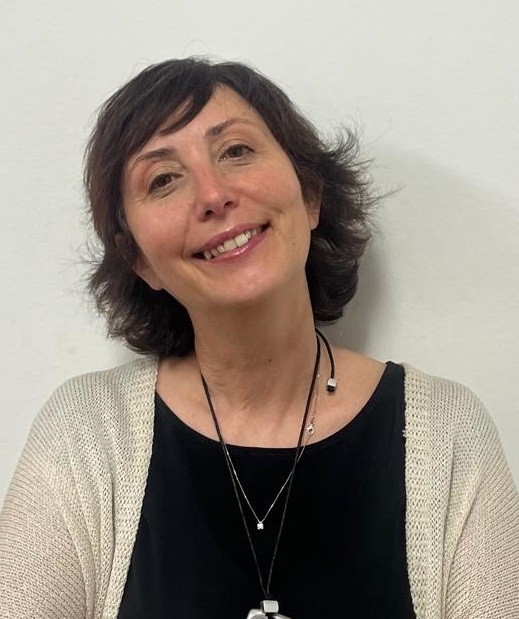
In this edition, our MedChemBioConversations is with Maria Letizia Barreca from the University of Perugia, Italy. Get to know her better by reading the interview below:
How did you get interested in Medicinal Chemistry?
I would describe my interest in medicinal chemistry as a journey. I have always been curious about science, a passion stimulated by my father Demetrio, a naval engineer with a deep love for physics and mathematics.
However, after high school, I was not sure which direction to take, and I even considered programs as different as Biological Sciences, Veterinary Medicine, and Graphic Design. At the very last minute, I discovered the degree course in Pharmaceutical Chemistry and Technology and decided to give it a try. I realized right away that it was the right choice for me.
During my university studies and later throughout my PhD, I met inspiring professors who introduced me first to the potential of small molecules in fighting disease, and then to the fascinating world of computational medicinal chemistry. That is when I truly fell in love with the discipline.
The people we meet along the way can deeply influence our interests and the choices we make, and that has certainly been true in my case.
Where did you have your postdoc position?
I initially carried out a two-year postdoctoral fellowship between the University of Messina and the University of Bari, both based in Italy, working in the research groups of Professors Alba Chimirri and Angelo Carotti, respectively.
Subsequently, I completed a one-and-a-half-year experience at the University of Houston, Texas, under the supervision of Professor James M. Briggs. There, my research focused on using molecular dynamics simulations to investigate resistance-related mutations that affect the efficacy of HIV integrase inhibitors.
What are your current research interests?
I have many! I am naturally a curious and creative person, and these characteristics shape the work we do in my lab. Broadly speaking, our research falls into two main areas.
On one side, we focus on the rational discovery of small bioactive molecules targeting proteins involved in various human diseases, including cancer, neurodegenerative disorders, antimicrobial resistance, and rare diseases. For the latter, we are applying an innovative drug discovery strategy that leverages protein folding interference as a new therapeutic modality to address undruggable or difficult-to-drug targets by promoting their physiological degradation. This approach implements a drugging paradigm called PPI-FIT (Pharmacological Protein Inactivation by Folding Intermediate Targeting), currently exploited by Sibylla Biotech, a company I co-founded. Specifically, we are currently applying PPI-FIT to two different targets: the prion protein, originally studied in an academic context, and a mutant form of AKT1 (E17K), which is implicated not only in cancer but also in a rare pediatric condition called Proteus syndrome. In this latter case, the research is part of a joint effort with the company to explore new therapeutic opportunities.
And given the curiosity I mentioned earlier, our interests have recently extended beyond human health, and we have opened a new research line in precision agrochemical discovery, applying similar rational strategies to target plant disease proteins.
On the other side, we are developing computational tools to improve chemical and biological datasets by enriching them with curated data and information automatically extracted from patents. This is crucial to ensure data quality and completeness, which are both key to reliable predictions and successful drug discovery efforts.
What do you like best about your work?
What I love most is its dynamism, which aligns perfectly with my enthusiastic and tireless nature. I constantly shift between different roles depending on the situation: I’m a researcher, a teacher, a mentor, a manager. That variety keeps things exciting and always gives me the chance to learn something new.
I also really value the connection with students, both in my lab and through teaching. It is a two-way exchange that I find incredibly enriching. Watching former students grow, find their path, and stay passionate about what they do is one of the most rewarding parts of my job.
What kind of tasks does your work involve?
The tasks I handle are quite diverse and often shift throughout the same day.
I work closely with members of my lab to plan experiments and analyze data, teach, write articles, and interact with collaborators from other disciplines to coordinate our joint research. I am currently supervising two PhD students working on projects co-funded by companies, one by Innovatune Srl and the other by Sibylla Biotech SpA., so part of my responsibilities includes regular interaction with the industrial partners.
In addition to internal mentoring activities, I have been part of the EFMC-YSN Mentoring Programme since 2021, supporting my mentee through scheduled meetings or whenever they need guidance.
My work also includes strategic tasks such as applying for funding, managing research projects, starting (and when needed, discontinuing) research lines, and building collaborative networks.
And finally, as a university professor, I am involved in a range of administrative and institutional activities.
What kind of skills does your work require?
Aside from scientific and technical expertise, you need to be flexible and well-organized, as the days are always intense and constantly changing. Curiosity, creativity, and resilience are essential skills in our field, but so is the ability to communicate clearly, whether you are working with students, collaborators, or writing a grant. Leadership plays a key role too. It is not just about giving direction, but about inspiring others, building a shared vision, and keeping the team motivated, even when things get challenging. And of course, you need plenty of energy to keep everything moving forward!
How many PhD students and postdocs do you currently supervise?
At the moment, I’m supervising two PhD students and one postdoc in my group. As I mentioned earlier, both PhD students are co-funded by industry partners, which allows them to work on cutting-edge projects at the intersection of academic research and industrial innovation. Thanks to this setting, they can develop not only strong scientific and technical skills, but also a deeper understanding of how research translates into real-world applications, something I consider essential for their future careers.
How would you describe yourself as a supervisor?
This is probably a question my team would be better suited to answer!
That said, I believe the role of a supervisor is important, not only during the time a student or a postdoc spends in the lab, but also afterwards. The experience they gain during those years often shapes their future path, both professionally and personally.
To me, a good supervisor should offer more than just scientific guidance. It is also about transmitting passion, dedication, integrity and the resilience needed to navigate the ups and downs of research.
I try to be supportive and encouraging, but also clear and firm when needed. And above all, I believe in leading by example: how we handle challenges, stay motivated, celebrate achievements, and work together as a team often teaches more than any formal lesson.
What are your recommendations for a book, podcast, website, blog, YouTube channel or film?
I would suggest three must-read blogs: In the Pipeline by Derek Lowe (https://www.science.org/blogs/pipeline), Practical Fragments by Dan Erlanson (https://practicalfragments.blogspot.com/), and Practical Cheminformatics by Pat Walters (https://patwalters.github.io/). Each offers sharp insights into drug discovery from a different and valuable perspective.
As a website, the EFMC Best Practices in Medicinal Chemistry (https://www.efmc.info/best-practices) is a great resource, offering expert guidance on key topics in drug discovery. DrugHunter.com is also excellent for staying updated on real-world case studies and molecules in development.
For books, I recommend Drug Hunters by Donald R. Kirsch and Ogi Ogas, a fascinating behind-the-scenes look at the history and challenges of drug discovery, and Medicinal Chemistry for Practitioners by Jie Jack Li, which starts with basic principles and then moves on to practical applications in modern drug design.
And for films, The Imitation Game and Hidden Figures are both inspiring, as they remind us that behind major scientific and technological breakthroughs there are often untold stories of brilliance, courage, and resilience.
Which field of medicinal chemistry do you consider the most promising for the future?
I see targeted protein degradation (TPD) as one of the most promising and transformative directions in modern drug discovery. While PROTACs are already in the clinical development, there is still plenty of room for innovation, not just in improving existing approaches, but also in exploring entirely new modalities, such as small molecules that interfere with protein folding, as I mentioned earlier. This is a field where creativity is essential, both in envisioning new strategies and in molecular design, and where artificial intelligence will increasingly support and accelerate progress. SHOWCASING THE SOCIETY FOR MEDICINES RESEARCH (SMR)
The mission of The Society for Medicines Research (SMR) is to provide a forum for those interested in medicines research. The origins of the Society can be traced back to a symposium organised by members of the Pharmacy Department of Chelsea College in London in April 1965, which highlighted the need for a multidisciplinary approach to drug discovery. Members of the SMR come from all sections of the medicines discovery community, both from academia and industry, and at various career stages.
In 2024, the SMR Early Career Researchers (ECR) committee was established. The mission of the ECR committee is to cultivate an inclusive and supportive environment for ECRs in the field of medicines research. In collaboration with the main SMR committee, we aim to enhance engagement, participation, and opportunities for ECRs at SMR events. We endeavour to provide resources, mentorship, and networking platforms that will aid the ECR community to contribute meaningfully to the advancement of medicines research.
Meetings
SMR organises four high quality, one-day scientific meetings each year focussed on the discovery and development of new medicines. The meetings are usually held either in Central London or at the sites of pharmaceutical companies across the UK. At least one of these meetings is devoted to a specific therapeutic area and another to medicinal chemistry, while the rest cover the widest possible aspects of Drug Discovery. In 2025, SMR has already organised a meeting on molecular glues and a meeting on women’s health, while two more conferences are planned for the rest of year:
- Target Identification and Validation in Drug Discovery
(October 24, AstraZeneca, The Discovery Centre - DISC, Cambridge Biomedical Campus)
- Recent Clinical Candidates and SMR Award meeting
(December 4, Friends House, London)
SMR recognises the importance of equality and diversity both within the committee and at meetings. We therefore endeavour to organise meetings with speakers that represent the diverse community we serve, and to make these meetings accessible to the broadest audience using hybrid formats, where possible, and by providing bursaries to students.
SMR Award
We believe that outstanding contributions, achievements and inventions in the world of drug discovery and development should be recognised and celebrated. To achieve this goal the SMR instigated its own symbol of recognition, the SMR Award for Drug Discovery. Recipients are individual scientists, or teams of scientists, duly acknowledged for their contribution by the scientific community. The multidisciplinary nature of the achievement is inherent in this award. With members from all disciplines of drug research, we are proud to recognise the successes of others in order to help the individuals and their host institution gain the reward and acclaim they deserve from within the pharmaceutical world.
To learn more about SMR, you can visit our website here, and follow us on LinkedIn and BlueSky. SPOTLIGHT ON THE UNITED KINGDOM!
The Society for Medicines Research (SMR) is pleased to highlight the “Identification of Actionable Targeted Protein Degradation Effector Sites through Site-Specific Ligand Incorporation-Induced Proximity (SLIP)”. SLIP is a universal platform for chemically induced proximity-based drug discovery, developed in the Tate group at Imperial College London and in collaboration with the Kozakov lab at Stony Brook University, and was recently published in Journal of the American Chemical Society.
Chemically induced proximity (CIP) is a powerful concept rapidly reshaping the landscape of chemical biology and drug discovery. In CIP, a bifunctional molecule or a molecular glue brings two or more biomolecules into close spatial proximity to selectively modulate protein function, resulting in proximity-induced pharmacology. CIP between suitable effectors and target proteins may lead to diverse outcomes, including degradation, stabilisation, inhibition, or activation of the targeted protein.
One of the most successful applications of this strategy is in targeted protein degradation (TPD), in which a monovalent molecular glue degrader (MGD) or bivalent conjugate such as a proteolysis targeting chimera (PROTAC) mediates a ternary complex between a degradation pathway effector protein and a protein of interest (POI), directing the latter to degradation. However, the narrow set of exploitable effector proteins and ligand binding sites currently limits the scope for improved selectivity, overcoming drug resistance, and access to a broader range of disease-relevant induced proximity mechanisms beyond TPD.
Z. Xiao et al. report the first universal strategy to precisely and site-specifically induce protein-protein proximity to identify “PROTACable” sites on any potential effector protein in live cells. Their approach, called “Site-specific Ligand Incorporation-induced Proximity” or SLIP, uses genetic code expansion to encode an unnatural amino acid for copper-free “click” ligand ligation at a specific effector site in intact cells. This enables the in-situ formation of a covalent PROTAC-effector conjugate against a target protein of interest. Modification at actionable effector sites drives degradation of the targeted protein, establishing the potential of these sites for TPD.
Using SLIP, the authors systematically screened dozens of sites across E3 ligases and E2 enzymes from diverse classes, identifying multiple novel potentially “PROTACable” effector sites which are competent for TPD.
SLIP adds a powerful approach to the proximity-induced pharmacology toolbox, allowing future effector ligand discovery to fully enable TPD, as well as other emerging modalities.
Read the Article! ADVANCES IN STRUCTURAL ANALYSIS OF BIOMOLECULES | CELEBRATING 25 YEARS OF CHEMBIOCHEM AND CHEMPHYSCHEM
Join ChemBioChem and ChemPhysChem for their 25th Anniversary Symposium on Advances in Structural Analysis of Biomolecules, which will take place in Berlin, Germany, on October 23-24, 2025.
This exciting event will bring together scientists working at the interface between chemistry, biology, medicine, and physics, and will cover a wide variety of topics from biophysical methods, subcellular imaging to drug design, and more. The programme will include plenary and invited lectures, a selection of short communications, and a large poster session with poster prizes. There will also be many opportunities to connect and exchange ideas.
Registration deadlines
- Early bird registration: September 11, 2025
- Standard registration: from September 12, 2025
Abstract submission deadlines
- Oral Communication submissions: September 11, 2025
- Poster submission: September 11, 2025
We look forward to welcoming you to two days full of science, networking and celebrations in Berlin!
More information on CBC-CPC 2025.
NEWS FROM THE DIVISION OF MEDICINAL CHEMISTRY OF THE ITALIAN CHEMICAL SOCIETY
We have received an invitation from the organizers of the upcoming "First Panviride Drug Discovery Conference", an EFMC sponsored event which will take place on September 30, 2025, in Calabria, Italy.
The programme will feature eight invited lectures delivered by leading international experts in the antiviral field, highlighting advances in medicinal chemistry, virology, pharmacology, molecular biology, and translational medicine, all focused on tackling infectious diseases.
Participants interested in presenting a poster or applying for a flash presentation session are kindly invited to submit their abstract prior the extended deadline of August 10, 2025!
Further details about the event, including contact information and submission guidelines, can be found on the official website.
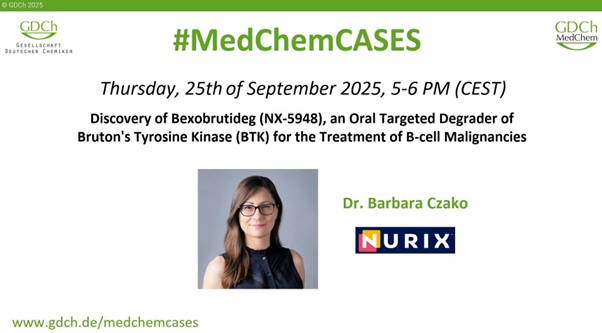
#MEDCHEMCASES - SEMINAR BY THE DIVISION OF MEDICINAL CHEMISTRY OF THE GERMAN CHEMICAL SOCIETY (GDCH)
The MedChem Division of the German Chemical Society (GDCh) would like to invite you to the next #MedChemCASES online seminar which will be held on September 25 by Dr Barbara Czako, Nurix Therapeutics.
The topic of the webinar will be “Discovery of Bexobrutideg (NX-5948), an Oral Targeted Degrader of Bruton's Tyrosine Kinase (BTK) for the Treatment of B-cell Malignancies”.
Register for free here.
#GDCh (MedChem Division), #NextGenMedChem.
NEWS FROM THE BIOLOGICAL AND MEDICINAL CHEMISTRY SECTOR (BMCS) OF THE ROYAL SOCIETY OF CHEMISTRY (RSC)
The BMCS is happy to announce several upcoming events.
RSC-BMCS/SCI 23rd Medicinal Chemistry Symposium
Sunday 14 – Wednesday 17 September 2025, Churchill College, Cambridge, UK
RSC-BMCS/SCI
Registration still open! Limited accommodation packages available!
Website: https://www.rscbmcs.org/events/cammedchem25/
Synopsis: The organisers invite you to the 23rd SCI-RSC Medicinal Chemistry symposium, Europe’s premier biennial Medicinal Chemistry event, focusing on first disclosures and new strategies in Medicinal Chemistry.
8th RSC-CICAG/RSC-BMCS Artificial Intelligence in Chemistry
Monday 22 – Wednesday 24 September 2025, Churchill College, Cambridge, UK
RSC-BMCS/CICAG
Registration is open! Bursary applications closing soon!
Website: https://www.rscbmcs.org/events/aichem8 /
Synopsis: Artificial Intelligence is experiencing a renaissance in the development of new methods and practical applications to ongoing challenges in Chemistry. Following the successes of six annual “Artificial Intelligence in Chemistry” meetings starting in 2018, we are pleased to announce that the Chemical Information & Computer Applications Group (CICAG) and Biological & Medicinal Chemistry Sector (BMCS) of the Royal Society of Chemistry are once again organising a conference to present the current advances in AI and machine learning in Chemistry. The meeting will be held over two and half days and combine aspects of artificial intelligence and deep machine learning methods to applications in chemistry. The programme will include a mixture of keynote talks, panel discussion, oral presentations, flash presentations, posters and opportunities for open debate, networking, and discussion. This year meeting will follow 2024 with two and half days and will include workshop on first day, please keep checking the website for updates.
ELRIG Drug Discovery 2025
Tuesday 21 – Wednesday 22 October 2025, Liverpool, UK
RSC-BMCS/RSC Medicinal Chemistry/ELRIG
Registration and abstract submission is open!
Website: https://elrig.org/portfolio/drug-discovery-2025/
Synopsis: RSC-BMCS is once again collaborating with ELRIG to present a chemistry-focused track on day 2 of ELRIG Drug Discovery 2025, Europe’s leading drug discovery and life sciences conference which will also have scientific tracks covering topics including robotics, cell and disease models, ‘omics, AI, oncology and neurodegenerative disease. Our contribution to ELRIG’s ‘Festival of Life Science’ is put together by the RSC-BMCS and RSC Medicinal Chemistry, the UK’s leading drug discovery journal. As in previous years, our track will feature the drug discovery process from early stage emerging technologies to clinical candidate selection. We have an exciting lineup of UK and international experts and among the hot topics covered are high throughput lead discovery, protein degradation as a drug modality, and lead optimisation of natural products. Please keep checking the website for updates.
BMCS New approaches to the treatment of Parkinson’s
Wednesday 12 November 2025, Burlington House, London, UK
BMCS/Parkinsons UK
Registration and abstract submission is open! Check the website for updated speaker details!
Website: https://www.rscbmcs.org/events/parkinsons25/
Synopsis: Join the Royal Society of Chemistry Biological Medicinal Chemistry Sector and Parkinson’s UK to hear about new approaches to the treatment of Parkinson’s Disease.
In the dynamic field of drug discovery, the search for new treatments for Parkinson’s disease has never been more critical. It is estimated 10 million people worldwide are living with Parkinson’s – a chronic, progressive neurodegenerative condition resulting from the loss of the dopamine-containing cells of the substantia nigra. Motor and non-motor symptoms of the condition are wide ranging and current treatments only help to manage a small subset of the symptoms and do not modify the disease progression. But there is a wealth of research to find new and better therapeutics for Parkinson’s.
This meeting, specifically designed for professionals dedicated to developing new therapeutics for Parkinson’s disease, will highlight current research offering symptomatic relief and disease modifying approaches.
BMCS Hot Topics: Antibody–Drug Conjugates
Thursday 20 November 2025 (afternoon), Virtual
BMCS
Registration is now open!
Website: https://www.rscbmcs.org/events/hottopicsadcs2025/
Synopsis: The BMCS Hot Topics online meetings are intended to highlight breaking areas of research in fields of science relevant to drug discovery. They will run as stand-alone half-day virtual events, 2-3 times per year. The programmes will be targeted towards researchers working in or who would like to enhance their understanding of these nascent or developing fields.
Antibody-drug conjugates (ADCs), alongside other targeted modalities, effectively enrich target tissues with potent payloads unsuitable for systemic administration. With several recent clinical successes, the number of new ADCs approaching the clinic is rapidly increasing. This meeting aims to highlight the technological advancements and innovations driving these ADCs, while addressing the challenges and opportunities within the field. The Hot Topics session will feature speakers from industry and academia who are at the forefront of ADC design.
Meetings in 2026
BMCS Postgraduate Symposium XIX
Thursday 08 January 2026, University of Manchester, UK
BMCS
Registration and abstract submission is now open!
Website: https://www.rscbmcs.org/events/psxix/
This face-to-face meeting will comprise of oral and poster presentations from PhD students and post-doctoral workers researching in biological or medicinal chemistry. In addition, the agenda will feature invited keynote speakers from industry and academia. INTERESTED IN SPONSORING THIS NEWSLETTER?
Take the opportunity of our monthly newsletter “MedChemBioWatch” to promote your company or deliver a message to our audience of more than 10,000 members.
Each issue can be sponsored exclusively with two banners, a short company description, and a weblink. Reach out to administration@efmc.info if you want to receive more information.
|
|
|
|
|
|
ISSUE SPONSORED BY
EFMC ORGANISED EVENTS
September 4-5, 2025
Porto, Portugal
12th EFMC Young Medicinal Chemists' Symposium (EFMC-YMCS 2025)
August 31 - September 4, 2025
Porto, Portugal
X EFMC International Symposium on Advances in Synthetic and Medicinal Chemistry (EFMC-ASMC 2025)
October 9, 2025
Virtual Event
6th EFMC² Tandem Talks
EFMC SPONSORED EVENTS
September 30, 2025
Gizzeria Lido, Italy
First PANVIRIDE Drug Discovery Conference
October 6-9, 2025
Paris, France
ICBS/ECBS2025
October 23-24, 2025
Berlin, Germany
Advances in Structural Analysis of Biomolecules (Wiley)
January 25-29, 2026
St Anton, Austria
5th Alpine Winter Conference on Medicinal and Synthetic Chemistry
EFMC CERTIFIFED SCHOOLS
September 14 - 19, 2025
Department of Pharmaceutical Sciences - Vienna, Austria
Vienna Summer School
September 15-16, 2025
University of Tübingen, Tübingen, Germany
MedChemCampus2025
September 22 - 24, 2025
University of Bologna – Rimini Campus, Rimini, Italy
SSPA Summer School
JOB PORTAL
Junior research group leader
Institut Pasteur, FRANCE
Read more
|
|