|
|
EFMC YEARBOOK 2026 IS AVAILABLE
The official EFMC Yearbook 2026, "Medicinal Chemistry and Chemical Biology in Europe" is a valuable resource for those interested in quickly finding information on all things related to EFMC, such as the activities and composition of Member Societies, Corporate Members and the activities and events of EFMC and its working groups.
The Yearbook is available as an electronic version only.
READ THE PDF VERSION
CHEMMEDCHEM & CHEMBIOCHEM, THE OFFICIAL JOURNALS OF EFMC
LITERATURE SPOTLIGHT
The “Literature Spotlight” section of the newsletter offers concise and accessible summaries of recently published research. It highlights a range of themes drawn from various journals, with this edition’s contribution provided by Dr Tiago Bozzola (Lead Discovery Center GmbH, Germany).
This contribution discusses the recently published article “A Facile Protocol for C(sp²)–C(sp³) Bond Formation Reactions Toward Functionalized E3 Ligase Ligands” by Maksutova et al., published in ChemMedChem.
Given the central role of cereblon (CRBN) E3 ligase ligands in proteolysis-targeting chimeras (PROTACs) and molecular glue degraders (MGDs), the authors set out to explore how alternative linker connection modes influence physicochemical properties, stability, and degradation performance. While most reported degraders rely on C(sp²)–N bonds, typically formed via Buchwald–Hartwig or Ullmann couplings, such approaches restrict linker geometry and limit property-driven optimization. To overcome this, the authors developed a nickel-catalysed decarboxylative cross-coupling between aryl bromides and N-hydroxyphthalimide (NHP) esters, enabling efficient formation of C(sp²)–C(sp³) bonds.
The methodology was applied to a diverse set of classical and non-traditional CRBN-binding scaffolds. Prior to functionalization, these ligands were comprehensively profiled for CRBN binding, solubility, lipophilicity, stability, and neosubstrate degradation, allowing the identification of particularly promising cores for further development. The new coupling protocol proved broadly tolerant of functional groups and heterocycles and requires neither strictly inert conditions nor electrochemical or photochemical setups.
To demonstrate biological relevance, selected linker-functionalized ligands were incorporated into MGDs and PROTACs targeting GSPT1 and BRD4. In both cases, the authors were able to develop compounds with excellent degradation profiles, as well as varied physiochemical properties.
This work establishes a versatile C(sp²)–C(sp³) coupling protocol that broadens the synthetic toolbox for CRBN-based degraders, enabling access to new linker architectures and diverse E3 ligase ligands under mild conditions. By identifying promising CRBN scaffolds and demonstrating their efficient functionalization into PROTAC and MGD building blocks, the study opens expanded chemical space and supports more property''.chr('8209').''driven degrader design.
Read the Article! CALL FOR NOMNATIONS – NOVALIX PHD PRIZE
The "Novalix PhD Prize for Excellence in Chemistry in Life Sciences Research" is a new EFMC-YSN Partner Prize aiming to recognise outstanding research in medicinal chemistry and chemical biology, executed by early career researchers during their thesis work.
Aimed at European PhD students (up to 12 months before the end of PhD and up to three years after PhD) in medicinal chemistry or chemical biology, the prize will consist of a:
More info and applications on www.efmc.info/novalix-phd-prize
Deadline for submission: March 31, 2026
23rd EFMC-YSN MEDCHEMBIOONLINE | ENCODED LIBRARY TECHNOLOGIES
In this edition, scheduled for March 10, the EFMC and the Young Scientists Network will tackle the exciting topic of Encoded Library Technologies.
Hit Finding is an integral part of the drug discovery process and despite advancements in automation and machine learning, it remains a significant bottleneck. Encoded Library Technologies offer an alternative approach to traditional hit-finding methods, such as high-throughput screening (HTS), by encoding each small-molecule in the library with a tag made of either DNA, RNA or a peptide. The unique tag enables the pooling of potentially billions of compounds which can be stored in a single vial and screened in parallel, which can improve both the cost and speed of the hit-finding process.
Our confirmed experts are:
- Dr Louise Walport (The Francis Crick Institute, UK)
- Prof. Michael Waring (Newcastle University, UK)
Registration to the event is free and open to all.
MENTAL HEALTH IN ACADEMIA WORKSHOP | FOCUS ON IMPOSTOR SYNDROME
We are pleased to announce an upcoming online workshop jointly organised by the European Federation for Medicinal Chemistry and Chemical Biology – Young Scientists Network (EFMC-YSN) and the European Young Chemists’ Network (EYCN).
Hosted via Zoom on February 26 between 15.00 and 16.45 CET, the workshop will explore impostor syndrome in academic and research environments and will consist of two complementary parts:
- A 45-minute lecture by Prof. Echegoyen (ICIQ, Spain).
- Moderated small-group discussion rooms designed as safe and supportive spaces for reflection and peer exchange
To ensure meaningful and interactive discussions, registration is required and participation in the small-group sessions will be limited. As part of the registration process, participants are invited to complete a short pre-event survey. Responses will help us better understand expectations, create balanced discussion groups, and tailor the session to attendees’ needs.
We look forward to fostering an open and constructive conversation on a topic that affects many in academia.
Registration can be done HERE.
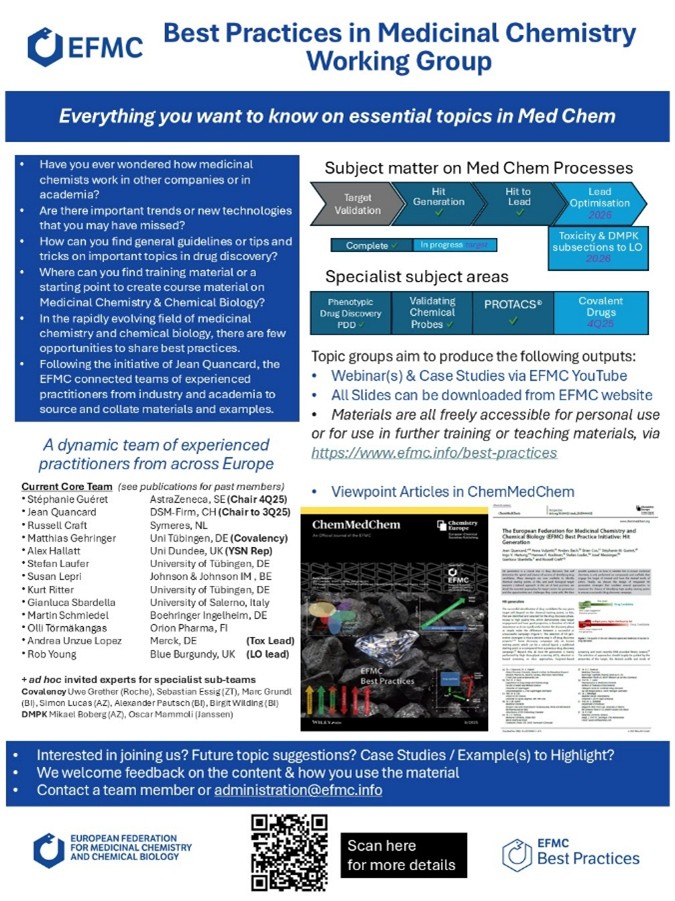
POSTER FROM THE EFMC BEST PRACTICES GROUP
To support the dissemination of best practices in key areas of Medicinal Chemistry, the Best Practices Working Group has created a comprehensive poster highlighting the most important insights from their work.
We encourage you to download, print, and display the poster in your laboratory or company so colleagues can easily benefit from these recommendations. Attending a conference soon? Feel free to bring a few copies along and—subject to the organisers’ approval—share them as informative leaflets.
The HD version can be accessed HERE.
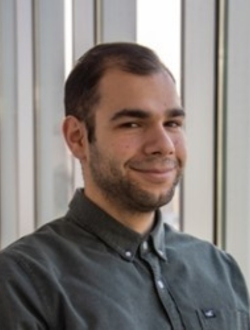
GET TO KNOW KHALED ESSA (LEIDEN UNIVERSITY, THE NETHERLANDS)
In this edition, our MedChemBioConversations is with Khaled Essa from Leiden University. Get to know him better by reading the interview below:
How did you get interested in Chemical Biology?
My passion for medicinal chemistry and chemical biology started during my Bachelor of pharmaceutical sciences at Utrecht University where I had great medicinal chemistry mentors. During that time, I discovered my passion for organic synthesis in the context of drug development. This interest has been with me ever since.
What are your current research interests?
I am currently in the fourth year of my PhD at the University of Leiden, Netherlands. The focus of my PhD work is the development of novel chemical modalities that target G protein coupled receptors (GPCRs). Such modalities include PROTACs and covalent antagonists.
My current research is focusing on discovering novel approaches for the targeted degradation of membrane proteins. My main interest in the field of medicinal chemistry and chemical biology is induced proximity. This concept brought an exciting new approach in drug discovery. Instead of antagonizing a target, we can now decide to degrade it or activate it or relocate it. With the current powerful induced proximity tools we have in-hand, and looking at the speed at which this field develops, I believe we will witness great strides in targeting difficult to treat diseases.
How would you explain what your research area is to non-scientists?
My research involves dealing with proteins located on the surface of cells. In healthy conditions, these proteins are important for the cells. However, in disease states, these proteins can contribute to worsening of these diseases. I work on developing chemical LEGOs to bring back these misbehaving proteins back to their normal state. By achieving that, we can cure different cancers, immune diseases or cardiovascular conditions.
What do you like best about your work?
What I like best about my work is that it never gets boring, we are always dealing with scientific puzzles either in the organic chemistry lab or in the pharmacology lab. These puzzles can vary from optimizing synthetic routes, purification techniques, confusing assay data or even data that we did not expect at all. These daily challenges keep me excited about the scientific research work I do during my work.
What kind of tasks does your work involve?
My daily tasks involve being in the organic chemistry lab, synthesizing the compounds that I have designed along with their workups and purification. In addition, I supervise master thesis students in the lab. Moreover, I coordinate with the researchers involved in the biological evaluation of my chemical tools. Such work involves discussing data, suggesting changes in the assay or adjusting the design of my compounds.
What kind of skills does your work require?
I would say that the skills required in my field of work are also skills that I keep improving on everyday in my work. Such skills include critical thinking, leadership, mental resilience, patience, active listening and interdisciplinary mindset.
How many PhD students and postdocs do you currently supervise?
During my PhD I was involved in the supervision of 5 master thesis students and eight bachelor thesis students. This experience provided me with extensive knowledge on teaching novel concepts or techniques to students. Furthermore, I learned how to efficiently delegate tasks. But most importantly I learned how to be a good mentor to inspire the younger generations.
How would you describe yourself as a supervisor?
I would describe myself as a quirky but serious supervisor that not just aims to teach his students but inspire them to pursue their motivations and assist them on their scientific journey.
What do you consider your greatest achievement in your scientific career?
The biggest highlight of my career so far was presenting one of my PhD projects during the EFMC-ACSMEDI conference in Utrecht in 2024. During the conference I gave a presentation about the work we did on the targeted degradation of GPCRs.
What advice would you give to someone who wants to know more about your field?
I would say feel free to reach out to me through email or LinkedIn and I will be more than happy to provide you with an overview of the field and prominent scientists in the field that you can follow. Apart from that, connecting with scientists in the field through social media platforms like LinkedIn is very useful to get acquainted with the field. Setting up publication alerts from journals is also a valuable tool to stay up to date with novel research.
What would you like to ask from other medicinal chemists?
I would like to ask other medicinal chemists about the chemical structure of their favourite drug candidate or which protein do they dream of one day targeting.
Have you experienced any unfair situations during your scientific career? How would you advise scientists facing similar situations?
I would say I am grateful that I did not experience any unfair situation during my PhD. My advice if that happens to anyone in the field is to reach out to the confidential advisors within the institute to fix the situation. I can image that this approach can be daunting for some PhD students, thus I would also advise to reach out to the co workers they trust the most and seek their guidance.
What is the most embarrassing thing you have done in the lab while doing experiments, e.g. explosions?
I was once working with a compound that was extremely yellow and I was loading it on the silica column; I did not realize the column was leaking and my fumehood was permanently covered in yellow stains.
What are your recommendations for a book, podcast, website, blog, YouTube channel or film?
Great light-hearted YouTube organic chemistry content: extractions & Ire, chemiolis.
Great organic chemistry book: The Chemists’ Cookbook: A practical handbook of 201 named reactions for advanced students and researchers of synthetic organic by Lluís Llorens Palomo (a cool scientist that I follow on social media)
Which scientist do you admire the most and why?
The scientist I admire the most is Professor Craig Crews. I remember when I first read his papers on targeted protein degradation, I was astonished and developed a rapid and great interest in the field based on these papers. When I got to meet him in person, he was very friendly and gave me a lot of valuable advice on how to do research in this field.
Which field of medicinal chemistry do you consider the most promising for the future?
I would say the same field I am interested in (could definitely be biased) which is induced proximity. I believe we are just starting to open this treasure chest full of opportunities in drug discovery that can help a lot of people suffering from incurable diseases.
What would you expect to be the next breakthrough in medicinal chemistry?
I believe the next breakthrough in medicinal chemistry would be a discovery around biocatalysis combined with synthetic organic chemistry. Such discovery can be in the form of biocatalysts that enable common synthetic reactions involved in medicinal chemistry to be done with greener alternatives and better yields. Such discovery can enable the development or production of medicinal compounds that were once considered unachievable or too environmentally unfriendly to produce. SHOWCASING THE NEXTGENMEDCHEM GROUP OF THE GDCH
The NextGenMedChem is a group of young medicinal chemists from industry and academia within the GDCh. Our aim is to contribute shaping the future of the German MedChem community and strengthen the interaction with other communities, such as the EFMC.
Among many activities, the group is organising networking events, such as a ‘Job shadowing in industry’ event for young medicinal chemists. For the last five years, the NextGenMedChem team has supported the organization of the Frontiers in Medicinal Chemistry conference, hosted the session on ‘Next Generation Drugs’, and created a lunch break event highlighting careers in Medicinal Chemistry.
Together with the YSN, we coorganised the MedChemBio Posters Online session. We work closely together with the Board of the Medicinal Chemistry Division of the GDCh and are very proud to support their Women Mentoring program by serving as mentors for young female medicinal chemists in Germany.
Our flagship initiative is without any doubt the monthly MedChemCASES webinar series, which has featured remarkable Medicinal Chemistry case studies from industry and academia for the past five years. With a constantly high number of participants, we can offer exciting talks on a regular basis and provide a stage for top notch international Medicinal Chemistry research that both educates and connects the community (stay tuned on: https://www.gdch.de/medchemcases or the LinkedIn group of the GDCh MedChem Division). SPOTLIGHT ON GERMANY!
The NextGenMedChem group of the Division of Medicinal Chemistry of the German Chemical Society (GDCh) highlights the paper titled “Probing the Protein Kinases′ Cysteinome by Covalent Fragments” recently featured as a Hot Paper in Angewandte Chemie International Edition, https://doi.org/10.1002/anie.202419736
Selectivity remains a major challenge in the development of protein kinase inhibitors. A prominent strategy to enhancing potency and selectivity targets poorly conserved, noncatalytic cysteines adjacent to the ATP-binding pocket with electrophilic “covalent warheads”, yet many accessible cysteines within the kinases´ “cysteinome” remain unexplored.
Gehringer, Knapp, and co-workers describe an approach to sample ATP-site cysteines using fragment-like covalent inhibitors. They generated a kinase-focused covalent library of 47 compounds and screened it against 47 protein kinases, covering 60 active-site cysteines. Initial screening used intact protein mass spectroscopy (MS) and differential scanning fluorimetry (DSF), with hits validated by enzymatic assays, NanoBRET, MS-based kinetic analyses (kinact/KI), and GSH reactivity assays. Binding sites were confirmed by mutagenesis and X-ray crystallography. This strategy expands the set of ligandable kinase cysteines, identifying covalent binders for CSNK1G1/2/3, CHEK2, PLK1/2/3, MELK, ULK1/2, and RIOK2. Structural insights from X-ray crystallography reveal distinct binding modes and the study yielded isoform-selective hits that are promising starting points for potent, selective covalent kinase inhibitors in underexplored regions of the kinome. #MEDCHEMCASES - SEMINAR BY THE DIVISION OF MEDICINAL CHEMISTRY OF THE GERMAN CHEMICAL SOCIETY (GDCH)
The MedChem Division of the German Chemical Society (GDCh) would like to invite you to the next #MedChemCASES online seminar which will be held on February 26 by Dr Momar Toure (Moma Therapeutics).
The topic of the webinar will be “Discovery of MOMA-341, a chemically distinct, potent and selective covalent inhibitor of Werner Syndrome Helicase (WRN) in clinical development.”
Register for free here.
#GDCh (MedChem Division), #NextGenMedChem.
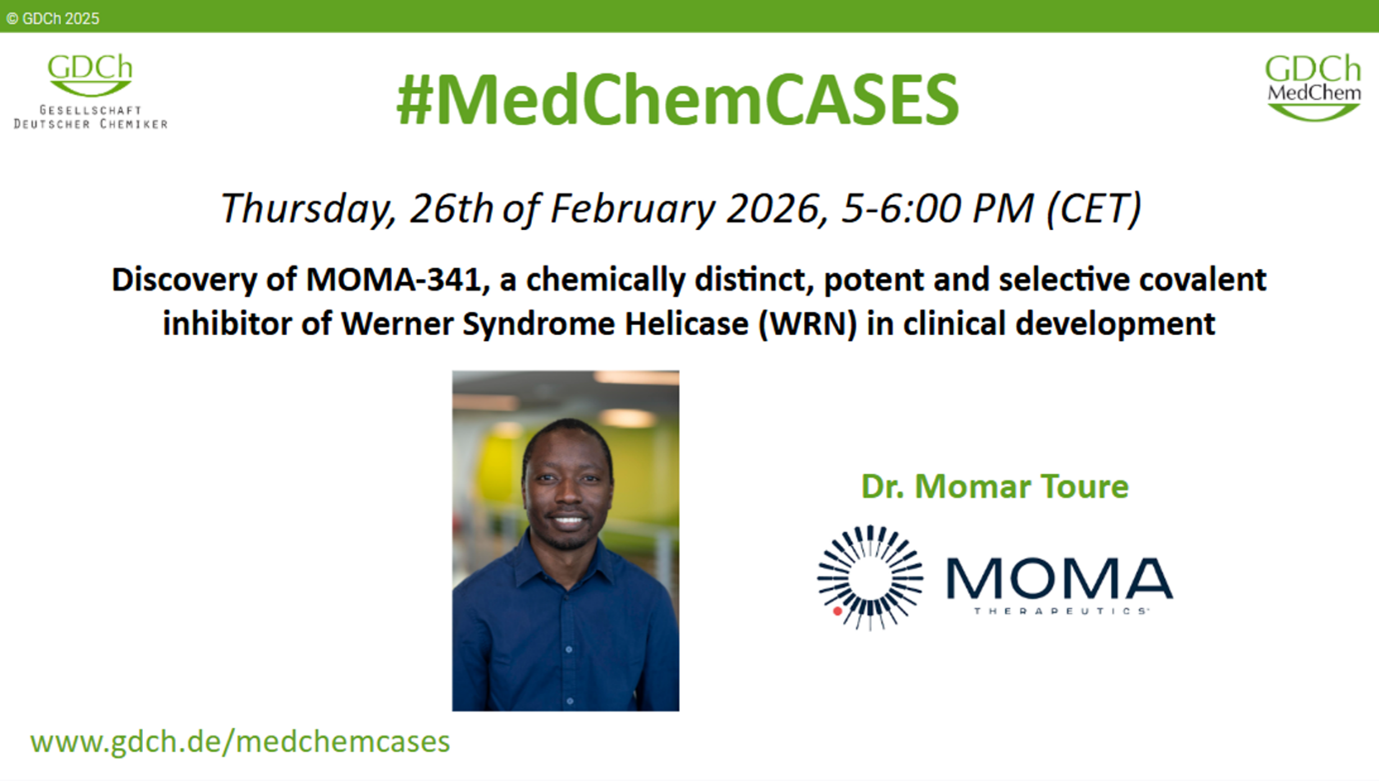
MOMA-341 is a chemically distinct, potent and selective clinical stage covalent inhibitor of WRN. Leveraging MOMA's KNOWMATIC platform and the presence of cysteine 727 in an allosteric binding pocket, covalent inhibitors were designed to achieve high potency. Optimization was based on precise refinement of covalent warhead trajectory, compound rigidity, and improvement of binding affinity to drive high kinact/KI. Optimization of potency and ADME properties, guided by in silico prediction of in vivo target occupancy, led to the discovery of MOMA-341, which demonstrates tumor regression at low doses in MSI-H mouse xenograft models. MOMA-341 is currently in clinical development. NEWS FROM THE BIOLOGICAL AND MEDICINAL CHEMISTRY SECTOR (BMCS) OF THE ROYAL SOCIETY OF CHEMISTRY (RSC)
The BMCS is happy to announce several upcoming events:
BMCS 3rd Conformational Design in Drug Discovery
Monday 02 March 2026, GSK Conference Centre, Stevenage, UK
BMCS
Registration open!
Website: BMCS 3rd Conformational Design in Drug Discovery 2026 - RSC BMCS
Synopsis: Conformational Design plays a key role in the medicinal chemistry of small molecule drug candidates. The emergence of generative AI models to assist molecular design and free-energy-perturbation techniques critically depend on accurate prediction of 3D ligand conformations. Here we bring together cutting-edge computational methods with experimental free ligand NMR solution conformations and protein-ligand X-ray and CryoEM structures to craft the medicines of tomorrow. We will discuss ligand rigidification and physicochemical optimisation strategies for protein-protein interaction inhibitors, PROTACs, molecular glues, antibody-drug-conjugate payloads and other new modalities. This RSC-BMCS event aims at building a community that shares conformational design strategies, technologies, and successful case studies. It will complement other rational drug design events and promote more successful research into future medicines.
The BMCS Mastering MedChem X: 10th RSC-BMCS Symposium on Mastering Medicinal Chemistry
Friday 13 March 2026, Burlington House, London, UK
BMCS
Registration open!
Website: https://www.rscbmcs.org/events/mastermedchem26/
Synopsis: Mastering Medicinal Chemistry X is the latest in an ongoing series of conferences intended to provide expert advice and guidance to new practitioners in the field of drug discovery. It has been said that “there are two types of drug discovery programmes: those that hit serious problems and those that are going to hit serious problems.” Anticipating and preparing for such problems thus accelerates the delivery of new medicines: this event will feature presentations from experienced ‘drug-hunters’ in both industry and academia, who will talk about the challenges faced in modern drug discovery, and will share best practice common to all successful medicinal chemists.
37th BMCS Spring Symposium on Medicinal Chemistry
Thursday 23 April 2026, The Fielder Centre, Hatfield, UK
Website: https://www.rscbmcs.org/events/hatfield26/
BMCS
Registration open! Abstract submission closing soon!
Synopsis: Known colloquially as the “Hatfield MedChem” meeting, this is a highly successful, long-standing, one-day meeting that runs annually. The scientific program will comprise presentations showcasing medicinal chemistry case studies from tools to candidates, across a range of modalities, therapeutic areas and target classes, as well as covering more general topics at the forefront of drug discovery. The meeting aims to be informal and interactive, and is ideal for all those working in medicinal chemistry and drug discovery more widely.
BMCS Hot Topics: Peptides in Drug Discovery
Wednesday 06 May 13.00-17.00 UK time, virtual
BMCS
Registration is open!
Website: https://www.rscbmcs.org/events/hottopicspeptides26/
Synopsis: The BMCS Hot Topics online meetings are intended to highlight breaking areas of research in fields of science relevant to drug discovery. They will run as stand-alone half-day virtual events, 2-3 times per year. The programme will be targeted towards researchers working who would like to enhance their understanding of these nascent or developing fields.
Peptides are a key modality for modulating biological pathways with the potential to enable mechanisms inaccessible to traditional small molecules. This meeting will showcase advances in peptide discovery and development, from cyclic and stapled scaffolds to strategies for achieving oral bioavailability. Talks will span discovery and optimisation technologies alongside chemistry strategies for stability, permeability, and delivery, with case studies charting progress from peptide leads to clinical candidates.
BMCS 6th Synthesis in Drug Discovery and Development
Monday 18 – Tuesday 19May 2026, virtual
BMCS
Registration now open! Abstract submission closing soon!
Website: https://www.rscbmcs.org/events/sddd26/
Synopsis: Synthesis is at the heart of drug discovery and development. The industry has increasingly demanded higher quality clinical candidates and has sought to exploit less druggable biological targets. Densely functionalised small molecules with a high degree of synthetic complexity are often the result of these demands. Successful programmes therefore require the application of innovative synthesis in all stages of discovery and development. The medicinal chemist’s toolbox is also enhanced by the introduction of novel bioisosteres, often made available only through the application of new synthetic methods. This symposium aims to celebrate the crucial role of synthesis in the success of drug discovery and development.
5th SCI/RSC-BMCS Symposium on Anti-Infectives Drug Discovery
Monday 01 – Tuesday 02 June 2026, Francis Crick Institute, London, UK
SCI/BMCS
Registration and abstract submission open!
Website: https://www.rscbmcs.org/events/mastermedchem26/
Synopsis: With the ever-growing prevalence of drug-resistant pathogens, it has never been more important that we refresh the drug pipeline with new antimicrobials that act on new targets or exhibit novel modes of action. The rise of antimicrobial resistance and recent COVID pandemic serve to highlight the importance of developing effective treatments for infection, and is helping to drive a resurgence in anti-infectives drug discovery and the development of innovative technologies and approaches for combating infection through more effective detection and diagnosis methods.
7th RSC-BMCS/DMDG New Perspectives in DMPK
Wednesday 10 June 2026, Burlington House, London, UK
BMCS/DMDG
Registration and abstract submission open!
Website: https://www.rscbmcs.org/events/dmpk26/
Synopsis: Novel small-molecule-based therapeutic approaches represent a key component of the discovery landscape. The emergence of molecular glues, PROTACs, bicyclic peptides, and other novel chemistries often bring with them new challenges for drug discovery scientists; synthetic difficulty, beyond rule-of-five physicochemical properties, and complexity in the link between exposure and response, may complicate ADME characterisation and accurate human dose prediction, particularly for drugs aimed at oral administration. This meeting will provide a forum for the exchange of ideas between principal members of the DMPK research community on how we can rise to these challenges. Keynote talks from thought leaders will provide wider perspectives on how DMPK can contribute to the delivery of medicines to patients more quickly and efficiently. There will be a balanced mix of oral and poster presentations, and networking opportunities throughout.
9th Artificial Intelligence in Chemistry Symposium
Wednesday 02 – Friday 04 September 2026, Churchill College, Cambridge, UK
BMCS
A date for your diary!
Website: https://www.rscbmcs.org/events/aichem9/
Synopsis: Artificial intelligence is increasingly revolutionizing chemistry. We are witnessing the impact of new methods and practical applications in many diverse areas of chemistry. Following on the successes of eight annual “Artificial Intelligence in Chemistry” meetings starting in 2018, we are pleased to announce that the Chemical Information & Computer Applications Group (CICAG) and Biological & Medicinal Chemistry Sector (BMCS) of the Royal Society of Chemistry are once again organizing a conference to present the latest advances in AI and machine learning in chemistry. The meeting will be held over two and half days and will combine aspects of artificial intelligence and deep machine learning methods to applications in chemistry. The programme will include a mixture of keynote talks, panel discussions, oral presentations, flash presentations, posters and opportunities for open debate, networking and discussion.
This year’s meeting will again feature the popular “Introduction to AI in Chemistry” workshop on Day 1, including an introduction to Python and Jupyter notebooks.
10th RSC-BMCS Fragment-based Drug Discovery Meeting
Monday 14 – Wednesday 16 September 2026, Churchill College, Cambridge, UK
BMCS
Registration and abstract submission open!
Website: https://www.rscbmcs.org/events/fragmentsx/
Synopsis: The aim of the 10th RSC-BMCS Fragment-based Drug Discovery meeting will be to continue the focus on case studies in Fragment-based Drug Discovery that have delivered compounds to late stage medicinal chemistry, preclinical or clinical programmes. The Fragment series was started in 2007 and continues with this theme in having over three-quarters of the presentations focused on case studies. This will be complemented by technology progress in high concentration, NMR, SPR and X-ray screening.
10th RSC-BMCS/SCI Symposium on GPCRs in Medicinal Chemistry
Wednesday 30 September – Friday 02 October, 2026, Evotec Campus, Verona, Italy
BMCS/SCI
A date for your diary!
Website: https://www.rscbmcs.org/events/gpcrs26/
Synopsis: The key role of G protein-coupled receptors (GPCRs) in human disease underpins their importance to modern medicine. We are pleased to hold this 10th meeting in the series on GPCR drug discovery, which combines cutting edge medicinal chemistry with innovative structural biology and novel drug design approaches.
ELRIG Drug Discovery 2026
Wednesday 14 – Thursday 15 October 2026, Excel London, UK
BMCS/RSC Medicinal Chemistry/ELRIG
A date for your diary!
Website: https://elrig.org/portfolio/drug-discovery-2026/
Synopsis: RSC-BMCS is once again collaborating with RSC Medicinal Chemistry and ELRIG to present a chemistry-focused track at ELRIG Drug Discovery, Europe’s leading drug discovery and life sciences conference.
RSC-BMCS/SCI Targeting Protein Degradation 5
Wednesday 21 – Thursday 22 October 2026, The Fielder Centre, Hatfield, UK
BMCS/SCI
Registration and abstract submission open!
Website: https://www.rscbmcs.org/events/protdeg26/
Synopsis: One of the most exciting new therapeutic modalities to emerge in the 21st century has been Targeted Protein Degradation (TPD). In 2021, the Targeted Protein Degradation Market size was valued at USD 400.5 million and is poised to grow from USD 507.0 million in 2022 to USD 3,300.0 million by 2030 and so has attracted interest from academia, non-profit organisations through to CROs and small and large pharma. This multidisciplinary meeting aims to present the latest developments in the design, biology, chemistry and ADME in TPD within the general themes of PROTACS (including non-oncology targets), Molecular Glues and non-PROTAC degraders. We aim to highlight the newest in enabling technologies such as computational techniques, Direct to Biology, HT synthesis (click, photochemistry etc) and structural biology methods.
Recent Trends in Medicinal Chemistry and Enabling Technologies
Wednesday 02 December 2026, Burlington House, London, UK
BMCS/SMR
A date for your diary!
Website: https://www.smr.org.uk/Meetings/
Synopsis: BMCS and the Society for Medicines Research will again jointly host this popular biennial symposium covering medicinal chemistry, chemistry-based drug discovery-enabling technologies
and chemical biology, reflecting the breadth of work taking place in academia and industry to advance our understanding and to underpin medicines research. INTERESTED IN SPONSORING THIS NEWSLETTER?
Take the opportunity of our monthly newsletter “MedChemBioWatch” to promote your company or deliver a message to our audience of more than 10,000 members.
Each issue can be sponsored exclusively with two banners, a short company description, and a weblink. Reach out to administration@efmc.info if you want to receive more information.
|
|
|
|
|
|
EFMC ORGANISED EVENTS
March 10, 2026
Online Event
23rd EFMC-YSN MedChemBioOnline
April 19-22, 2026
Oegstgeest, The Netherlands
EFMC Short Course on Medicinal Chemistry
June 22-25, 2026
Dublin, Ireland
EFMC-ACSMEDI MedChem Frontiers 2026
September 6-10, 2026
Basel, Switzerland
EFMC Medicinal Chemsitry 2026
September 10-11, 2026
Basel, Switzerland
EFMC Young Scientists 2026
EFMC SPONSORED EVENTS
May 6, 2026
Paris, France
Perspectives in Medicinal Chemistry and Chemical Biology 60 years of SCT
June 2-4, 2026
Kuopio, Finland
Computational and Medicinal Chemistry by the Lake 2026
July 1-3, 2026
Paris, France
60th edition of the International Conference on Medicinal Chemistry (RICT 2026)
|
|