|
|
7th EFMC² TANDEM TALKS
The EFMC² Tandem Talks series, jointly organised by the EFMC and the EFMC Computational Chemistry Initiative (EFMC²), returns to give you real life insights into how medicinal and computational chemists can drive projects together. The tandem talks feature a balanced perspective from both sides.
The next edition will take place on May 7 from 16:00 to 17:00 CET. Nina Gommermann, Juraj Velcicky and Matthias Bauer (Novartis, Switzerland) will deliver a lecture entitled "Expanding Chemical Space for IL 17 Inhibition through In-Silico-Guided Discovery". All three will join the round table discussion to interact with the attendees afterwards
More information and registration on www.efmctandemtalks.org.
Interested in becoming the exclusive sponsor of the event and benefit from extended visibility toward this highly targeted audience? Reach out to administration@efmc.info for more information.
CHEMMEDCHEM & CHEMBIOCHEM, THE OFFICIAL JOURNALS OF EFMC
LITERATURE SPOTLIGHT
The “Literature Spotlight” section of the newsletter offers concise and accessible summaries of recently published research. It highlights a range of themes drawn from various journals, with this edition’s contribution provided by Dr Alessia Gambardella (Merck, Germany)
This contribution discusses the recently published article "Incorporation of Ruthenium Polypyridyl Complexes Into DNA Oligonucleotides by Copper-Free Click Chemistry" by Niogret et al. published in ChemBioChem.
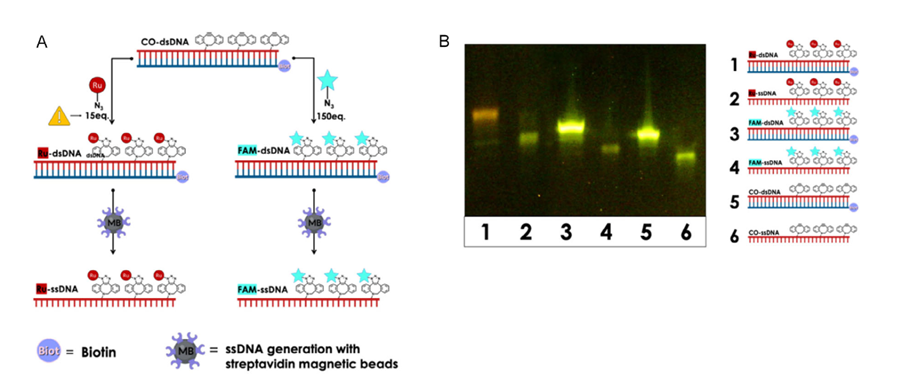
Aptamers, which are single-stranded nucleic acids that bind targets with high affinity and selectivity, are exploited in numerous practical applications, including drug delivery, therapeutics, and diagnostics due to their favorable properties. These biomolecules are mainly obtained by Systematic Evolution of Ligands by EXponential enrichment (SELEX) and related combinatorial methods of in vitro selection. The incorporation of chemical modifications can significantly enhance stability, binding, and specificity. However, incorporating bulky and hydrophobic modifications like ruthenium complexes into DNA libraries for selection (SELEX) presents several challenges. In a recent study, Niogret et al. described a novel method for synthesizing DNA oligonucleotides modified with ruthenium polypyridyl complexes via strain-promoted azide-alkyne cycloaddition (SPAAC), avoiding the limitations and cytotoxicity issues associated with copper-catalyzed click reactions.
The authors designed a method to incorporate dibenzocyclooctyne (DIBAC)-modified nucleotides into DNA via primer extension (PEX) reactions and PCR, evaluating different polymerases capable of tolerating the bulky modifications, with Deep Vent (exo-) appearing particularly suitable for this modified nucleotide. This generated double-stranded DNA (dsDNA) equipped with strained alkynes was then successfully conjugated via SPAAC reaction to the commercially available fluorescein azide (FAM-N3), and to two previously reported ruthenium complexes equipped with azide moieties ([Ru(bpy)2dppz-N3]2+ and [Ru(BPH)2bpy-N3]2+). These reactions were successful (digestion/LC-MS analysis were conducted to confirm efficient conjugation). However, at higher concentrations of ruthenium complexes, intercalation into DNA appeared to become predominant.
The modified dsDNA was then easily converted into the corresponding ssDNA by magnetoseparation on streptavidin-coated magnetic beads. This copper-free approach enables the preparation of highly modified aptamer libraries compatible with SELEX screening for functional nucleic acids bearing complex metal-based modification. This represents the first example of the modification of oligonucleotides with up to 15 ruthenium polypyridyl complexes by SPAAC reactions.
Read the Article! CHIMIA SPECIAL EDITION: A LANDMARK IN CHEMICAL BIOLOGY - INSIGHTS FROM THE EFMC-ISCB SYMPOSIUM 2025
The European Federation for Medicinal Chemistry and Chemical Biology (EFMC) and the Swiss Chemical Society (SCS) proudly presented the 2nd International Symposium on Chemical Biology (EFMC-ISCB) in January 2025, hosted in Basel, Switzerland. This landmark event served as a global nexus for leading scientists to exchange groundbreaking ideas and discoveries in chemical biology. With its focus on advancing the understanding of intricate biological processes through chemical, structural, and analytical methods, the symposium not only celebrated the progress of the field but also fostered collaboration among a diverse scientific community.
Building on the success of this milestone, CHIMIA has published a Special Edition dedicated to the symposium, offering readers a curated selection of some of the most impactful contributions presented during the event. This issue stands as a testament to the symposium’s role in shaping the future of chemical biology.
Highlights from the Symposium and Special CHIMIA Issue
The EFMC-ISCB Symposium 2025 delivered a stimulating program that spanned diverse topics, from molecular mechanisms to therapeutic breakthroughs. The collegial atmosphere, enriched by the active engagement of speakers, poster presenters, and attendees, underscored the vibrant spirit of the chemical biology community.
The CHIMIA Special Edition, titled Advances in Chemical Biology: Insights from EFMC-ISCB 2025, captures the symposium’s essence by featuring a collection of insightful reviews and research articles. These contributions exemplify the breadth, depth, and innovation at the heart of chemical biology today.
Featured Contributions
Key highlights in the Special Edition include:
- Synthetic Nucleic Acids: M. Rabar, A. Zenz, and S. Kath-Schorr (University of Cologne) explore synthetic nucleic acids with expanded genetic alphabets for site-specific labeling and other applications.
- Nanopore Sequencing: A. Fleming and C. Burrows (University of Utah) present cutting-edge methods to analyze DNA lesions and G-quadruplex folding.
- Fluorescent Light-Up Aptamers (FLAPs): R. Micura, A. Lusser, and colleagues (University of Innsbruck) advance RNA research with innovative FLAP technologies.
- Protein Arginylation: Z. Lin (Rutgers University) and B.A. Garcia (Washington University) provide insights into the regulatory roles of post-translational modifications in protein stability.
- Epigenetic Regulation: Bonnici, Schofield, and Kawamura (Newcastle University and University of Oxford) reveal mechanistic flexibility in Jumonji C histone demethylases.
- Activity-Based Profiling: Janssen and van der Stelt (Leiden University) develop a gel-based assay for serine hydrolase inhibitor screening.
- Small-Molecule Modulators: Y. Liu and P. Wu (MPI Dortmund) uncover structural insights into IRE1α, a key stress sensor.
- Targeted Protein Degradation: M. Serafini and R. Moreira (University of Lisbon) introduce AKT-targeting PROTACs for selective oncology applications.
- Fluorescent Probes: L. Mach and M. Nazare (Leibniz-Forschungsinstitut, Berlin) design novel fluorescent probes to investigate the cannabinoid receptor type 1.
These articles showcase the innovative methodologies and transformative applications that define modern chemical biology, from fundamental discoveries to therapeutic strategies.
Access the Special Edition
The CHIMIA Special Edition is now available online, offering a comprehensive view of the outstanding research presented at the symposium. This collection is an invaluable resource for anyone seeking to stay at the forefront of chemical biology.
Link to special edition: https://www.chimia.ch/chimia/issue/view/2026_03
Acknowledgment
We extend our deepest gratitude to the authors, reviewers, and symposium participants who contributed to this landmark event and the resulting CHIMIA Special Edition. Their dedication to advancing chemical biology continues to inspire and propel the field toward new horizons. MEET CHRISTINA SCHINDLER, MERCK HEALTHCARE KGAA, GERMANY
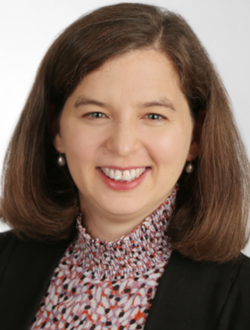
In this edition, our MedChemBioConversations is with Christina Schindler from Merck, Germany.
Get to know her better by reading the interview below:
How did you get interested in Computational Chemistry?
My fascination with computer simulations to study complex biological systems and predict molecular behaviour began during my studies in Physics at the University of Heidelberg through introductory courses on biophysics and through research internships. In addition, an internship in the molecular modelling group for crop science research at BASF, just before I completed my Diploma, introduced me to computational chemistry and its application to herbicide design.
Where did you have your postdoc position?
I completed my postdoctoral research in the Computational Chemistry and Biology group at Merck Healthcare KGaA, where I focused on evaluating and applying alchemical free energy calculations in drug discovery projects. This position served as a perfect bridge between my educational background as a physicist and my desire to enter pharmaceutical research, allowing me to learn about drug discovery and compound design.
Where are you currently working and what is your current position?
I am currently the Head of Computational Drug Design at Merck Healthcare KGaA, leading a team of three computational chemists who support early-stage drug discovery projects. Additionally, I act as project lead for early-stage small molecule inhibitor and degrader projects, and I also contribute as computational chemistry expert in project teams.
What do you like best about your work?
I truly enjoy the diverse range of responsibilities my role encompasses. As a people manager of highly skilled experts, I believe it’s essential to stay closely connected to their work to provide the best support possible.
How would you describe yourself as a team lead?
I strive to be supportive and approachable, to create an environment where team members feel comfortable sharing their ideas and challenges. Coaching my team and helping them develop new skills while growing beyond their current responsibilities is one of the most rewarding aspects of my role. In our dynamic environment, I also find it crucial to provide clear direction while remaining flexible and adaptable to changing circumstances.
Which of your papers are you most proud of and why?
I am very proud of my paper "Large-scale prospective assessment of alchemical binding free energy calculations in active drug discovery projects," which summarizes my Postdoc work. The paper provides a comprehensive prospective evaluation of free energy calculations applied in active drug discovery projects at Merck KGaA and the results also helped to establish the approach internally. Furthermore, the public data sets provided in this study have been taken up by other researchers in the computational chemistry community and are now parts of larger benchmarks. I particularly enjoyed leveraging my previous benchmarking experience for protein-protein docking from my Ph.D. project to contribute to this new field.
Which scientist do you admire the most and why?
I admire Ada Yonath for her remarkable energy and determination in pursuing goals that many deemed impossible at the time. Her curiosity and excitement for exploration throughout her life make her a great role model for any scientist.
Which field of medicinal chemistry do you consider the most promising for the future?
While I may be biased, I firmly believe that the integration of artificial intelligence (AI) into medicinal chemistry has already led to significant advancements, with even more breakthroughs on the horizon. The rapid improvements in deep learning algorithms and their impact on various prediction tasks are extremely promising. One area that particularly excites me is the potential to combine AI and computational design with innovative therapeutic modalities, such as targeted protein degraders and mixed modalities like antibody-drug conjugates, to accelerate the development of these complex molecules. AWARDEES OF THE 2026 YSN-YMCC TRAVEL GRANTS
We proudly announce the names of the awardees of the 2026 YMCC-YSN Grant to attend EFMC|ACSMEDI Medicinal Chemistry Frontiers.
- Kenneth Lopez-Perez, University of Florida, United States
- Jerret Holdaway, University of Minnesota, United States
|
|
|
|
|
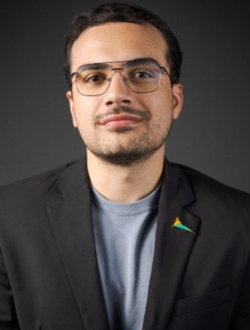
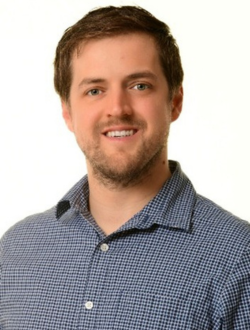
Kenneth Lopez-Perez is a final-year Ph.D. candidate at the University of Florida in the Miranda-Quintana lab. He is originally from Costa Rica, where he earned his bachelor's degree in chemistry. He began his cheminformatics research there, working on QSPR using machine learning.
At the University of Florida, his work has focused on developing efficient cheminformatics software for clustering, with an emphasis on analyzing ultra-large molecular libraries. His research supports applications such as diversity selection, virtual screening, library comparison, test/train set splitting for machine learning, and the analysis of DNA-encoded libraries. He has also contributed to the development of efficient, diversity-aware reward functions for generative reinforcement learning models.
He is a MolSSI Fellow, a CAS Future Leader, and a D. E. Shaw Doctoral Fellow. He has also received multiple American Chemical Society awards, including recognition from the COMP (Division of Computers in Chemistry), MEDI (Division of Medicinal Chemistry), and PRIDE (ACS Scholars Program), highlighting his research excellence, leadership, and contributions to the scientific community.
|
|
|
|
|
Jerrett Holdaway is a PhD candidate in Medicinal Chemistry at the University of Minnesota, where he joined the laboratory of Dr. Gunda I. Georg in 2021. His research focuses on the design and development of bioavailable heterobifunctional targeted protein degraders against TSSK1/2 as a strategy for non-hormonal male contraception. His work integrates organic synthesis and chemical biology approaches to advance targeted protein degradation in reproductive health. In addition to synthetic chemistry, Jerrett has experience in computational and screening methodologies, including computer-aided drug design and DNA-encoded library technologies. His interdisciplinary approach aims to address key challenges in drug discovery, particularly in improving the pharmacological properties and selectivity of novel therapeutic modalities.
|
SHOWCASING THE INSTITUTE OF CHEMISTRY OF IRELAND YOUNG CHEMISTS’ NETWORK (ICI-YCN)
The ICI Young Chemists’ Network is the young division of the Institute of Chemistry of Ireland and represents the interests of all early-career chemists and postgraduate scholars across the island of Ireland. The network was formed in 2021 with the aim of promoting engagement and collaboration amongst early-stage researchers in Ireland through the organisation of various conferences and networking events. In addition, the ICI-YCN actively supports its members by providing a platform to promote upcoming positions and opportunities available in Ireland across various fields of chemistry.
Activities organised within the ICI-YCN have included:
‘How To Survive Your PhD Viva’ Panel Session: Last year, the ICI-YCN hosted a panel discussion with the inclusion of recent PhD graduates, post-doctoral researchers and academic staff members, with the aim of sharing accounts of their own viva experiences both as students and examiners. This highly engaging session also featured a Q&A component for PhD students to gain valuable insights, encouragement, and advice on how to effectively prepare for their own academic assessment.
‘Young Chemists for Change (YCFC): Advancing Equity in Chemistry’: In 2024, the ICI-YCN hosted the first YCFC conference with the aims of raising awareness within the chemistry community in Ireland around the topic of equality, diversity and inclusion (EDI). The event was structured to create a safe environment for chemists in Ireland to come together and share their research outcomes with a special focus on EDI-based subjects. This interactive event included renowned plenary speakers from Ireland and the UK, with insightful discussions exploring:
- The promotion of open communication and understanding what it means to be your authentic self.
- The practise of active listening, self-awareness and valuing diverse perspectives to enrich collaboration and innovation.
- The value of a supportive working environment and behaviours that support EDI within chemistry communities.
- The enhancement of the neurodiverse student experience in higher education and the cultivation of a more inclusive and accessible learning infrastructure.
‘Ceimic as Gaeilge 2024 - Imeacht Seachtain na Gaeilge’: Being the first event of its kind, the ICI-YCN hosted ‘Ceimic as Gaeilge’ as an event during Seachtain na Gaeilge as a unique opportunity for chemists across the island of Ireland to present their research findings through the Irish language. With the participation of eight oral presenters, this event successfully showcased the feasibility of presenting both diverse and technical areas of chemical research through the Irish language, as well as the increased demand for this accessibility across other scientific fields.
‘Where I Went With Science’ Seminar Series: First established in 2022, the ICI-YCN have also hosted numerous online seminars engaging with guest speakers from both industry and academia. By sharing insights into the speakers’ professional journeys, the seminars aim to illustrate the overall diversity of career paths a degree in Chemistry can offer.
To learn more about the work of the ICI-YCN, please visit our website and/or social media pages (LinkedIn, Instagram, X). SPOTLIGHT ON IRELAND!
Activity-Based Probes (ABPs) are invaluable chemical tools used to selectively capture the active form of an enzyme in a mechanism-based manner by covalently capturing an active site residue. This article by Cataldi et al. presents the first synthesis of a novel peptidic ABP incorporating a vinyl methyl ether (VME)-bearing unnatural amino acid, which was shown to be compatible with numerous solid phase peptide synthesis (SPPS) coupling iterations. Through fine-tuning of the electrophilic VME warhead within the ABP structure, optimal reactivity and selectivity towards a deubiquitinating enzyme target, OTUB1, was achieved.
The biological evaluation of VME-bearing ABPs demonstrated robust labelling of a recombinant OTUB1 target, with a high degree of selectivity for the catalytic cysteine residues in its active site even when in the presence of additional thiol-containing proteins. Moreover, these novel probes demonstrated effective labelling of wild type OTUB1 in Human Colorectal Tumour 116 cell lysate, showcasing their potential as reliable warheads for interrogating deubiquitinating enzymes in complex biological environments. Moreover, when compared with native controls consisting of peptide ABPs that did not bear a VME side chain, increased labelling was observed following visualisation by gel electrophoresis and antibiotin Western blot. This high specificity of VME-bearing ABPs was further shown through a competition assay with HA-Ub-PA, an established ABP for deubiquitinating enzymes, which showed a significantly diminished intensity when incubated in the presence of a VME-bearing ABP. Through this assay, the authors were successful in showcasing the competitive binding of their novel ABP for the active site of OTUB1 by blocking HA-Ub-PA binding. In addition, this behaviour was not observed in native peptide sequence controls, demonstrating that the highly electrophilic VME warhead was crucial for competitive ABP activity.
Overall, this article excellently portrays the applicability and versatility of peptidic activity-based probes to systematically survey the reactivity and selectivity of cysteine-containing enzyme targets. Furthermore, the author’s synthetic approach in employing interchangeable unnatural amino acids as building blocks with diverse warheads within simple peptide scaffolds allows for rational substrate mimicking alongside the rapid and scalable assembly of a diverse library of peptidic ABPs, with simplified purification and downstream applications.
These findings offer an exciting gateway towards future proteomic studies aimed at mapping OTUB1 activity and interactions, opening up new avenues in identifying important biomarkers and developing targeted therapies for ubiquitin signalling pathways.
To find out more: https://doi.org/10.1021/acschembio.5c00771
#MEDCHEMCASES - SEMINAR BY THE DIVISION OF MEDICINAL CHEMISTRY OF THE GERMAN CHEMICAL SOCIETY (GDCH)
The MedChem Division of the German Chemical Society (GDCh) would like to invite you to the next #MedChemCASES online seminar which will be held on April 23 by Dr Timo Heinrich (Merck).
The topic of the webinar will be “Investigation of TEAD transcription factor inhibitors from different perspectives.”
Register for free here.
#GDCh (MedChem Division), #NextGenMedChem.
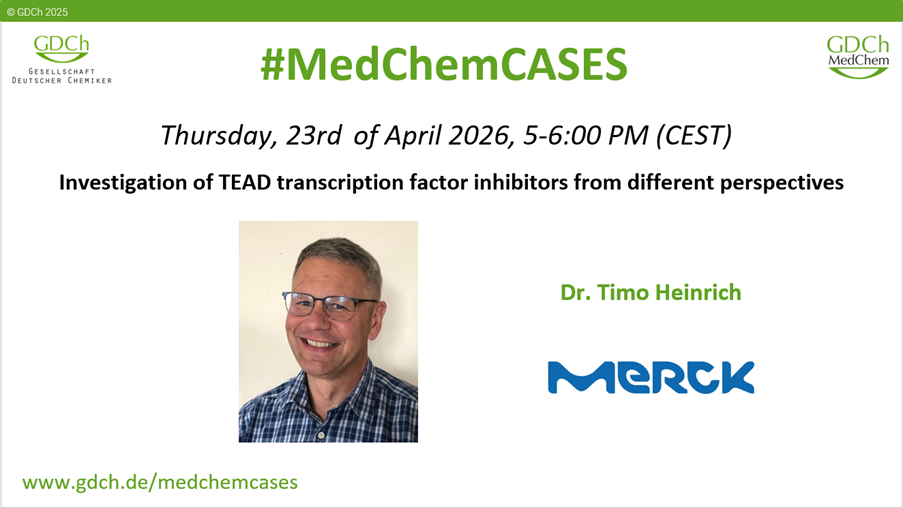
A cell-based screening approach identified an azaindole-based hit, optimized to the pan-TEAD inhibitor MSC-2723, which demonstrated monotherapy effects in vivo. Structure-derived scaffold modifications led to the lactam-based TEAD1,2,4 inhibitor MSC-9643, which exhibited convincing synergism with an approved drug in vivo. Scaffold tuning resulted in the brain-penetrant inhibitor MSC-4070. Proton/deuterium exchange experiments with a fragment derived TEAD1 selective inhibitor revealed how TEAD P-site binding compounds interfere with the formation of an active YAP/TAZ-TEAD transcription complex. Together with MD simulations a working hypothesis is developed how TEAD selectivity impacts the benefit/risk ratio. NEWS FROM THE BIOLOGICAL AND MEDICINAL CHEMISTRY SECTOR (BMCS) OF THE ROYAL SOCIETY OF CHEMISTRY (RSC)
The BMCS is happy to announce several upcoming events:
37th BMCS Spring Symposium on Medicinal Chemistry
Thursday 23 April 2026, The Fielder Centre, Hatfield, UK
Website: https://www.rscbmcs.org/events/hatfield26/
BMCS
Registration is open!
Synopsis: Known colloquially as the “Hatfield MedChem” meeting, this is a highly successful, long-standing, one-day meeting that runs annually. The scientific program will comprise presentations showcasing medicinal chemistry case studies from tools to candidates, across a range of modalities, therapeutic areas and target classes, as well as covering more general topics at the forefront of drug discovery. The meeting aims to be informal and interactive, and is ideal for all those working in medicinal chemistry and drug discovery more widely.
BMCS Hot Topics: Peptides in Drug Discovery
Wednesday 06 May 13.00-17.00 UK time, virtual
BMCS
Registration is open!
Website: https://www.rscbmcs.org/events/hottopicspeptides26/
Synopsis: The BMCS Hot Topics online meetings are intended to highlight breaking areas of research in fields of science relevant to drug discovery. They will run as stand-alone half-day virtual events, 2-3 times per year. The programme will be targeted towards researchers working who would like to enhance their understanding of these nascent or developing fields.
Peptides are a key modality for modulating biological pathways with the potential to enable mechanisms inaccessible to traditional small molecules. This meeting will showcase advances in peptide discovery and development, from cyclic and stapled scaffolds to strategies for achieving oral bioavailability. Talks will span discovery and optimisation technologies alongside chemistry strategies for stability, permeability, and delivery, with case studies charting progress from peptide leads to clinical candidates.
BMCS 6th Synthesis in Drug Discovery and Development
Monday 18 – Tuesday 19May 2026, virtual
BMCS
Registration is open!
Website: https://www.rscbmcs.org/events/sddd26/
Synopsis: Synthesis is at the heart of drug discovery and development. The industry has increasingly demanded higher quality clinical candidates and has sought to exploit less druggable biological targets. Densely functionalised small molecules with a high degree of synthetic complexity are often the result of these demands. Successful programmes therefore require the application of innovative synthesis in all stages of discovery and development. The medicinal chemist’s toolbox is also enhanced by the introduction of novel bioisosteres, often made available only through the application of new synthetic methods. This symposium aims to celebrate the crucial role of synthesis in the success of drug discovery and development.
5th SCI/RSC-BMCS Symposium on Anti-Infectives Drug Discovery
Monday 01 – Tuesday 02 June 2026, Francis Crick Institute, London, UK
SCI/BMCS
Registration and abstract submission open!
Website: https://www.rscbmcs.org/events/antiinfectives/
Synopsis: With the ever-growing prevalence of drug-resistant pathogens, it has never been more important that we refresh the drug pipeline with new antimicrobials that act on new targets or exhibit novel modes of action. The rise of antimicrobial resistance and recent COVID pandemic serve to highlight the importance of developing effective treatments for infection, and is helping to drive a resurgence in anti-infectives drug discovery and the development of innovative technologies and approaches for combating infection through more effective detection and diagnosis methods.
7th RSC-BMCS/DMDG New Perspectives in DMPK
Wednesday 10 June 2026, Burlington House, London, UK
BMCS/DMDG
Registration and abstract submission open!
Website: https://www.rscbmcs.org/events/dmpk26/
Synopsis: Novel small-molecule-based therapeutic approaches represent a key component of the discovery landscape. The emergence of molecular glues, PROTACs, bicyclic peptides, and other novel chemistries often bring with them new challenges for drug discovery scientists; synthetic difficulty, beyond rule-of-five physicochemical properties, and complexity in the link between exposure and response, may complicate ADME characterisation and accurate human dose prediction, particularly for drugs aimed at oral administration. This meeting will provide a forum for the exchange of ideas between principal members of the DMPK research community on how we can rise to these challenges. Keynote talks from thought leaders will provide wider perspectives on how DMPK can contribute to the delivery of medicines to patients more quickly and efficiently. There will be a balanced mix of oral and poster presentations, and networking opportunities throughout.
9th Artificial Intelligence in Chemistry Symposium
Wednesday 02 – Friday 04 September 2026, Churchill College, Cambridge, UK
RSC-CICAG/BMCS
Registration and abstract submission open!
Website: https://www.rscbmcs.org/events/aichem9/
Synopsis: Artificial intelligence is increasingly revolutionizing chemistry. We are witnessing the impact of new methods and practical applications in many diverse areas of chemistry. Following on the successes of eight annual “Artificial Intelligence in Chemistry” meetings starting in 2018, we are pleased to announce that the Chemical Information & Computer Applications Group (CICAG) and Biological & Medicinal Chemistry Sector (BMCS) of the Royal Society of Chemistry are once again organizing a conference to present the latest advances in AI and machine learning in chemistry. The meeting will be held over two and half days and will combine aspects of artificial intelligence and deep machine learning methods to applications in chemistry. The programme will include a mixture of keynote talks, panel discussions, oral presentations, flash presentations, posters and opportunities for open debate, networking and discussion.
This year’s meeting will again feature the popular “Introduction to AI in Chemistry” workshop on Day 1, including an introduction to Python and Jupyter notebooks.
10th RSC-BMCS Fragment-based Drug Discovery Meeting
Monday 14 – Wednesday 16 September 2026, Churchill College, Cambridge, UK
BMCS
Registration and abstract submission open!
Website: https://www.rscbmcs.org/events/fragmentsx/
Synopsis: The aim of the 10th RSC-BMCS Fragment-based Drug Discovery meeting will be to continue the focus on case studies in Fragment-based Drug Discovery that have delivered compounds to late stage medicinal chemistry, preclinical or clinical programmes. The Fragment series was started in 2007 and continues with this theme in having over three-quarters of the presentations focused on case studies. This will be complemented by technology progress in high concentration, NMR, SPR and X-ray screening.
10th RSC-BMCS/SCI Symposium on GPCRs in Medicinal Chemistry
Wednesday 30 September – Friday 02 October, 2026, Evotec Campus, Verona, Italy
BMCS/SCI
Abstract submission is open!
Website: https://www.rscbmcs.org/events/gpcrs26/
Synopsis: The key role of G protein-coupled receptors (GPCRs) in human disease underpins their importance to modern medicine. We are pleased to hold this 10th meeting in the series on GPCR drug discovery, which combines cutting edge medicinal chemistry with innovative structural biology and novel drug design approaches.
ELRIG Drug Discovery 2026
Wednesday 14 – Thursday 15 October 2026, Excel London, UK
BMCS/RSC Medicinal Chemistry/ELRIG
A date for your diary!
Website: https://elrig.org/portfolio/drug-discovery-2026/
Synopsis: RSC-BMCS is once again collaborating with RSC Medicinal Chemistry and ELRIG to present a chemistry-focused track at ELRIG Drug Discovery, Europe’s leading drug discovery and life sciences conference.
RSC-BMCS/SCI Targeting Protein Degradation 5
Wednesday 21 – Thursday 22 October 2026, The Fielder Centre, Hatfield, UK
BMCS/SCI
Registration and abstract submission open!
Website: https://www.rscbmcs.org/events/protdeg26/
Synopsis: One of the most exciting new therapeutic modalities to emerge in the 21st century has been Targeted Protein Degradation (TPD). In 2021, the Targeted Protein Degradation Market size was valued at USD 400.5 million and is poised to grow from USD 507.0 million in 2022 to USD 3,300.0 million by 2030 and so has attracted interest from academia, non-profit organisations through to CROs and small and large pharma. This multidisciplinary meeting aims to present the latest developments in the design, biology, chemistry and ADME in TPD within the general themes of PROTACS (including non-oncology targets), Molecular Glues and non-PROTAC degraders. We aim to highlight the newest in enabling technologies such as computational techniques, Direct to Biology, HT synthesis (click, photochemistry etc) and structural biology methods.
Recent Trends in Medicinal Chemistry and Enabling Technologies
Wednesday 02 December 2026, Burlington House, London, UK
BMCS/SMR
A date for your diary!
Website: https://www.smr.org.uk/Meetings/
Synopsis: BMCS and the Society for Medicines Research will again jointly host this popular biennial symposium covering medicinal chemistry, chemistry-based drug discovery-enabling technologies
and chemical biology, reflecting the breadth of work taking place in academia and industry to advance our understanding and to underpin medicines research. INTERESTED IN SPONSORING THIS NEWSLETTER?
Take the opportunity of our monthly newsletter “MedChemBioWatch” to promote your company or deliver a message to our audience of more than 10,000 members.
Each issue can be sponsored exclusively with two banners, a short company description, and a weblink. Reach out to administration@efmc.info if you want to receive more information.
|
|
|
|
|
|
EFMC ORGANISED EVENTS
April 19-22, 2026
Oegstgeest, The Netherlands
EFMC Short Course on Medicinal Chemistry
May 7, 2026
Online Event
8th EFMC Tandem Talk
June 22-25, 2026
Dublin, Ireland
EFMC-ACSMEDI MedChem Frontiers 2026
September 6-10, 2026
Basel, Switzerland
EFMC Medicinal Chemsitry 2026
September 10-11, 2026
Basel, Switzerland
EFMC Young Scientists 2026
EFMC SPONSORED EVENTS
April 20-21, 2026
Hinxton, United Kingdom
TARGET TO PATIENT 2026 (T2P26)
May 6, 2026
Paris, France
Perspectives in Medicinal Chemistry and Chemical Biology 60 years of SCT
June 2-4, 2026
Kuopio, Finland
Computational and Medicinal Chemistry by the Lake 2026
July 1-3, 2026
Paris, France
60th edition of the International Conference on Medicinal Chemistry (RICT 2026)
July 10, 2026
Valencia, Spain
XII Symposium of Medicinal Chemistry Young Researchers 2026 (YRS2026)
September 13-16, 2026
Messina, Italy
30th National Meeting on Medicinal Chemistry (NMMC30) and 17th Young Medicinal Chemists Symposium “Nuove Prospettive in Chimica Farmaceutica” (NPCF17)
September 29, 2026
Online Event
The 6th Virtual ChemBioTalks
September 27 - October 1, 2026
Perugia, Italy
25th European Symposium on Quantitative Structure-Activity Relationship (EuroQSAR)
|
|