| Monthly Newsletter |
October 2024 |
|
|
|
2025 EFMC-WuXi AppTec AWARD FOR EXCELLENCE IN CHEMICAL BIOLOGY
The EFMC is proud to announce the name of the winner of the 2025 EFMC-WuXi AppTec Award for Excellence in Chemical Biology.
Congratulations to Prof. Peng Chen (Peking University, China).
For his groundbreaking contributions to the field of live-cell chemistry. Through his innovative research, Peng has pushed the boundaries of scientific understanding, offering new perspectives and methods to explore the intricacies of biology in real time. His pioneering work on developing bioorthogonal reactions has profoundly transformed the way scientists study protein activities and interactions within living systems. These advanced tools have enabled more precise investigations and have opened new avenues in chemical biology, driving both fundamental and applied research. Peng Chen's achievements have been recognized globally, earning him numerous prestigious awards. He stands at the forefront of chemical biology, shaping its future and inspiring the next generation of scientists. Today, we recognize his remarkable dedication and brilliance, which continue to advance the frontiers of science. He is truly deserving of recognition as one of the foremost chemical biologists of our time
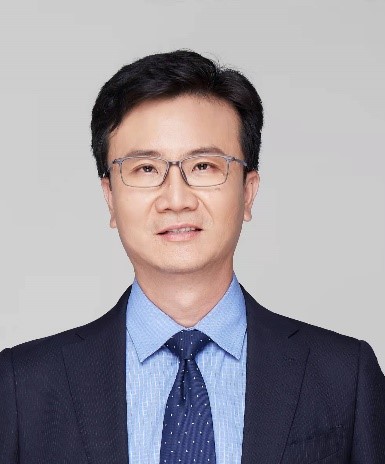
Dr. Peng Chen is the Boya Distinguished Professor and Chair of Chemical Biology at Peking University, and the New Cornerstone Investigator from the New Cornerstone Foundation. Before joining Peking University in 2009, he obtained Ph.D with Prof. Chuan He at The University of Chicago and finished postdoctoral training with Prof. Peter Schultz at The Scripps Research Institute. He is currently also the Director of Chemical Biology Division at Chinese Chemical Society and the Executive Editor at ACS Chemical Biology.
His group is interested in developing and applying new chemistry tools to investigate protein-based interactions and activities in living systems. He has been leading the development of bioorthogonal cleavage reactions, which has enabled the gain-of-function study of proteins as well as other biomolecules in living cells and animals. This has created a new direction in bioorthogonal chemistry with broad utilities in life sciences and medicine. THE NEWSLETTER IS KINDLY SPONSORED BY WuXi AppTec.
WuXi Chemistry: CRDMO services from discovery to commercial for all synthetic molecular modalities, including small molecules, oligonucleotides, peptides and complex conjugates.
WuXi Biology: A full spectrum of biology services and solutions from target discovery to candidate selection and into the clinic.
LITERATURE SPOTLIGHT
The “literature spotlight” section of the newsletter will bring you a summary of recently published research in a concise and accessible way. Multiple thematics from different journals will be highlighted thanks to the valuable contribution of members of the EFMC working groups.
This contribution will focus on the recently published article on “Triazolylboronic acids: a novel scaffold to target FLT3 in AML” by Introvigne, M.L. et al., published in ChemMedChem.
The management of acute myeloid leukaemia (AML) poses a significant challenge to existing therapies due to the emergence of drug resistance. While genetic mutation of FMS-like tyrosine kinase-3 (FLT3) is a focal point for AML treatment, the application of FLT3-targeting medications in AML patients has yielded unsatisfactory clinical results thus far. This article delves into the exploration of α-triazolylboronic acids as a novel scaffold for targeting FLT3 in AML. The authors conducted a comprehensive screening of a range of structurally diverse boronic acids to identify potential candidates for FLT3 inhibition. Through their investigations, they discovered that α-triazolylboronic acids demonstrated significant promise as a scaffold for inhibiting FLT3. The most promising inhibitor, 4g, possesses an IC50 in the low micromolar range in MV-4-11 cells (IC50 = 2.7 μM) and in the nanomolar range in MOLM-14 cells (IC50 = 0.68 μM). It is worth noting that α-triazolylboronic acids can be easily synthesized by click chemistry from readily available precursors, with few purification issues. Overall the findings suggest that α-triazolylboronic acids hold promise as a scaffold for the development of potent and selective FLT3 inhibitors, which could significantly contribute to the advancement of AML treatment.
Read the article! EFMC-YSN PUBLISHING ACADEMY, POWERED BY CHEMISTRY EUROPE
The publishing academy is an intensive workshop covering topics on writing, publishing, and general communication that will be helpful for early-career researchers. The academy will be hosted and coordinated by the EFMC’s Young Scientists Network with workshops run by professional editors from Chemistry Europe / Wiley-VCH.
The workshop is open to all members of the EFMC-YSN but restricted to applicants having a draft of a journal manuscript ready upon submission of the application. The draft does not need to be complete or even close to its final form, but should have the following at minimum: Title, abstract, introduction and references, some results/discussion covering at least one figure, conclusion section (can be predictions or placeholder “ideal” conclusions).
The next Seminar & Interactive Workshop will take place on November 7, 2024.
- AM session - 9:30-12nn
- PM session - 14:00-17:00
Registration & Manuscript deadline is October 31, 2024.
GET TO KNOW WIKTOR SZYMANSKI (UNIVERSITY OF GRONINGEN, THE NETHERLANDS)
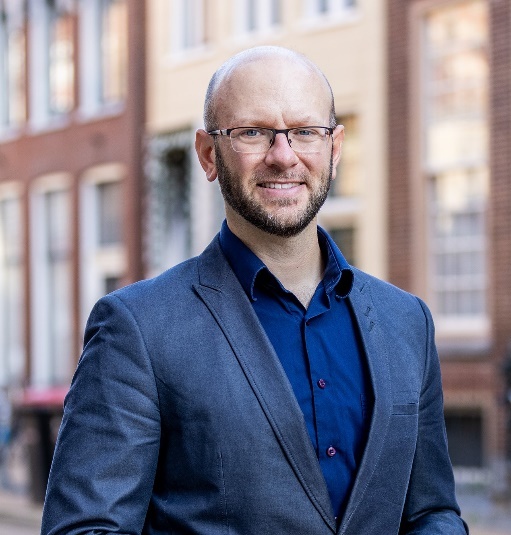
Our MedChemBioConversations is with Wiktor Szymanski (University Medical Center Groningen / University of Groningen, The Netherlands).
Get to know him better by reading the interview below:
How did you get interested in Medicinal Chemistry?
I got into Medicinal Chemistry through a happy accident. I wanted to study biotechnology, hoping to learn genetic engineering. I chose Biotechnology program at Warsaw University of Technology, which was given by three faculties. I chose the Faculty of Chemistry, and soon learned two things: firstly, that the Biotechnology program at my new university is in fact organic synthesis and pharmaceutical biocatalysis program with a fancy name. Secondly, that synthetic organic chemistry, especially when applied to designing bioactive molecules, is much more appealing to me than genetic engineering!
I obtained my MSc in 2004 and my PhD in 2008, at Warsaw University of Technology (Poland), under the supervision of Prof. Ryszard Ostaszewski. For my postdoc position, I joined the University of Groningen, first in biocatalysis and then in synthetic organic chemistry, working with Prof. Dick Janssen and Prof. Ben Feringa. And after working at Stratingh Institute for Chemistry, followed by the Medical Imaging Center of University Medical Center Groningen, I am about to come back to Medicinal Chemistry, taking a professorship at the Groningen Research Institute for Pharmacy in July 2023.
What are your current research interests?
My group is developing the methods and applications of photopharmacology – a relatively new field that designs, synthesises, and evaluates drugs whose activity can be controlled with light. Light is a fascinating control element: it is very clean (photons can “do” chemistry – break, form and isomerise chemical bonds – but they do not contaminate the object you study), it can be delivered with unprecedented precision in space (even sub-cellular) and time, and – what is becoming increasingly important for us – it comes in different colours!
What do you like best about your work?
That it combines basic concepts (photochemistry, quantum chemistry) with clinical applications. When I explain our work to students of the Medical Faculty, we go through the whole Jablonski diagram and look at the clinical applications of the very fundamental processes in it – and students really enjoy it.
How would you describe yourself as a supervisor?
I truly hope to come across as someone that the students can trust. The world of academia is not always a simple and easy place to work and having a supervisor you can completely rely on (and I was always lucky to work with such people) is very important.
What do you consider your greatest achievement in your scientific career?
Helping to set up photopharmacology as a vibrant field of research that it is today – and the community around it, with organising the First International Symposium on Photopharmacology, which has since then travelled around the world.
Which of your papers are you most proud of and why?
Molecular photoswitches are the main tools of photopharmacology. When embedded into the structures of bioactive compounds, they render them light-responsive, giving us the possibility to switch a drug “on” and “off”. In this respect, I am very proud of our discoveries of new photoswitches that expand our arsenal of tools for photopharmacology (Hoorens et al., Nat. Commun. 2019, 10, 2390, and Crespi et al, Angew. Chem. Int. Ed. 2021, 60, 25290-25295).
Another aspect of our work that really excites me is building the synergy between medical imaging and photopharmacology, which we do for example by using photochemistry in the design or responsive MRI contrast agents (Reeßing et al., ChemComm 2019, 55, 10784-10787).
What are the features of a successful PhD student or postdoc?
Curiosity, excitement for research and resilience when things do not go as planned. Those are all pretty obvious but having trust in the “final product” (the PhD thesis), even when the almost inevitable 3rd year crisis hits, can bring you through it and leave you with a lot to be proud of. Another skill, which is very useful but equally difficult to develop, is the ability to separate one’s ego from one’s research – as those often stand in each other’s way.
What would you like to ask from other medicinal chemists?
Open mindedness when dealing with such outlandish ideas as those that we and others bring to the field. Out light-responsive drugs may not immediately tick all the MedChem boxes, but with your help and expertise, we can bring them towards the clinical use.
What is the most embarrassing thing you have done in the lab while doing experiments, e.g. explosions?
Once, I was purifying a simple compound using flash column chromatography. I collected around 20 fractions with an eluent of low polarity, checked them by TLC, and saw nothing. I increased the polarity, another 20 fractions, again nothing. In a desperate move, I decided to stop compromising and went for a heavy-duty eluent (10% methanol in DCM). Still nothing. And then, next to the column, I noticed the flask with crude product that I forgot to load on the column. I wish this was a made-up story.
What are your recommendations for a book, podcast, website, blog, YouTube channel or film?
I always find the prose of Neil Stephenson very inspiring. Whatever he writes about (and his topics range from philosophy to space travel, from energy transition to online gaming and from eco-terrorism to cryptology), he clearly does his research in a most thorough way. A good starting point for Stephenson’s work is his 1999 novel “Cryptonomicon” or his 1992 novel “Snow Crash” – which served as the inspiration for the Google Earth project.
Which scientist do you admire the most and why?
With all the analytical methods available to us in laboratories currently (and with the number of problems that we still cannot solve using them), I am always dumbfounded by the fact that Emil Fischer elucidated the relative stereochemistry of hexoses without using chromatography, HPLC, NMR spectroscopy, or mass spectrometry.
Which field of medicinal chemistry do you consider the most promising for the future?
I see a lot of potential in approaches that would (directly or indirectly) enable imaging-guided pharmacotherapy. The role of medical imaging in surgery is at this point increasing, with intraoperative optical imaging allowing unprecedented surgical precision. In medicinal chemistry and pharmacology, we should aim for the same effect. This would require locally (and, if possible, reversibly) activatable drugs that can be locally switched on using any suitable external stimulus. Thinking further, the use of the imaging signal itself (such as photons of different energies) for drug activation would bring real theranostics to pharmacotherapy. SHOWCASING THE SRC JEUNES
The SRC Jeunes is the youth section of the mother organisation Société Royal de Chimie (SRC), an organisation that regroups different scientifical actors from the academic and industrial fields in the French-speaking region of Belgium around the subject of chemistry. The committee members of the mother SRC are mainly professor from French-speaking universities in Belgium and people from the chemical industry in Wallonia and Brussels. Their main goal is to create a strong bond between the academic and the private sector and to inform their members about important news on both sides.
In that larger organisation, the SRC Jeunes comprises all the nearly or just graduated researchers. Just as the mother organisation, SRC Jeunes has its own committee composed of 10-15 PhD students, coming from the 5 French-speaking universities. This committee ensures its good functioning via three main roles among others, a president (or 2 co-presidents, Max Larry and Thibault Massenet), a secretary (Pierre Mathieu), and a treasurer (Thomas Robert). The latter’s main mission is the organisation networking events (such as conferences and visits of industries), sharing job offers with their members, and serving as an important link between PhD students coming to the end of their academic career and eager to start their professional career.
Every year, the SRC Jeunes organises its annual One Day Meeting, taking place at one of the 5 partner universities (ULB, ULiège, UNamur, UMons, UCLouvain). This conference allows its young members (mainly PhD students, but not only) to present their work to their pears, attend speeches from various experts in specific domains related to the subject of the day (last year, it was focused on sustainability at the conference held at UNamur), network and discover what other laboratories in Wallonia-Brussels work on. This event is completely free for the participants and include food and drinks throughout the day. The costs are covered by local industrial and academic sponsors.
For a few years now, the SRC Jeunes has had a communication officer who is responsible for keeping the community of young PhD students informed about news, job opportunities, and upcoming events via social media, mainly Facebook and LinkedIn. Furthermore, at the end of the year, the SRC Jeunes will launch its own website. More news is coming soon. In the meantime, don’t hesitate to visit one of our social media pages: Facebook & LinkedIn. SPOTLIGHT ON ITALY!
The Young Group of the Medicinal Chemistry Division of the Italian Chemical Society is pleased to highlight a paper titled “Targeting Relevant HDACs to Support the Survival of Cone Photoreceptors in Inherited Retinal Diseases: Identification of a Potent Pharmacological Tool with In Vitro and In Vivo Efficacy” recently featured in the cover art of the Journal of Medicinal Chemistry.
This research, conducted by the team of Prof. Campiani at the University of Siena, culminated in the discovery of the promising HDAC inhibitor 5d (repistat), which demonstrated significant therapeutic potential for retinal dysfunction.
Inherited retinal diseases, which include retinitis pigmentosa, are a family of genetic disorders characterized by gradual rod-cone degeneration and vision loss, with no effective pharmacological treatments available. In this context, Carullo et al. developed new HDAC inhibitors typified by a tetrahydro-γ-carboline scaffold, which exhibited high potency against HDAC6 with balanced physicochemical properties suitable for in vivo studies. Notably, repistat (IC50 HDAC6 = 6.32 nM) significantly increased the levels of acetylated α-tubulin compared to histone H3 in ARPE-19 and 661W cells and promoted vision rescue in the atp6v0e1–/– zebrafish model of photoreceptor dysfunction.
Following confirmation of the absence of toxicity in various models, 5d was tested in vivo using zebrafish and rd10 mice. A single intravitreal injection of repistat in the rd10 mouse model of retinitis pigmentosa supported the morphological and functional preservation of cone cells while maintaining the integrity of the retinal pigment epithelium array.
Notably, 5d administration in rd10 mice enhanced GR gene expression, suggesting a potential mechanism that may improve photoreceptor response to corticosteroids. This study provides compelling evidence of 5d’s ability to delay secondary cone degeneration, contributing to extended visual function in retinal diseases.
Read the Article! DO NOT MISS THE MEDCHEMBIOCONVERSATIONS PODCAST!
In this first edition of the MedChemBioConversations Podcast, Sean McKenna from the Young Scientists Network speaks with Stephan Hacker, Assistant Professor at Leiden Institute of Chemistry, Leiden University.
Listen to the Podcast here!
As scientists, we all love an experiment, and this podcast is very much an experiment. If you like the format or have feedback to share, reach out to us at ysn@efmc.info. #MEDCHEMCASES - SEMINAR BY THE DIVISION OF MEDICINAL CHEMISTRY OF THE GERMAN CHEMICAL SOCIETY (GDCH)
The MedChem Division of the German Chemical Society (GDCh) would like to invite you to the next #MedChemCASES online seminar which will be held on October 22 by Dr Aileen Frost.
The topic of the webinar will be “Translational Applications of Targeted Protein Degradation: Successes and Learnings along the MAPK Pathway”.
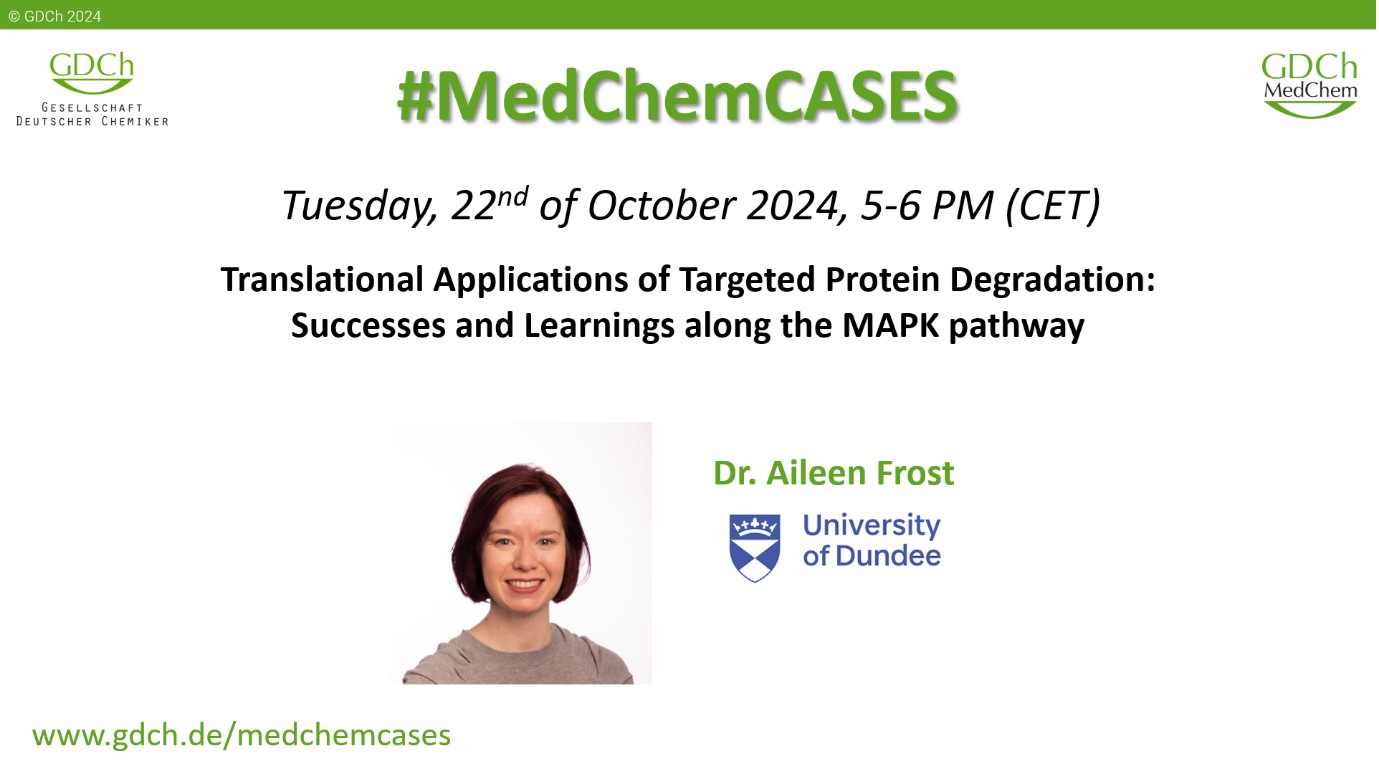
The MAPK pathway is critical in regulating aspects of cell cycle control, including proliferation, differentiation and survival. Pathway mutations can lead to unregulated cellular division and are therefore responsible for driving many blood and solid cancers in humans. Over 30% of all human cancers are driven by RAS genes, of which 85% are the result of KRAS mutations. This has led to KRAS being considered a “holy grail” of cancer therapy. Targeting KRAS via an inhibition approach has, however, been challenging, as it lacks traditionally druggable small molecule binding sites. Although advances have been made in recent years, the majority of disclosed therapies to date target single KRAS alleles. In this seminar, we will discuss two PROTAC projects targeting proteins within the MAPK pathway, culminating in the discovery of a pan-KRAS bifunctional degrader, ACBI3, and sharing several important learnings we made along the way.
Register for free here.
#GDCh (MedChem Division), #NextGenMedChem. NEWS FROM THE BIOLOGICAL AND MEDICINAL CHEMISTRY SECTOR (BMCS) OF THE ROYAL SOCIETY OF CHEMISTRY (RSC)
The BMCS is happy to announce several upcoming events.
RSC-BMCS/SCI Targeting Protein Degradation 4
15th-16th October 2024, Cranfield Management Development Centre, Cranfield University, Milton Keynes, UK
Registration is still open!
Website: https://www.rscbmcs.org/events/protdeg24/
Synopsis: One of the most exciting new therapeutic modalities to emerge in the 21st century has been Targeted Protein Degradation (TPD). In 2021, the Targeted Protein Degradation Market size was valued at USD 400.5 million and is poised to grow from USD 507.0 million in 2022 to USD 3,300.0 million by 2030 and so has attracted interest from academia, non-profit organisations through to CROs and small and large pharma. This multidisciplinary meeting aims to present the latest developments in the design, biology, chemistry and ADME in TPD within the general themes of PROTACS (including non-oncology targets), Molecular Glues and non-PROTAC degraders. We aim to highlight the newest in enabling technologies such as computational techniques, Direct to Biology, HT synthesis (click, photochemistry etc) and structural biology methods.
BMCS Postgraduate Symposium XVIII
12th December 2024, University of Oxford, Oxford, UK
Registration and abstract submissions are now open!
Website: https://www.rscbmcs.org/events/psxviii/
Synopsis: This face-to-face meeting will comprise oral and poster presentations from PhD students and post-doctoral workers researching in biological or medicinal chemistry. In addition, the agenda will feature invited keynote speakers from industry and academia.
Meetings in 2025:
BMCS 2nd Conformational Design in Drug Discovery 2025
3rd March 2025, AstraZeneca, Cambridge, UK
Registration and abstract submission now open!
Website: https://www.rscbmcs.org/events/conformationaldesign25/
Synopsis: Conformational Design plays a key role in the medicinal chemistry of small molecule drug candidates. The emergence of generative AI models to assist molecular design and free-energy-perturbation techniques critically depend on accurate prediction of 3D ligand conformations. Here we bring together cutting-edge computational methods with experimental free ligand NMR solution conformations and protein-ligand X-ray and CryoEM structures to craft the medicines of tomorrow. We will discuss ligand rigidification and physicochemical optimisation strategies for protein-protein interaction inhibitors, PROTACs, molecular glues, antibody-drug-conjugate payloads and other new modalities. This RSC-BMCS event aims at building a community that shares conformational design strategies, technologies, and successful case studies. It will complement other rational drug design events and promote more successful research into future medicines.
8th RSC-BMCS / SCI Symposium on Ion Channels as Therapeutic Targets
31st March – 1st April 2025, Hinxton Hall Conference Centre, Cambridge, UK
Registration and abstract submissions are now open!
Website: https://www.rscbmcs.org/events/ionchannels25/
Synopsis: Ion channels are important targets for therapeutic intervention due to their extensive roles in human physiology and the pathophysiology of disease. Many successful drugs targeting this gene family have been discovered for diseases such as hypertension, epilepsy, and neuropathic pain. This symposium, the 8th in an ongoing series, will showcase the most recent advances to aid the design of new ion channel therapeutics and promote interaction between scientists with a shared interest in the field of ion channel drug discovery.
36th BMCS Spring Symposium on Medicinal Chemistry
24th April 2025, Fielder Centre, Hatfield, UK
Website: https://www.rscbmcs.org/events/hatfields25/
Synopsis: Known colloquially as the “Hatfield MedChem” meeting, this is a highly successful, long-standing, one-day meeting that runs annually. The scientific program will comprise presentations showcasing medicinal chemistry case studies from tools to candidates, across a range of modalities, therapeutic areas and target classes, as well as covering more general topics at the forefront of drug discovery. The meeting aims to be informal and interactive, and is ideal for all those working in medicinal chemistry and drug discovery more widely.
11th RSC/SCI Symposium on Kinase Inhibitor Design
12th-13th May 2025, Royal College of Physicians of Edinburgh, Edinburgh, UK
Registration and abstract submissions are now open!
Website: https://www.rscbmcs.org/events/kinase2025/
Synopsis: With more than 100 clinically approved small molecules, the field of kinase modulation continues to attract significant investment from the drug discovery community and attention from academia. The 11th RCS-BMCS/SCI symposium on kinase inhibitor design will encompass plenary lectures on emerging topics and case studies of ongoing programmes as well as successful past programmes. A range of topics including brain penetrant and inhaled kinase inhibitors, kinase chemical probes, allosteric modulators, targeted kinase protein degradation and kinase inhibition for non-oncology indications will be covered, along with views and perspectives on the future of kinase modulator research.
4th RSC Anglo-Nordic Medicinal Chemistry Symposium
10th-13th June 2025, Hotel Comwell Borupgaard, Snekkersten, Denmark
Registration and abstract submissions are now open!
Website: https://www.rscbmcs.org/events/anmc-4/
Synopsis: This 2.5 day symposium is the fourth in the very successful series of biannual meetings started in 2017 containing high quality international speakers from industry and academia on topics of Medicinal Chemistry and related enabling technologies. Organised by the BMCS of the RSC, together with Nordic affiliates, the meeting promises to be an exciting and invigorating gathering packed with fantastic opportunities to disseminate knowledge and expand networks.
RSC-BMCS / SCI 23rd Medicinal Chemistry Symposium
14th-17th September 2025, Churchill College, Cambridge, UK
Website: https://www.rscbmcs.org/events/cammedchem25/
Synopsis: The organisers invite you to the 23rd SCI-RSC Medicinal Chemistry symposium, Europe’s premier biennial Medicinal Chemistry event, focusing on first disclosures and new strategies in Medicinal Chemistry. |
|
|
|
|
|
|
|
|
|
|