|
|
WELCOME BY THE EFMC PRESIDENT
Welcome to our first MedChemBioWatch for 2025!
As EFMC President, I would like to take this opportunity to wish you a happy, healthy, and prosperous New Year. I eagerly anticipate another year in this role, marked by ongoing and new collaborations, successful events and webinars, and countless initiatives tailored to both Early Career Researchers and established scientists.
Our achievements are made possible thanks to the dedication and commitment of our members and collaborators, both past and present, for which I am deeply grateful. I look forward to the opportunities ahead to connect, collaborate, and reach new goals in our shared mission to advance medicinal chemistry and chemical biology.
Luc Van Hijfte
EFMC President
EFMC PRIZES – DEADLINE IS APPROACHING!
The deadline to apply for some of the 2025 EFMC Prizes is quickly approaching!
The various prizes will be presented at the X EFMC International Symposium on Advances in Synthetic and Medicinal Chemistry (EFMC-ASMC 2025) or the EFMC Young Medicinal Chemist’s Symposium (EFMC-YMCS 2025), scheduled to be held in Porto, Portugal on August 31-September 4, 2025, and September 4-5, 2025, respectively.
Nomination deadline is January 31, 2025!
Prizes
To acknowledge and recognise outstanding young medicinal chemists and chemical biologists (≤ 12 years after PhD) working in European industry and academia.
To recognise excellence and merits at the early stage. LITERATURE SPOTLIGHT
The “literature spotlight” section of the newsletter will bring you a summary of recently published research in a concise and accessible format. Multiple thematics from different journals will be highlighted thanks to the valuable contributions from members of the EFMC working groups.
This contribution focuses on the recently published article "Synthesis and Preliminary Evaluation of Tanshinone Mimic Conjugates for Mechanism of Action Studies" by Giulia Assoni et al., published in ChemBioChem.
In their study of ligands for the RNA-binding protein Human Antigen R (HuR), the authors describe the exploration of a class of orthoquinone indole-sulfonamide mimics of the natural product Tanshinone. Previous NMR and MD simulations indicated that these small molecules bind to a region of HuR between two RNA recognition motifs, leading to the disruption of HuR-RNA complexation. Since HuR acts as a regulator of post-transcriptional gene expression, further study of these ligands is considered valuable to support the development of small-molecule modulators for inflammation and cancer pathologies.
The authors began by designing several Tanshinone mimics (TMs), each containing either biotin as an affinity handle or aryl diazirine for photoactivatable labelling. Achieving these target compounds involved the preparation of an azide-functionalized intermediate in a six-step synthesis, after which the remaining groups were conjugated to the TM scaffold using CuAAC or SPAAC.
With an array of tool compounds in hand, the authors performed an initial study in MDA-MB-231 breast cancer cells, where differing cytotoxic effects were observed at TM concentrations up to 100 µM. Next, the authors evaluated the RNA-binding activity of HuR in the presence of the prepared compounds using an RNA Electrophoretic Mobility Shift Assay (REMSA). They found that biotin-functionalized TMs retained the ability to disrupt the HuR-RNA complex, while aryl diazirine-functionalized TMs effectively lost all activity. Finally, the authors demonstrated that both of the prepared biotinylated TMs could be used to enrich purified HuR in a simple pull-down experiment.
Taken together, this work describes the preparation and initial assessment of several valuable tool compounds for the study of a therapeutically relevant RNA-binding protein target.
Read the article. EFMC-ISCB 2025 | ONE DAY PASSES AVAILABLE!
Registrations are still open for the 2nd edition of the EFMC International Symposium on Chemical Biology (EFMC-ISCB 2025) organised jointly by the EFMC and the Swiss Chemical Society, Division for Medicinal Chemistry & Chemical Biology (DMCCB).
A strong line-up of speakers showcasing the most recent advances in the field of chemical biology, more than 100 posters submitted by peers and early-career researchers, a commercial exhibition featuring 15+ companies and an interesting social programme are to be expected!
One-day access is possible for industry affiliated researchers.
More information and registration at www.efmc-iscb.org.
MEET ROMAN SAROTT, MAX PLANCK INSTITUTE FOR MEDICAL RESEARCH, GERMANY
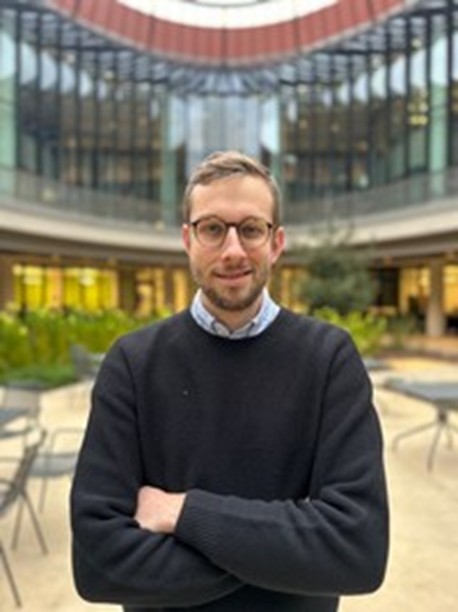
In this edition, our MedChemBioConversations is with Roman Sarott who just started a position at the Max Planck Institute for Medical Research, Germany
Get to know him better by reading the interview below:
How did you get interested in Chemical Biology?
I have always been fascinated by the power of chemistry in probing and modulating fundamental biological processes relevant to human health and disease. In my doctoral studies at ETH Zürich in the group of Prof. Erick Carreira, I utilised strategies rooted in total synthesis to develop chemical probes for cannabinoid receptors. I obtained my Ph.D. in 2021 and joined the lab of Prof. Nathanael Gray at Stanford University as an SNSF Postdoctoral Fellow the same year. My postdoctoral work focused on the development of chemical inducers of proximity for context-specific gene modulation.
Where are you currently working and what is your current position?
I am currently transitioning from my Postdoc at Stanford to starting my own research group as a Max Planck Group Leader in Heidelberg, Germany, in January 2025. My lab will develop chemical inducers of proximity that induce new protein-protein interactions to rewire disease drivers and activate therapeutic signalling. A particular focus will be on molecules that re-localise epigenetic activators and transcription factors on chromatin to enable selective activation of therapeutic genes without the need for genetically altered cells and organisms. I envision these molecules to serve both as chemical probes and as a basis for new therapeutic strategies.
If you are intrigued to work in chemically induced proximity, appreciate interdisciplinarity and collaboration, and have a background in chemistry, pharmacology, or molecular biology, please get in touch!
What do you consider your greatest achievement in your scientific career?
At Stanford I have been fortunate to work on bivalent molecules that turn kinase inhibitors into context-specific activators of cell death in cancer cells. Looking back, this was a risky endeavor that paid off and now opens many avenues in which kinase inhibitors may be used for new therapeutic applications beyond that of target-centric silencing of catalytic activity.
What is further gratifying about this work is that it inspired the foundation of a new biotechnology startup company in the San Francisco Bay Area, which aims to develop the molecules into new precision therapies for cancer patients.
What are the features of a successful PhD student or postdoc?
“Never talk yourself out of an experiment” is advice from my PhD advisor that keeps on paying dividends. Science is experimental, and I have seen it time and time again that fortune does indeed favour the bold. Another one, slightly adapted from my Postdoc mentor in California that applies to any career stage: “A good academic always has a good tan and a plan B.”
What are your recommendations for a book, podcast, website, blog, YouTube channel or film?
The weekly ‘Targeted Protein Degradation’ webinar, hosted by the Dana-Farber Cancer Institute, is a must watch for all aficionados of chemically induced proximity. In terms of books, I have greatly enjoyed reading ‘The Emperor of all Maladies’ by Siddhartha Mukherjee and ‘Dark Remedy’ on the history of the notorious thalidomide.
Which field of medicinal chemistry do you consider the most promising for the future?
I think what makes the present so exciting for us working in chemical biology and medicinal chemistry is that, by working across disciplines and the academic-industry boundary, we are rapidly discovering new chemical strategies for addressing previously challenging drug targets and diseases.
Admitting a little bias, I trust chemically induced proximity will continue to be playing a leading role in “drugging the undruggable”. The developments in targeted protein degradation, the most established instance of induced proximity, serve as an impressive example – and yet it barely scratches the surface of what is possible! YSN-YMCC GRANTS TO ATTEND THE MEDCHEMFRONTIERS 2025
To support the participation of young researchers to attend transatlantic conferences and offer them the opportunity to broaden their network outside of the national-regional scope, the EFMC Young Scientists Network (YSN) and the ACSMEDI Young Medicinal Chemists Committee (YMCC) decided to fund a joint grant.
Up to two grants of €1,500 each, covering economy flights and up to 3 nights of accommodation, will be awarded to facilitate attendance to the ACSMEDI|EFMC Medicinal Chemistry Frontiers conference. The prizes will be allocated to European researchers when the conference takes place in the United States, and to American researchers when the conference takes place in Europe. In addition, the awardees will be guaranteed a poster presentation and will be offered the opportunity to apply for an oral communication.
The upcoming edition of the ACSMEDI|EFMC Medicinal Chemistry Frontiers will take place in Chicago, United States, on May 12-15, 2025.
As the next relevant conference is taking place in the United States, this round of grants is only eligible to European researchers.
More information at www.efmc.info/ysn-ymcc-prize.
Deadline for nominations is February 10, 2025.
SHOWCASING THE ITALIAN MEDICINAL CHEMISTRY DIVISION AND YOUTH INITIATIVES SUPPORTING THE NEXT GENERATION OF MEDICINAL CHEMISTS
The Division of Medicinal Chemistry of the Società Chimica Italiana (SCI) is deeply committed to fostering the growth and development of young researchers in the field. Our under-35 community includes 381 young individuals, comprising of graduates, PhD students, and early-career researchers.
Have a look at their activities:
In January 2024, the Division launched its first Mentorship Program, designed to support advanced PhD students, postdoctoral fellows, and early-career researchers transitioning from academia to industry. This program offers personalised guidance from experienced industry mentors, helping participants develop essential technical, organisational, and career management skills. Regular virtual meetings throughout 2024 provided ongoing support and networking opportunities, fostering meaningful connections among mentees and mentors. With 15 senior researchers from industry actively involved, this initiative has been widely praised for its positive impact on both mentors and mentees.
Awards Recognising Excellence in Medicinal Chemistry
The Division of Medicinal Chemistry also annually honours outstanding young researchers through two prestigious awards:
- The Division of Medicinal Chemistry Prize recognises young scientists from academia, CNR, industries, and non-academic research institutions for their significant contributions to Medicinal Chemistry, including published research or patent applications.
- The Best PhD Thesis Award celebrates the exceptional work of recent PhD graduates in all areas of Medicinal Chemistry, from drug design to synthetic, extractive, and biotechnological preparations, as well as analysis, formulation, technology, and quality control of medicines and health products.
Key Events for Young Researchers
- The Merck Young Chemists' Symposium (MYCS), held annually in Rimini each November, is a major event for young chemists, chemical engineers, and material scientists from Italy and Europe. This three-day event offers PhD students, postdocs, research fellows, and thesis students the opportunity to present their research to an international audience. With a strong representation of Medicinal Chemistry within the Società Chimica Italiana, MYCS is a must-attend event for young researchers in the field.
- The Autumn Meeting for Young Chemists in Biomedical Sciences (AMYC-BIOMED) celebrated its 5th edition in 2024, uniting young scientists under 40 engaged in biomedical sciences. This multidisciplinary conference, launched in 2020 at the University of Naples, brings together researchers from diverse fields, including Medicinal Chemistry, to promote collaboration and drive innovation.
Regional Activities Promoting Scientific Collaboration
The Società Chimica Italiana (SCI) is also organised into regional sections, each actively promoting events that foster scientific engagement and collaboration. Notable upcoming regional events include:
- La Chimica sotto l'Albero (Puglia section)
- SCICASI – The joint Calabria-Sicilia conference
- Next Generation Chemists 2024 – La Parola ai Giovani (Sardegna section)
These events reflect the vitality of SCI's regional sections and their commitment to advancing chemistry across Italy.
Upcoming Events in Medicinal Chemistry
The Division of Medicinal Chemistry is organising several exciting events in the coming months:
- National Medicinal Chemistry Meeting (NMMC 2025) – It will be held in Parma, alongside the 16th edition of the Young Medicinal Chemists’ Symposium (NPCF16), covering the latest advancements in medicinal chemistry and chemical biology.
- The 44th European School of Medicinal Chemistry (ESMEC 2025) – Organised by the Medicinal Chemistry Division of the Società Chimica Italiana with the support of EFMC, this EFMC Certified School, hosted at the University of Urbino Carlo Bo, is tailored for PhD students and young researchers from academia and industry. The programme includes thematic sessions on hot topics and innovative methodologies in medicinal chemistry.
- The Italian Flow Chemistry Symposium – This two-day event aims to unite Italian scientists working in flow chemistry, with a focus on organic synthesis, medicinal chemistry, biotechnology, process engineering, and drug discovery.
- Summer School on Pharmaceutical Analysis 2025 – This edition will focus on "New therapeutic approaches, new analytical challenges: nucleic acid- and cell-based therapies," addressing the analytical challenges related to DNA- and cell-based therapies.
- Workshop "Drug Discovery in Epigenetics" (December, Modena) – A key workshop on drug discovery and epigenetics, featuring a panel of leading experts.
These events provide excellent opportunities for researchers to present innovative work, exchange ideas, and advance the field of medicinal chemistry.
Stay tuned for more updates, and we look forward to your participation in these exciting initiatives! #MEDCHEMCASES - SEMINAR BY THE DIVISION OF MEDICINAL CHEMISTRY OF THE GERMAN CHEMICAL SOCIETY (GDCH)
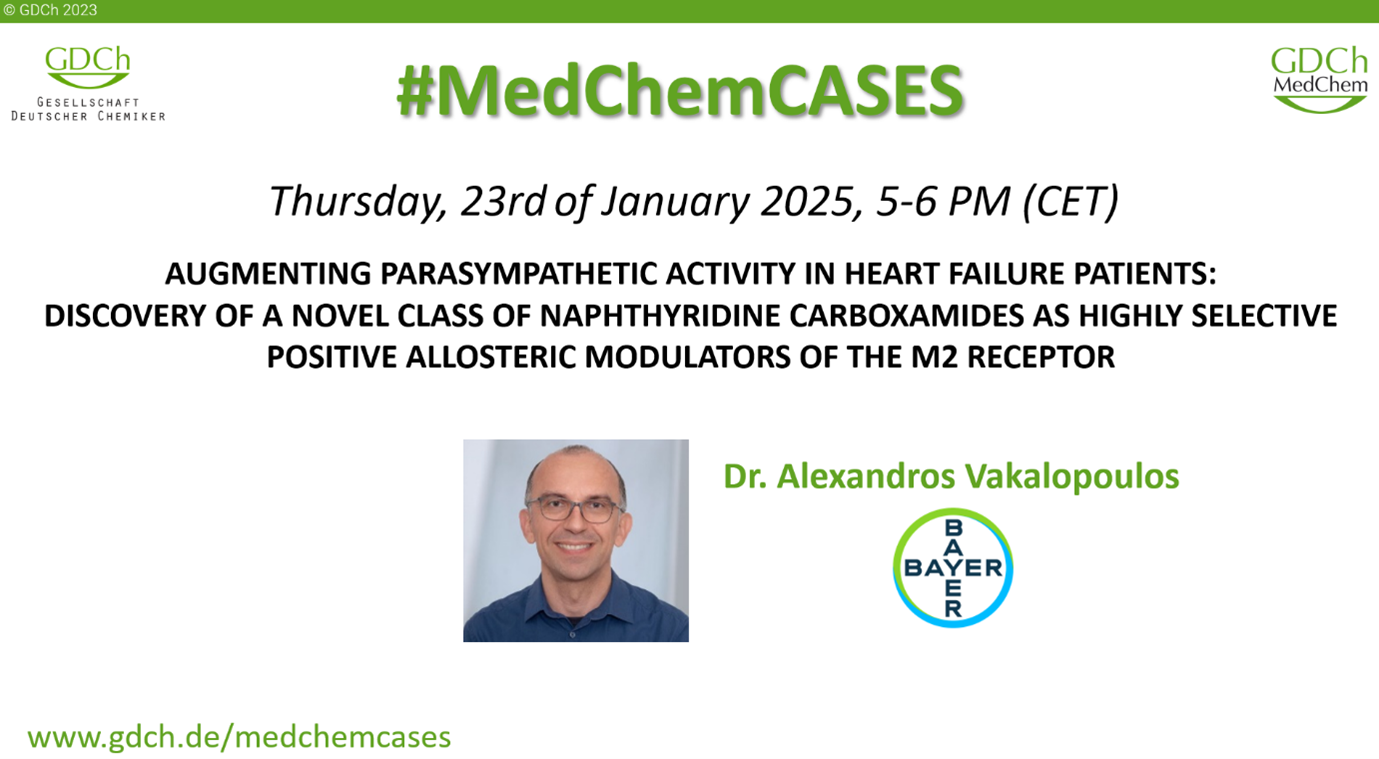
The MedChem Division of the German Chemical Society (GDCh) would like to invite you to the next #MedChemCASES online seminar which will be held on January 23 by Alexandros Vakalopoulos.
The topic of the webinar is “Augmenting Parasympathetic Activity in Heart Failure Patients: Discovery of a Novel Class of Naphthyridine Carboxamides as Highly Selective Positive Allosteric Modulators of The M2 Receptor”.
The talk describes the identification, optimisation work and preclinical characterisation of a highly selective, first in class positive allosteric modulator (PAM) of the muscarinic M2 acetylcholine receptor. The M2 receptor is mainly expressed within the heart and is the key component of the parasympathetic nervous system. Beta-blockers have been used successfully to target the sympathetic nervous system, however there is no drugs targeting the parasympathetic branch of the autonomic nervous system. Impaired parasympathetic tone has been associated with higher mortality in heart failure, independent of beta-blocker treatment. We describe the ultra-high-throughput screening (uHTS)-based discovery of a novel class of naphthyridine carboxamides as M2 PAMs. The extensive optimisation of the screening hit in terms of potency, permeation, metabolic stability and solubility ultimately led to the discovery of the clinical candidate BAY 2413555. The compound shows a very high selectivity towards all other muscarinic receptors and long-lasting pharmacological effects and is suitable for once-daily dosing. This modulator showed no clinically relevant safety findings in a first phase 1 study. With an excellent pharmacokinetic profile, BAY 2413555 could be an ideal treatment option for heart failure patients to increase parasympathetic tone and thus restore autonomic balance.
Register for free here.
#GDCh (MedChem Division), #NextGenMedChem. NEWS FROM THE SWISS CHEMICAL SOCIETY, DIVISION MEDICINAL CHEMISTRY AND CHEMICAL BIOLOGY (SCS-DMCCB)
The DMCCB Basel Symposium 2025, a one-day symposium, organised by the Swiss Chemical Society, Division Medicinal Chemistry and Chemical Biology, is dedicated to the theme «Strategies for Addressing Challenging Targets».
Join us on February 6, 2025, at the Biozentrum in Basel, where scientists from the fields of medicinal chemistry and chemical biology will meet to share the latest breakthroughs. From targeting protein-protein interactions to addressing the complexities of undruggable targets, this symposium promises a comprehensive overview of pioneering methods and techniques.
We kindly encourage registration by January 13 to assist with catering arrangements, though same-day registration will also be available. (Registration)
As the scientific community pushes the boundaries of drug discovery, certain biological targets remain notoriously difficult to tackle. Whether due to their structural complexity, dynamic nature, or elusive biochemical mechanisms, these challenging targets demand innovative approaches. The DMCCB Basel Symposium 2025 will bring together leading experts to explore cutting-edge strategies for overcoming these hurdles in drug discovery.
Confirmed Speakers and Talks:
- Sascha Hoogendoorn: Target elucidation through target degradation: discovery of BET bromodomains as the target of Hedgehog Pathway Inhibitor-1
- Nicolas Thomä: Transcription Factors in Cancer (and how to get rid of them)
- Stefanie Flohr: Identification and Optimization of Novel GPR126 Positive Allosteric Modulators Targeting a highly lipophilic cavity at the TM/lipid bilayer interface
- Pablo Rivera-Fuentes: Chemigenetic tools for imaging and sensing
- Joseph Rogers: De novo biopharmaceuticals for challenging targets
- Zuzanna Kozicka: Molecular glue degraders of cyclin K
- Lukas Schneider: BODIPY-Based Photothermal Agents for Cancer Treatment
This event is designed to engage professionals and students alike, offering a platform for fruitful discussions and collaboration. Don’t miss this unique chance to be part of the conversation shaping the future of drug discovery and challenging target therapeutics.
One poster submission will be selected for an oral presentation at the Symposium! NEWS FROM THE BIOLOGICAL AND MEDICINAL CHEMISTRY SECTOR (BMCS) OF THE ROYAL SOCIETY OF CHEMISTRY (RSC)
The BMCS is pleased to announce upcoming events.
BMCS 2nd Conformational Design in Drug Discovery 2025
March 3, 2025, AstraZeneca, Cambridge, UK
Registration and abstract submission now open!
Website: https://www.rscbmcs.org/events/conformationaldesign25/
Synopsis: Conformational Design plays a key role in the medicinal chemistry of small molecule drug candidates. The emergence of generative AI models to assist molecular design and free-energy-perturbation techniques critically depend on accurate prediction of 3D ligand conformations. Here we bring together cutting-edge computational methods with experimental free ligand NMR solution conformations and protein-ligand X-ray and CryoEM structures to craft the medicines of tomorrow. We will discuss ligand rigidification and physicochemical optimisation strategies for protein-protein interaction inhibitors, PROTACs, molecular glues, antibody-drug-conjugate payloads and other new modalities. This RSC-BMCS event aims at building a community that shares conformational design strategies, technologies, and successful case studies. It will complement other rational drug design events and promote more successful research into future medicines.
9th RSC-BMCS Symposium on Mastering Medicinal Chemistry
March 14, 2025, Burlington House, London, UK
Registration now open!
Website: 9th Mastering Med Chem - RSC BMCS
Synopsis: Mastering Medicinal Chemistry IX is the latest in an ongoing series of conferences intended to provide expert advice and guidance to new practitioners in the field of drug discovery. It has been said that “there are two types of drug discovery programmes: those that hit serious problems and those that are going to hit serious problems”. Anticipating and preparing for such problems thus accelerates the delivery of new medicines: this event will feature presentations from experienced ‘drug-hunters’ in both industry and academia, who will talk about the challenges faced in modern drug discovery, and will share best practice common to all successful medicinal chemists.
8th RSC-BMCS / SCI Symposium on Ion Channels as Therapeutic Targets
March 31 – April 1, 2025, Hinxton Hall Conference Centre, Cambridge, UK
Registration and abstract submissions now open! Poster Abstract deadline: Friday, December 20th!!
Website: https://www.rscbmcs.org/events/ionchannels25/
Synopsis: Ion channels are important targets for therapeutic intervention due to their extensive roles in human physiology and the pathophysiology of disease. Many successful drugs targeting this gene family have been discovered for diseases such as hypertension, epilepsy, and neuropathic pain. This symposium, the 8th in an ongoing series, will showcase the most recent advances to aid the design of new ion channel therapeutics and promote interaction between scientists with a shared interest in the field of ion channel drug discovery.
36th BMCS Spring Symposium on Medicinal Chemistry
April 24, 2025, Fielder Centre, Hatfield, UK
Registration now open!
Website: https://www.rscbmcs.org/events/hatfield25/
Synopsis: Colloquially known as the “Hatfield MedChem” meeting, this highly successful, long-standing, one-day meeting is held annually. The scientific programme will include presentations showcasing medicinal chemistry case studies, from tools to candidates, across a range of modalities, therapeutic areas and target classes. It will also cover more general topics at the forefront of drug discovery. The meeting aims to be informal and interactive and is ideal for anyone working in medicinal chemistry and drug discovery more widely.
11th RSC/SCI Symposium on Kinase Inhibitor Design
May 12 – 13, 2025, Royal College of Physicians of Edinburgh, Edinburgh, UK
Registration and abstract submissions now open!
Website: https://www.rscbmcs.org/events/kinase2025/
Synopsis: With more than 100 clinically approved small molecules, the field of kinase modulation continues to attract significant investment from the drug discovery community and attention from academia. The 11th RCS-BMCS/SCI symposium on kinase inhibitor design will encompass plenary lectures on emerging topics and case studies of ongoing programmes as well as successful past programmes. A range of topics, including brain penetrant and inhaled kinase inhibitors, kinase chemical probes, allosteric modulators, targeted kinase protein degradation and kinase inhibition for non-oncology indications will be covered, along with views and perspectives on the future of kinase modulator research.
BMCS 5th Synthesis in Drug Discovery and Development
June 3 – 4, 2025, Virtual
Abstract submission and registration now open!
Website: https://www.rscbmcs.org/events/sddd25/
Synopsis: Synthesis is at the heart of drug discovery and development. The industry has increasingly demanded higher quality clinical candidates and has sought to exploit less druggable biological targets. Densely functionalised small molecules with a high degree of synthetic complexity are often the result of these demands. Successful programmes therefore require the application of innovative synthesis in all stages of discovery and development. The medicinal chemist’s toolbox is also enhanced by the introduction of novel bioisosteres, often made available only through the application of new synthetic methods. This symposium aims to celebrate the crucial role of synthesis in the success of drug discovery and development.
4th RSC Anglo-Nordic Medicinal Chemistry Symposium
June 10 – 13, 2025, Hotel Comwell Borupgaard, Snekkersten, Denmark
Registration and abstract submissions now open!
Website: https://www.rscbmcs.org/events/anmc-4/
Synopsis: This 2.5 day symposium is the fourth in the very successful series of biannual meetings started in 2017 containing high quality international speakers from industry and academia on topics of Medicinal Chemistry and related enabling technologies. Organised by the Biological and Medicinal Chemistry Sector of the Royal Society of Chemistry, together with Nordic affiliates, the meeting promises to be an exciting and invigorating gathering packed with fantastic opportunities to disseminate knowledge and expand networks.
RSC-BMCS / SCI 23rd Medicinal Chemistry Symposium
September 14 – 17, 2025, Churchill College, Cambridge, UK
Registration opening soon!
Website: https://www.rscbmcs.org/events/cammedchem25/
Synopsis: The organisers invite you to the 23rd SCI-RSC Medicinal Chemistry symposium, Europe’s premier biennial Medicinal Chemistry event, focusing on first disclosures and new strategies in Medicinal Chemistry.
8th RSC-CICAG / RSC-BMCS Artificial Intelligence in Chemistry
September 22 – 24, 2025, Churchill College, Cambridge, UK
A date for your diary!
Website: https://www.rscbmcs.org/events/aichem8 /
Synopsis: Artificial Intelligence is experiencing a renaissance in the development of new methods and practical applications to ongoing challenges in Chemistry. Following the successes of six annual “Artificial Intelligence in Chemistry” meetings starting in 2018, we are pleased to announce that the Chemical Information & Computer Applications Group (CICAG) and Biological & Medicinal Chemistry Sector (BMCS) of the Royal Society of Chemistry are once again organising a conference to present the current advances in AI and machine learning in Chemistry. The meeting will be held over two and half days and combine aspects of artificial intelligence and deep machine learning methods to applications in chemistry. The programme will include a mixture of keynote talks, panel discussion, oral presentations, flash presentations, posters and opportunities for open debate, networking, and discussion. This year meeting will follow 2024 with two and half days and will include workshop on first day, please keep checking website for updates. |
|
|
|
|
|
EFMC ORGANISED EVENTS
January 29-31, 2025
Basel, Switzerland
2nd EFMC International Symposium on Chemical Biology (EFMC-ISCB 2025)
April 6-9, 2025
Oegstgeest (near Leiden), The Netherlands
19th EFMC Short Course on Medicinal Chemistry
May 12-15, 2025
Chicago, USA
ACSMEDI-EFMC Medicinal Chemistry Frontiers 2025
August 31 - September 4, 2025
Porto, Portugal
X EFMC International Symposium on Advances in Synthetic and Medicinal Chemistry (EFMC-ASMC 2025)
September 4-5, 2025
Porto, Portugal
12th EFMC Young Medicinal Chemists' Symposium
EFMC SPONSORED EVENTS
March 14, 2025
Burlington House, London, United Kingdom
9th RSC-BMCS Symposium on Mastering Medicinal Chemistry
31st March – 1st April 2025
Hinxton Hall, Wellcome Genome Campus, Cambridge, United Kingdom
8th RSC-BMCS / SCI Symposium on Ion Channels as Therapeutic Targets
April 3-5, 2025
University of Ioannina, Karolos Papoulias Conference, Greece
20th Hellenic Symposium on Medicinal Chemistry (HSMC-20)
JOB PORTAL
PhD Chemistry, Chemical Biology, Proteomics
Leiden University, THE NETHERLANDS
Read more
Post-Doc Researcher Medicinal Chemistry
Université de Tours, FRANCE
Read more
Junior research group leader
Institut Pasteur, FRANCE
Read more
|
|



