|
|
CELEBRATE EXCELLENCE: NOMINATE FOR THE EFMC AWARDS 2026
To acknowledge outstanding achievements in the field of Medicinal Chemistry and Chemical Biology, EFMC will confer three awards in 2026. The Awards will be presented during the EFMC International Symposium on Medicinal Chemistry (EFMC Medicinal Chemistry 2026), which will be held in Basel, Switzerland, on September 6-10, 2026.
All 3 awards consist of a diploma, € 7.500 and an invitation to give a headline presentation at EFMC Medicinal Chemistry 2026.
Nominations for these Awards consist of a nomination letter, a brief CV including a list of selected publications and two supporting letters. Self-nominations are also accepted. The nominations should be submitted to Dr Luc Van Hijfte, President of the EFMC, via the following link:
Deadline for submission: January 31st, 2026
The Award will be given for outstanding achievements in scientific research including contributions to the development of international organisational structures in Medicinal Chemistry and Chemical Biology.
To acknowledge and recognise outstanding research in the field of Medicinal Chemistry in its broadest sense by a young scientist. This Award has been established with the support of UCB Pharma.
To encourage innovation and investigation in technological development related to drug discovery, this Award, established with the support of the Prous Institute, will be given for the discovery, evaluation, or use of new technologies.
CHEMMEDCHEM, AN OFFICIAL JOURNAL OF EFMC
LITERATURE SPOTLIGHT
The “Literature Spotlight” section of the newsletter offers concise and accessible summaries of recently published research. It highlights a range of themes drawn from various journals, with this edition’s contribution provided by Dr Etienne J. Donckele (Monte Rosa Therapeutics, Switzerland)
This contribution focuses on the recently published article “Toward Anti-Herpesviral PROTACs: Assessing the Challenges for Targeted Protein Degradation on the Example of Kaposi’s Sarcoma-Associated Herpesvirus Latency-Associated Nuclear Antigen” by Berwanger et al. (ChemMedChem 2025, DOI: 10.1002/cmdc.202500758)
This study explores the potential of PROTACs (Proteolysis-Targeting Chimeras) as a strategy to target LANA, a critical viral protein responsible for maintaining Kaposi’s Sarcoma-Associated Herpesvirus (KSHV) latency. LANA plays a central role in tethering the viral genome, regulating viral and host gene expression, and promoting viral persistence, making it an attractive target for antiviral therapy.
The authors designed a series of PROTAC-like molecules that link a LANA-binding moiety to an E3 ubiquitin ligase recruiter via chemical linkers, aiming to induce targeted degradation of LANA through the ubiquitin-proteasome system.
In vitro studies demonstrated that some of these compounds could bind LANA and the E3 ligase and even form ternary complexes, indicating that the molecular design was biochemically viable. However, when tested in cells, none of the PROTACs successfully degraded LANA.
The primary limitation identified was poor cellular and nuclear uptake, preventing sufficient intracellular concentrations to trigger effective ubiquitination and proteasomal degradation.
This work highlights a critical challenge in developing antiviral PROTACs: beyond biochemical activity, intracellular delivery and subcellular localization are essential considerations. The study provides valuable insights, showing that while PROTACs can conceptually target previously “undruggable” viral proteins, achieving effective antiviral activity requires careful optimization of molecule design, pharmacokinetics, and strategies to overcome cellular barriers.
Overall, these findings suggest that targeted protein degradation could become a promising approach to disrupt viral latency, but success will depend on overcoming delivery and localization challenges to access latent viral reservoirs. EFMC PRIZES 2026 – YOUR NOMINATION MATTERS!
To acknowledge and recognise outstanding researchers (≤ 12 years after PhD) working in European industry and academia, the EFMC established the "EFMC Prize for a Young Medicinal Chemist or Chemical Biologist in Industry" and the "EFMC Prize for a Young Medicinal Chemist or Chemical Biologist in Academia".
These two prizes are given annually and consist of a diploma, 2.500€ and an invitation to give an oral communication at the EFMC International Symposium on Medicinal Chemistry (EFMC Medicinal Chemistry 2026), scheduled to be held in Basel, Switzerland from September 6-10 2026. Two additional nominees will also be identified and acknowledged as most meritorious runners-up.
Deadline for nominations is January 31st, 2026.
More information and nominations on www.efmc.info/prizes.
EFMC-YSN REVIEWER ACADEMY, POWERED BY CHEMISTRY EUROPE
The Reviewer Academy is a program hosted by EFMC’s Young Scientists Network (YSN) and conducted by professional editors of Chemistry Europe / Wiley-VCH to help train future referees. The academy aims to teach best practices in peer review, especially for early-career researchers.
Do not miss the next Live Workshop and Q/A Session on December 15th (17:00-18:00 CET)
More information on www.efmc.info/reviewer-academy.
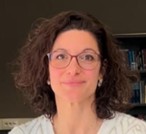
GET TO KNOW ANNE VALADE (UCB, BELGIUM)
In this edition, our MedChemBioConversations is with Anne Valade from UCB. Get to know her better by reading the interview below:
How did you get interested in Chemical Biology?
I began my research journey, during my master’s training, at the Institut Pasteur, in Paris, in the field of synthetic carbohydrate-based conjugate vaccines. I discovered the fascinating combination of organic chemistry and biology. This first experience deeply inspired me and motivated me to continue expanding my expertise in carbohydrate chemistry during my PhD thesis.
Where did you have your postdoc position?
University of Oxford – Organic Chemistry in the group of Prof. David Hodgson
Where are you currently working and what is your current position?
I work at UCB, in Braine l’Alleud (Belgium), as director in medicinal chemistry.
What are your current research interests?
Discovery of novel chemical entities to treat neurological disorders with a focus on epilepsy, neurodegenerative diseases, and neuroinflammation.
How would you explain what your research area is to non-scientists?
Our aim is to bring new drugs to treat patients suffering from severe neurological disorders.
What do you like best about your work?
I love the combination of exquisite science and team work to bring treatments to patients.
What kind of tasks does your work involve?
As project leader of therapeutic projects, I interact with experts from many disciplines involved in the drug discovery process. A key task is to coordinate activities across functions, making sure that the strategy is clear and activities are on track. Communication inside and outside the team is essential.
What kind of skills does your work require?
Good coordination, interpersonal relationship, team leadership, communication skills
How would you describe yourself as a supervisor?
I believe I’m a mix between democratic supervisor and coaching supervisor. The key is to adapt our leadership style to the level of experience and development need of each team member.
Are you currently looking for a new PhD student or a postdoc?
Not myself, but at department level, yes.
What do you consider your greatest achievement in your scientific career?
As the Associate Project Leader for the D1PAM project that led to the discovery of Glovadalen - an oral, brain-penetrant positive allosteric modulator of the dopamine D1 receptor currently in Phase 2 clinical trials. It was an incredible learning journey that enriched me both scientifically and as a leader.
Which of your papers are you most proud of and why?
‘Evaluation of 18F-UCB-H as a novel PET tracer for synaptic vesicle protein 2A in the brain’, Warnock et al., J. Nucl. Med., 2014, 8, 1336. UCB-H is widely used by many groups, as diagnostic tool to image synaptic density and in epilepsy research.
What are the features of a successful PhD student or postdoc?
In my mind what a PhD thesis brings you is a rigorous mindset and great resilience. PhD and postdocs are very tough and demanding experiences, but so rewarding, ultimately. The most important is the journey.
What advice would you give to someone who wants to know more about your field?
Use the many ‘materials’ that are available online (webinars, EFMC Best practices, …), readings and conferences/workshops. Be curious. Ask speakers if you have questions, connect… People are generally happy to help!
What would you like to ask from other medicinal chemists?
To keep an open mind and stay away from dogma.
Have you experienced any unfair situations during your scientific career? How would you advise scientists facing similar situations?
I have been very lucky and was supported in my development. It’s important to listen to your feelings and set your own limits. I recommend to regularly take the time to pause and reflect, to question yourself about your journey.
What is the most embarrassing thing you have done in the lab while doing experiments, e.g. explosions?
On my first day at work, I inadvertently pushed an open vial from my colleague (we were sharing a hood). The final product it was containing spilt onto the hood bench. Not a good way to start :-)
What are your recommendations for a book, podcast, website, blog, YouTube channel or film?
In addition to gaining scientific expertise, I recommend developing leadership and interpersonal skills. Those are essential to connect people together. TED talks offer high quality presentations on so many topics. More specifically I recommend reading books/watch videos from Simon Sinek.
Which scientist do you admire the most and why?
I admire all scientists who dedicate their life to better understand the world. It requires huge resilience and great humility, as this is never ending… and that’s the beauty of science. Learning is a journey where each discovery opens the door to deeper mysteries.
Which field of medicinal chemistry do you consider the most promising for the future?
Medicinal chemistry… digitally augmented!
What would you expect to be the next breakthrough in medicinal chemistry?
Medicinal chemistry… digitally augmented!
EFMC-YSN PHD PRIZE 2026, sponsored by Selvita – CALL FOR NOMINATIONS
In their aim to recognise excellence and accomplishment in postgraduate research, the EFMC-Young Scientist Network is proud to announce the 2026 edition of the "EFMC-YSN PhD Prize, sponsored by Selvita", to be awarded to a European PhD student (or up to two years post PhD) in medicinal chemistry or chemical biology.
The prize, kindly sponsored by Selvita, will consist of a diploma, 1.000€ and an invitation to deliver an oral communication at the EFMC Young Medicinal Chemists' Symposium (EFMC Young Scientists). The 2026 winner will also receive a free registration and a 500€ travel grant to attend both the EFMC Medicinal Chemistry 2026 and the EFMC Young Scientists which will take place in Basel, Switzerland on September 6-10 & September 10-11, 2026.
An additional nominee will also be identified and acknowledged as most meritorious runner-up and will receive a 500€ prize.
More information on EFMC-YSN PhD Prize, sponsored by Selvita.
LUNCH & LEARN: FIFTH AND FINAL EDITION!
The Lunch & Learn initiative returns to provide a valuable knowledge sharing resource for early-career scientists in medicinal chemistry and chemical biology.
Each Lunch & Learn session will take the form of a short lunchtime webinar (max.1 hr), covering background theory, practical techniques and case study applications.
Our fifth edition, hosted on December 9, will tackle Targeting RNA with Small Molecules and will be delivered by Dr Federico Riu (Italian Institute of Technology (IIT), Italy), Elena Mencarelli and Kateryna Demchenko (Université Côte d'Azur, France)
Register!
EFMC GRANTS 2026 – APPLICATIONS ARE OPEN
EFMC is funding grants for EFMC organised events with the aim to support the participation of young academic scientists.
Upon application, a limited number of grants will be covered by EFMC, corresponding to the full registration fees for:
- 10 participants at EFMC Medicinal Chemistry 2026 and EFMC Young Scientists' Symposium 2026
- 5 participants at EFMC-ACSMEDI MedChemFrontiers 2026
- 2 participants at the EFMC Short Course on Medicinal Chemistry 2026
The following grant applications for 2026 events are open:
- EFMC Young Scientists' Symposium (Formerly EFMC-YMCS)
Basel, Switzerland | September 10-11, 2026
Combined with the grant application of EFMC Medicinal Chemistry 2026 (Participation to both events is mandatory)
More information and application on www.efmc.info/ysn-grants.
NEWS FROM THE FRENCH MEDICINAL CHEMISTRY SOCIETY (SOCIÉTÉ DE CHIMIE THÉRAPEUTIQUE, SCT)
We are pleased to announce that registration is now open for the 33rd Young Research Fellows Meeting (JJC) of the French Society of Therapeutic Chemistry (Société de Chimie Thérapeutique, SCT), which will take place from February 11-13, 2026, at the Faculty of Pharmacy in Marseille, France.
Since 1994, this event—dedicated to highlighting the work of young researchers—has brought together outstanding early-career scientists and world-renowned experts to exchange cutting-edge research in medicinal chemistry. Topics covered include all areas of medicinal chemistry: chemical biology, chemoinformatics, SAR studies, ADMET, imaging, physicochemistry, biomarking and diagnostic tools, drug delivery, nanotechnologies, natural products, innovative synthetic methods, and more.
This meeting offers a unique opportunity for scientific and friendly exchanges among PhD students, postdoctoral fellows, academic researchers, and industrial partners.
- Registration (flat fee: €60) and abstract submission are now open on our website: https://www.sct-asso.fr/yrfm
- Abstract submission deadline: December 17, 2025.
NEWS FROM THE BIOLOGICAL AND MEDICINAL CHEMISTRY SECTOR (BMCS) OF THE ROYAL SOCIETY OF CHEMISTRY (RSC)
The BMCS is happy to announce several upcoming events:
BMCS Postgraduate Symposium XIX
Thursday 08 January 2026, University of Manchester, UK
BMCS
Registration is open!
Website: https://www.rscbmcs.org/events/psxix/
Synopsis: This face-to-face meeting will comprise of oral and poster presentations from PhD students and post-doctoral workers researching in biological or medicinal chemistry. In addition, the agenda will feature invited keynote speakers from industry and academia.
BMCS 3rd Conformational Design in Drug Discovery
Monday 02 March 2026, Stevenage, UK
BMCS
Registration and abstract submission is open!
Website: BMCS 3rd Conformational Design in Drug Discovery 2026 - RSC BMCS
Synopsis: Conformational Design plays a key role in the medicinal chemistry of small molecule drug candidates. The emergence of generative AI models to assist molecular design and free-energy-perturbation techniques critically depend on accurate prediction of 3D ligand conformations. Here we bring together cutting-edge computational methods with experimental free ligand NMR solution conformations and protein-ligand X-ray and CryoEM structures to craft the medicines of tomorrow. We will discuss ligand rigidification and physicochemical optimisation strategies for protein-protein interaction inhibitors, PROTACs, molecular glues, antibody-drug-conjugate payloads and other new modalities. This RSC-BMCS event aims at building a community that shares conformational design strategies, technologies, and successful case studies. It will complement other rational drug design events and promote more successful research into future medicines.
The BMCS Mastering MedChem X: 10th RSC-BMCS Symposium on Mastering Medicinal Chemistry
Friday 13 March 2026, Burlington House, London, UK
BMCS
Registration and abstract submission is open!
Website: https://www.rscbmcs.org/events/mastermedchem26/
Synopsis: Mastering Medicinal Chemistry X is the latest in an ongoing series of conferences intended to provide expert advice and guidance to new practitioners in the field of drug discovery. It has been said that “there are two types of drug discovery programmes: those that hit serious problems and those that are going to hit serious problems.” Anticipating and preparing for such problems thus accelerates the delivery of new medicines: this event will feature presentations from experienced ‘drug-hunters’ in both industry and academia, who will talk about the challenges faced in modern drug discovery, and will share best practice common to all successful medicinal chemists.
37th BMCS Spring Symposium on Medicinal Chemistry
Thursday 23 April 2026
Website: https://www.rscbmcs.org/events/hatfield26/
BMCS
Registration and abstract submission is open!
Synopsis: Known colloquially as the “Hatfield MedChem” meeting, this is a highly successful, long-standing, one-day meeting that runs annually. The scientific program will comprise presentations showcasing medicinal chemistry case studies from tools to candidates, across a range of modalities, therapeutic areas and target classes, as well as covering more general topics at the forefront of drug discovery. The meeting aims to be informal and interactive, and is ideal for all those working in medicinal chemistry and drug discovery more widely.
RSC-BMCS/SCI 5th Symposium on Anti-Infectives Drug Discovery
Monday 01 – Tuesday 02 June 2026, Francis Crick Institute, London, UK
SCI/BMCS
Abstract submission is open!
Website: https://www.rscbmcs.org/events/mastermedchem26/
Synopsis: With the ever-growing prevalence of drug-resistant pathogens, it has never been more important that we refresh the drug pipeline with new antimicrobials that act on new targets or exhibit novel modes of action. The rise of antimicrobial resistance and recent COVID pandemic serve to highlight the importance of developing effective treatments for infection, and is helping to drive a resurgence in anti-infectives drug discovery and the development of innovative technologies and approaches for combating infection through more effective detection and diagnosis methods.
7th RSC-BMCS/DMDG New Perspectives in DMPK
Wednesday 10 June 2026, Burlington House, London, UK
BMCS/DMDG
Registration is open!
Website: https://www.rscbmcs.org/events/dmpk26/
Synopsis: Novel small-molecule-based therapeutic approaches represent a key component of the discovery landscape. The emergence of molecular glues, PROTACs, bicyclic peptides, and other novel chemistries often bring with them new challenges for drug discovery scientists; synthetic difficulty, beyond rule-of-five physicochemical properties, and complexity in the link between exposure and response, may complicate ADME characterisation and accurate human dose prediction, particularly for drugs aimed at oral administration. This meeting will provide a forum for the exchange of ideas between principal members of the DMPK research community on how we can rise to these challenges. Keynote talks from thought leaders will provide wider perspectives on how DMPK can contribute to the delivery of medicines to patients more quickly and efficiently. There will be a balanced mix of oral and poster presentations, and networking opportunities throughout.
10th Fragment-based Drug Discovery Meeting
Monday 14 – Wednesday 16 September 2026, Churchill College, Cambridge, UK
BMCS
A date for your diary!
Website: https://www.rscbmcs.org/events/fragmentsx/
Synopsis: The aim of the 10th RSC-BMCS Fragment-based Drug Discovery meeting will be to continue the focus on case studies in Fragment-based Drug Discovery that have delivered compounds to late stage medicinal chemistry, preclinical or clinical programmes. The Fragment series was started in 2007 and continues with this theme in having over three-quarters of the presentations focused on case studies. This will be complemented by technology progress in high concentration, NMR, SPR and X-ray screening.
ELRIG Drug Discovery 2026
Wednesday 14 – Thursday 15 October 2026, London, UK
RSC-BMCS/RSC Medicinal Chemistry/ELRIG
A date for your diary!
Website: https://elrig.org/portfolio/drug-discovery-2026/
Synopsis: RSC-BMCS is once again collaborating with RSC Medicinal Chemistry and ELRIG to present a chemistry-focused track at ELRIG Drug Discovery, Europe’s leading drug discovery and life sciences conference.
RSC-BMCS/SCI Targeting Protein Degradation 5
Wednesday 21 – Thursday 22 October 2026, The Fielder Centre, Hatfield, UK
RSC BMCS / SCI FCG
A date for your diary!
Website: https://www.rscbmcs.org/events/protdeg26/
Synopsis: One of the most exciting new therapeutic modalities to emerge in the 21st century has been Targeted Protein Degradation (TPD). In 2021, the Targeted Protein Degradation Market size was valued at USD 400.5 million and is poised to grow from USD 507.0 million in 2022 to USD 3,300.0 million by 2030 and so has attracted interest from academia, non-profit organisations through to CROs and small and large pharma. This multidisciplinary meeting aims to present the latest developments in the design, biology, chemistry and ADME in TPD within the general themes of PROTACS (including non-oncology targets), Molecular Glues and non-PROTAC degraders. We aim to highlight the newest in enabling technologies such as computational techniques, Direct to Biology, HT synthesis (click, photochemistry etc) and structural biology methods. INTERESTED IN SPONSORING THIS NEWSLETTER?
Take the opportunity of our monthly newsletter “MedChemBioWatch” to promote your company or deliver a message to our audience of more than 10,000 members.
Each issue can be sponsored exclusively with two banners, a short company description, and a weblink. Reach out to administration@efmc.info if you want to receive more information.
|
|
|
|
|
|
EFMC ORGANISED EVENTS
April 19-22, 2026
Oegstgeest, The Netherlands
EFMC Short Course on Medicinal Chemistry
June 22-25, 2026
Dublin, Ireland
EFMC-ACSMEDI MedChem Frontiers 2026
September 6-10, 2026
Basel, Switzerland
EFMC Medicinal Chemsitry 2026
September 10-11, 2026
Basel, Switzerland
EFMC Young Scientists 2026
EFMC SPONSORED EVENTS
December 5, 2025
Institut Pasteur, Paris, France
Advances in Screening Technologies for Drug Discovery
December 15, 2025
Ghent, Belgium
MedChem 2025 Sustainability in Drug Discovery
January 8, 2026
Manchester, United Kingdom
Postgraduate Symposium XIX – Biological and Medicinal Chemistry Symposium for Postgraduates
January 25-29, 2026
St Anton, Austria
5th Alpine Winter Conference on Medicinal and Synthetic Chemistry
JOB PORTAL
Junior research group leader
Institut Pasteur, FRANCE
Read more
|
|