|
|
EFMC AWARDS 2026 – CALL FOR NOMINATION
To acknowledge outstanding achievements in the field of Medicinal Chemistry and Chemical Biology, EFMC will confer three awards in 2026. The Awards will be presented during the EFMC International Symposium on Medicinal Chemistry (EFMC Medicinal Chemistry 2026), which will be held in Basel, Switzerland, on September 6-10, 2026.
All 3 awards consist of a diploma, € 7.500 and an invitation to give a headline presentation at EFMC Medicinal Chemistry 2026.
Nominations for these Awards consist of a nomination letter, a brief CV including a list of selected publications and two supporting letters. Self-nominations are also accepted. The nominations should be submitted to Dr Luc Van Hijfte, President of the EFMC, via the following link:
Deadline for submission: January 31, 2026
The Award will be given for outstanding achievements in scientific research including contributions to the development of international organisational structures in Medicinal Chemistry and Chemical Biology.
To acknowledge and recognise outstanding research in the field of Medicinal Chemistry in its broadest sense by a young scientist. This Award has been established with the support of UCB Pharma.
To encourage innovation and investigation in technological development related to drug discovery, this Award, established with the support of the Prous Institute, will be given for the discovery, evaluation, or use of new technologies.
CHEMMEDCHEM & CHEMBIOCHEM, THE OFFICIAL JOURNALS OF EFMC
LITERATURE SPOTLIGHT
The “Literature Spotlight” section of the newsletter offers concise and accessible summaries of recently published research. It highlights a range of themes drawn from various journals, with this edition’s contribution provided by Dr Alex Hallatt (University of Dundee, United Kingdom).
This contribution focuses on the recently published article “Inhibition of the Clathrin Terminal Domain—Amphiphysin Protein–Protein Interaction. Probing the Pitstop 2 Aromatic Moiety” by K. Prichard, M.J. Robertson, et al. (ChemMedChem 2025, DOI: 10.1002/cmdc.202500321)
Clathrin-mediated endocytosis (CME) is among one of the best studied mechanisms of endocytosis and has been shown to be hijacked by viruses, such as Ebola and SARS-CoV-2, in order for the virus to gain intracellular access. Clathrin is a protein complex comprised of three heavy chain subunits (190 kDa) and three light chain subunits (24-27 kDa). These clathrin units can multimerise to form vesicles of various sizes which can selectively transport cargo across cell membranes. CME is a tightly regulated process and the interaction between clathrin and its adaptor proteins is one of the main mechanisms of regulation. Amphiphysin is such an adaptor protein and binds to the N-terminal domain of clathrin to form a protein-protein interaction (NTD-PPI).
In this study, Prichard et al. expand on their previous discovery of an NTD-PPI inhibitor, Pitstop 2, via a focused library of 56 compounds in order to probe the SAR around the 4-bromostyrene head group of Pitstop 2. The design of the compounds was aided by docking based on the co-crystal structure of Pitstop 2 bound to clathrin N-terminal domain and compound activity was primarily measured using an previously''.chr('8209').''established ELISA assay. All of the target compounds could be rapidly synthesised from a common sulfonamide precursor via Knoevenagel condensation with the desired aldehyde.
Generally, the SAR around the aromatic head group was quite flat and could tolerate a wide range of (hetero)aromatic and aliphatic groups with all but a few compounds reporting an NTD-PPI IC50 between 1-10 µM (cf. Pitstop 2 IC50 = 1.9 µM). The wide tolerance at this position was justified by the authors due to the solvent-exposed nature of this region. Further studies were carried out on selected compounds to assess the inhibition of CME in a cellular context, with most compounds showing a drop-off from the ELISA assay, although this may be due to poor cell permeability and/or efflux liabilities. One compound, bearing a benzofuran head group, showed 2-3 fold improved CME inhibition in U2OS cells (IC50 = 6.8 µM) compared to Pitstop 2. Inhibiting PPIs can be notoriously difficult and without further structural information regarding the interface between clathrin and amphiphysin, it will be challenging to optimise NTD-PPI inhibitors beyond empirical means. EFMC PRIZES 2026 – CALL FOR NOMINATION
To acknowledge and recognise outstanding researchers (≤ 12 years after PhD) working in European industry and academia, the EFMC established the "EFMC Prize for a Young Medicinal Chemist or Chemical Biologist in Industry" and the "EFMC Prize for a Young Medicinal Chemist or Chemical Biologist in Academia".
These two prizes are given annually and consist of a diploma, 2.500€ and an invitation to give an oral communication at the EFMC International Symposium on Medicinal Chemistry (EFMC Medicinal Chemistry 2026), scheduled to be held in Basel, Switzerland from September 6-10 2026. Two additional nominees will also be identified and acknowledged as most meritorious runners-up.
Deadline for nominations is January 31, 2026.
EFMC Prize for a Young Medicinal Chemist or Chemical Biologist in Industry
Nominations should be written by the candidate’s supervisor and consist of:
- a letter by the supervisor.
- a brief CV of the candidate.
- an abstract of the potential oral presentation.
EFMC Prize for a Young Medicinal Chemist or Chemical Biologist in Academia
Applications should consist of:
- a one-page letter by the candidate, including a short rationale for their application.
- one page with the five key publications.
- a brief CV of the candidate.
- an abstract of the potential oral presentation.
UNDER PRESSURE: A MENTAL HEALTH CONVERSATION FOR THE ACADEMIC COMMUNITY
The academic world is a pressure cooker. Between the publish-or-perish culture, the constant fear of failure, and the struggle with imposter syndrome, it’s easy to feel overwhelmed. But you don't have to navigate these challenges alone.
Join us on October 10 at 1PM for Under Pressure: A Mental Health Conversation for the Academic Community, a virtual workshop designed to help you build resilience and find support. This isn't just about coping; it's about creating a healthier, more sustainable future for yourself and for the entire academic community.
Registration is free but required. To help shape our discussion and ensure we address the topics that matter most to you, please take a moment to complete our anonymous survey (8-10 minutes to complete)
REGISTER & FILL THE SURVEY
Our workshop will feature expert insights, real-world experiences, and an open roundtable discussion on the most pressing mental health topics in academia, including:
- Burnout: Recognizing the signs and finding strategies to recover.
- Harassment: Understanding how to identify and address harmful environments.
- Imposter Syndrome: Overcoming the feeling that you don’t belong.
- Publish-or-Perish Culture: Navigating the pressures of academic success while protecting your well-being.
Speakers
- Prof. Hilal A. Lashuel (Qatar Foundation & EPFL)
- Dr Brian Cahill (Bielefeld University of Applied Sciences and Arts)
- Ms Thi Bao Tien (Tien) Ho (University of Oxford)
MEDCHEMBIO POSTERS ONLINE – EFMC’S VIRTUAL POSTER SESSION
Following the success of the 1st edition of the virtual Poster Session, the EFMC YSN, the GDCh NextGenMedChem group, and the SCT YMCF happily announce a second joint online poster session focused on Medicinal Chemistry, Chemical Biology and Computational Chemistry!
The event will take place on LinkedIn on November 20, 2025, from 10 AM to 6 PM CET. It’s open to any young researchers worldwide, whether from academia or industry.
If you like to meet your peers, share your work, learn new tricks, and eventually be awarded one of our prizes with a special highlight in our social media, please register here before October 24.
Save the date, spread the word (#MCBPoster25) & get ready for the 2nd MedChemBio Posters Online!
More information on https://www.efmc.info/mcbposteronline.
EFMC-YSN REVIEWER & PUBLISHING ACADEMIES, POWERED BY CHEMISTRY EUROPE
If you haven’t heard of these yet, this is the occasion to discover the two training courses offered by the Young Scientists’ Network and run by professional editors from Chemistry Europe / Wiley-VCH.
- The reviewer academy aims to teach best practices in peer review, especially for early-career researchers and consist of a live one-hour workshop and Q&A session (4 times a year), an online workshop (c/o Wiley Research/Reviewer Academy), and actual peer review assignments and evaluations.
Next Live Workshop and Q/A Session: December 1st (10:00-11:00 CET)
More information on www.efmc.info/reviewer-academy.
- The publishing academy is a full-day intensive workshop covering topics on writing, publishing, and general communication that will be helpful for early-career researchers.
Next Live Workshop and Q/A Session: November 13th (09:30-17:00 CET)
More information on www.efmc.info/publishing-academy.
CALL FOR NOMINATIONS – 2026 IUPAC RICHTER PRIZE
The 2026 IUPAC-Richter Prize will be presented during the 39th ACS National Medicinal Chemistry Symposium (May 31-June 3, 2026) in Atlanta, GA, United States and the recipient will also give a lecture on the subject of their research at the XXIXth EFMC International Symposium on Medicinal Chemistry (September 6-10, 2026) in Basel, Switzerland.
The prize of USD 10 000 is to be awarded to an internationally recognized scientist, preferably a medicinal chemist, whose activities or published accounts have made an outstanding contribution to the practice of medicinal chemistry or to an outstanding example of new drug discovery.
Nomination materials should be uploaded by 15 December 2025
to IUPAC Secretariat via the following online form
The Prize has been established by a generous gift from the Chemical Works of Gedeon Richter, Plc. (Budapest, Hungary) to acknowledge the key role that medicinal chemistry plays toward improving human health.
Applicants should be received by NOMINATION only, with just one person needing to serve in that capacity, although a total of five (5) individuals should be listed as referees overall. The package must be submitted electronically and should contain a complete resume, a professional biography of not more than two pages, and a one-page summary of what the individual considers to be their activities, accomplishments and/or publications that have had the most significant impact upon the field of Medicinal Chemistry. The material will be forwarded confidentially to an independent selection committee appointed by the IUPAC Subcommittee on Medicinal Chemistry and Drug Development.
For further information please contact Prof. Janos Fischer, Member of the IUPAC Sub-committee on Drug Discovery and Development, by email at fischer-ext@gedeonrichter.com 22nd EFMC-YSN MEDCHEMBIOONLINE – PHOTOPHARMACOLOGY
In this edition, the EFMC and the Young Scientists Network will tackle the exciting topic of “Photopharmacology”.
Photopharmacology is an emerging field at the intersection of medicinal chemistry and chemical biology that harnesses light to control molecular activity with high precision. By exploiting the unique spatial and temporal resolution of light, researchers can achieve an unprecedented level of selectivity in regulating biological processes. This webinar will explore key strategies and molecular designs developed in the field, highlighting how light-responsive compounds are being used to modulate biological functions in innovative and versatile ways.
Our experts will be Dr Johannes Broichhagen (Leibniz-FMP, DE), Prof. Nadja Simeth-Crespi (Universität Göttingen, DE) and Prof. Wiktor Szymanski (University of Groningen, NE).
The event will take place on November 25 between 15:30 and 17:30 CET and we kindly invite you to register on https://www.medchembio.online/.
Registration to the event is free and open to all.
GET TO KNOW PARIA ANASTASIOU (MAX-PLANCK INSTITUTE FOR MEDICAL RESEARCH, GERMANY)
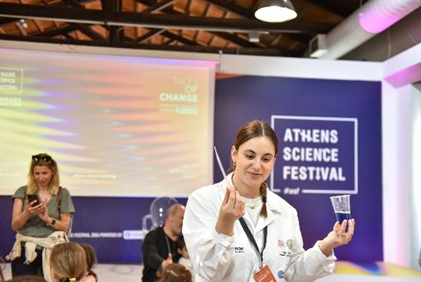
In this edition, our MedChemBioConversations is with Paria Anastasiou from the Max-Planck Institute for Medical Research. Get to know her better by reading the interview below:
How did you get interested in Medicinal Chemistry?
My interest in medicinal chemistry started during my undergraduate studies when I enrolled in my initial Organic Chemistry class. It was one of those subjects that felt like assembling puzzles—complex yet highly rewarding. What truly captivated me was a talk I went to regarding multicomponent reactions (MCRs) and their uses in pharmaceutical science. The effectiveness and beauty of these reactions were fascinating, and I was drawn to their ability to enhance drug development.
Starting from that moment, my curiosity grew even stronger. Throughout my undergraduate education, I focused on the complexities of organic chemistry, establishing a solid foundation and acquiring a clear insight into the connection between these concepts and pharmaceutical matters. When I began my Master’s, I focused on multicomponent reactions in synthetic organic chemistry. This experience has not only sharpened my abilities but also enhanced my understanding of how chemistry can propel innovation in drug creation and advancement. For me, medicinal chemistry represents the ideal convergence of science, creativity, and influence.
How would you explain what your research area is to non-scientists?
My research focused on multicomponent reactions (MCRs) towards the design and synthesis of peptidomimetics, which are compounds that imitate natural peptides and hold promise for use in drug development. To make this understandable for non-scientists, I frequently compared it to a recipe in which various components are mixed together in one step to produce a dish. In my scenario, the components are chemicals, and the dish represents a molecule with medical promise. I think that employing common analogies in this way makes science easier to understand and helps connecting complex concepts with practical comprehension.
What do you like best about your work?
What I enjoy most about research is the intellectual freedom it provides and the opportunity to satisfy my natural curiosity. I also value how research encourages personal growth. It’s an environment where you can wrestle with challenges, test your ideas, and evolve through those experiences.
What kind of skills does your work require?
Beyond technical expertise, research heavily relies on soft skills. In my view, collaboration is one of the most critical skills. Being able to work within a team, support one another, and cultivate a non-competitive, cooperative environment is the key. A positive and collaborative atmosphere also makes the work enjoyable.
Equally important are innovative thinking and creativity. Staying curious and keeping up with the latest research trends enables you to think outside the box and stay ahead. Lastly, optimism is vital. You need the mindset to tackle problems head-on and persist in finding solutions, even if that means taking alternative pathways.
What do you consider your greatest achievement in your scientific career?
There are two significant milestones in my scientific career. The first is my soon-to-be-published paper on exploring interrupted MCRs toward peptidomimetics. This paper is the culmination of two years of hard work and overcoming numerous challenges.
The second milestone is being selected for an oral communication at EFMC-ISMC 2024. EFMC-ISMC is one of the most prestigious international conferences in the field of medicinal chemistry, where presentations are typically given by professors and PhD candidates. I had the honor of presenting at this conference shortly after completing my Master’s degree. This experience was transformative for me as a scientist, as it allowed me to present my research to some of the leading experts in the field and boosted my confidence in my work.
What would you like to ask from other medicinal chemists?
As one of my professors often says I encourage them to embrace interdisciplinarity and nurture a scientific community that includes various voices and viewpoints. It’s essential to create an environment where scientists from various disciplines collaborate, as it prevents the risks of echo chambers that reinforce current ideas without confronting them with opposing perspectives.
What is the most embarrassing thing you have done in the lab while doing experiments, e.g. explosions?
One of my most embarrassing moments in the lab happened when I spent an entire day performing column chromatography to purify a product. I ended up with two separate sets of fractions in flasks—one containing the product and the other containing the starting material. While cleaning my lab bench, I accidentally threw away the flask with the purified product and kept the starting material! After realizing my mistake, I had to repeat the entire synthetic procedure and purification process from scratch.
What are your recommendations for a book, podcast, website, blog, YouTube channel or film?
One of my favorite books is The Drug Hunters by Donald R. Kirsch, which provides a fascinating behind-the-scenes look at how medicines are discovered. I also recommend the YouTube channel CosmeticChemist, which offers valuable insights into cosmetic formulation and industry secrets from a scientific perspective.
Which scientist do you admire the most and why?
I deeply admire Gertrude Elion, an innovative female scientist in medicinal chemistry and a recipient of the Nobel Prize. Her innovative research resulted in the development of life saving drugs, including those for leukemia, autoimmune disorders, and organ transplant rejection. What I find most inspiring is her unconventional path to science. She followed her passion in spite of social obstacles and restricted chances for women in the industry during that period. Her innovation and determination in applying rational drug design without structural details laid the foundation for numerous contemporary drug discovery techniques. In my view, she represents resilience, creativity, and the influence an individual can exert on worldwide health.
Which field of medicinal chemistry do you consider the most promising for the future?
I believe the intersection of medicinal chemistry and artificial intelligence (AI) holds great potential, as demonstrated by this year's Nobel Prize in Chemistry. Utilizing AI in drug discovery and design can speed up the development timeline, lower expenses, and assist in pinpointing new compounds with enhanced accuracy. The combination of chemistry and computational capabilities can also facilitate personalized medicine, customizing treatments to meet the specific needs of individual patients. Moreover, progress in chemical biology and targeted protein degradation techniques, including Molecular Glues and PROTACs (proteolysis-targeting chimeras), is creating opportunities to address diseases once thought to be untreatable. The future depends on adopting this multidisciplinary method.
What would you expect to be the next breakthrough in medicinal chemistry?
I anticipate that the upcoming significant advancement will be the development of drugs targeting RNA. While small molecules traditionally target proteins, directly targeting RNA could potentially address genetic disorders and other diseases at their fundamental origin. Progress in RNA-based treatments, such as siRNA and mRNA vaccines, has already revealed remarkable potential, as illustrated by the COVID-19 vaccines. SHOWCASING THE YOUNG MEDICINAL CHEMISTS (YMC) SECTION OF UNIVERSITY OF COPENHAGEN
The Young Medicinal Chemists (YMC) Section of University of Copenhagen was established in 2021, as part of the Center for Medicinal Chemistry. We are a vibrant community, with the main goal of supporting medicinal chemists in the early stages of their career and bringing together students from bachelor to the PhD level, as well as Postdoctoral researchers.
Towards that goal, we organize various events such as:
Every year, one-day visits to companies around Copenhagen are being organized. The aim of these visits is to show students the capabilities of the medicinal chemistry industry in the greater Copenhagen area, as well as strengthen the connections between academia and industry. Previous examples include company visits to Amgen, Novo Nordisk and Lundbeck
We organize several lunch talks each year, regarding various themes such as: tips on writing a good thesis (MSc and PhD), women in science and surprising career paths for medicinal chemists. The goal of these talks is to share knowledge between medicinal chemists, promote networking and raise awareness.
- Young Medicinal Chemists symposium
Each spring, we organize a half-day event in which early-stage medicinal chemists from Denmark and abroad present their scientific work. Through these symposia, great science is shared and valuable connections between young medicinal chemists are made. Last year, we had the pleasure to host two great lectures from Dr William Farnaby (Centre for Targeted Protein Degradation) and associate professor Céline Galvagnion-Büll (University of Copenhagen).
Currently, we are aiming to increase our activities and expand our board team with members from the Danish medicinal chemistry ecosystem, in order to expand our presence beyond the University of Copenhagen and Denmark. To learn more about our group, you can visit our website.
SPOTLIGHT ON COPENHAGEN!
The Copenhagen based Young Medicinal Chemists (YMC) Section is pleased to highlight a paper titled “Structure-Based Virtual Screening Identifies 2-Arylthiazole-4-Carboxylic Acids as a Novel Class of Nanomolar Affinity Ligands for the CaMKIIa Hub Domain” recently featured in the Journal of Medicinal Chemistry.
γ-Hydroxybutyric acid (GHB) is an endogenous molecule found in the mammalian brain, known to interact with both low- and high-affinity receptor targets. Clinically, GHB is prescribed for the treatment of narcolepsy-related symptoms and alcohol dependence, although it is also misused recreationally under the name "Fantasy." The primary pharmacological effects of exogenously administered GHB are mediated through GABA subtype B (GABAB) receptors, which bind GHB with low affinity. While high-affinity binding sites for GHB have been recognized for over three decades, their molecular identity remained elusive until recent discoveries revealed that GHB binds to a previously uncharacterized allosteric pocket within the hub domain of CaMKIIa (Calcium/Calmodulin-dependent protein kinase II alpha). This discovery opens exciting avenues for structure-based drug design, offering the potential to achieve unprecedented selectivity for a protein that plays a central role in numerous physiological processes, including synaptic plasticity, learning and memory, cardiovascular regulation, and cancer progression. Targeting this novel site could enable the development of therapeutics with refined specificity and reduced off-target effects.
In the mentioned study, researchers employed structure-based virtual screening to identify 2-arylthiazole-4-carboxylic acids as a novel class of nanomolar affinity ligands targeting the hub domain of CaMKIIa. These compounds, particularly PTCA, bind to the same allosteric pocket previously discovered for GHB, stabilizing the CaMKIIa protein and offering a new pharmacological handle on this critical kinase. This work builds directly on the discovery of GHB’s binding site, demonstrating that the hub domain is a druggable and selective target. Given CaMKII’s central role in learning and memory, cardiovascular function, and cancer, these findings significantly advance the potential for rational drug design aimed at modulating CaMKII activity with high specificity and therapeutic relevance. #MEDCHEMCASES - SEMINAR BY THE DIVISION OF MEDICINAL CHEMISTRY OF THE GERMAN CHEMICAL SOCIETY (GDCH)
The MedChem Division of the German Chemical Society (GDCh) would like to invite you to the next #MedChemCASES online seminar which will be held on November 11 by Dr Ryan Wurz, Amgen.
The topic of the webinar will be “Structure- and Property-based Design of a Macrocyclic pan-KRAS Inhibitor, AMG 410”.
Register for free here.
#GDCh (MedChem Division), #NextGenMedChem.
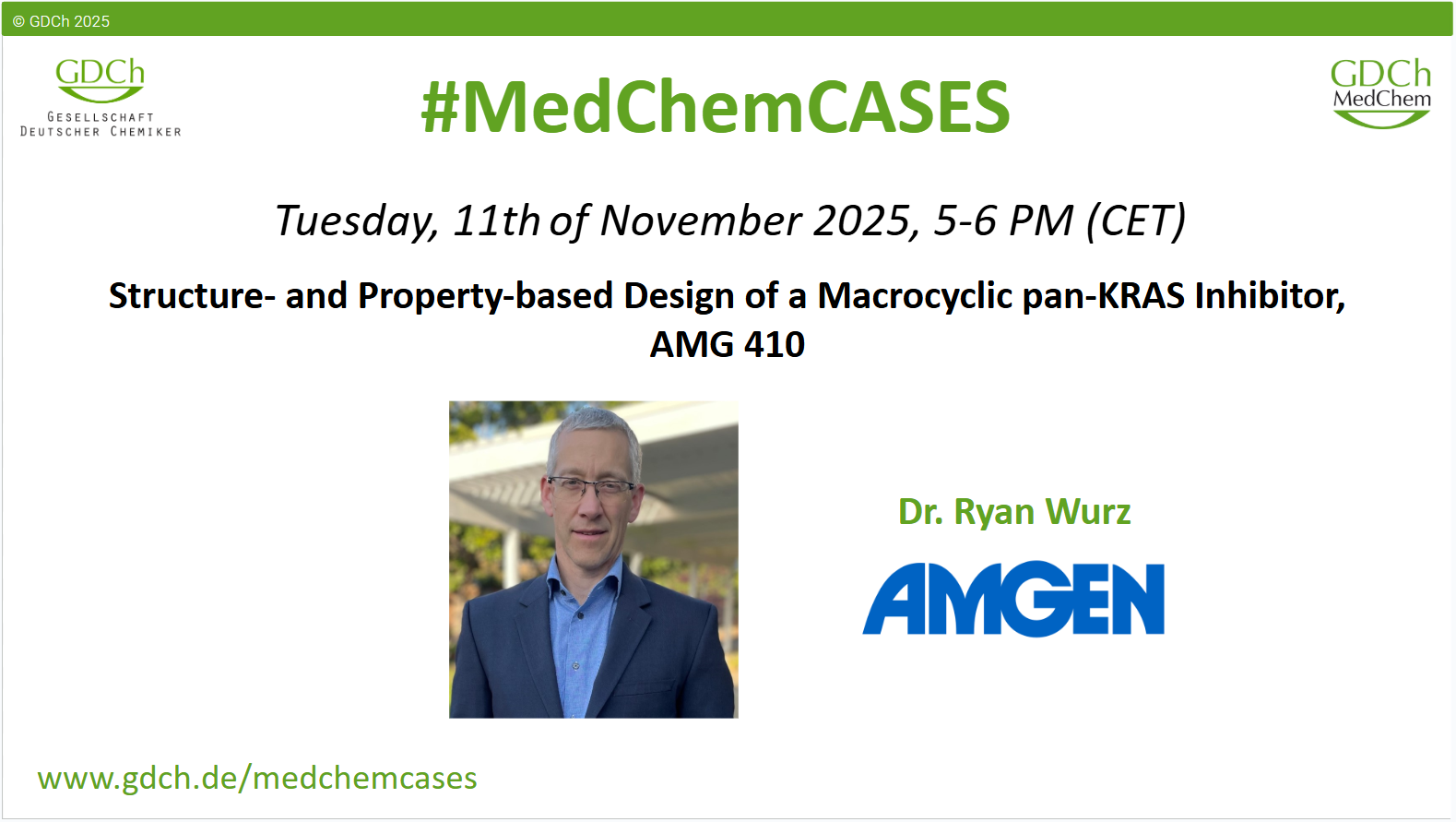
KRAS is the most frequently mutated oncogene, driving over 20% of human cancers, including pancreatic, colorectal, lung, endometrial, and gastric tumors. Building on insights from the development of sotorasib (covalent KRAS G12C inhibitor), we leveraged structure- and property-based design to identify a new class of reversible, macrocyclic pan-KRAS inhibitors, culminating in the discovery of AMG 410. AMG 410 is orally bioavailable, highly selective over HRAS and NRAS, and has high affinity for both GTP(on)- and GDP(off)-bound states of KRAS. Non-clinical studies of AMG 410 demonstrate robust antitumor activity. AMG 410 is currently under clinical evaluation in patients harboring KRAS missense mutations or genetic amplification who have progressed on standard-of-care therapy. NEWS FROM THE BIOLOGICAL AND MEDICINAL CHEMISTRY SECTOR (BMCS) OF THE ROYAL SOCIETY OF CHEMISTRY (RSC)
The BMCS is happy to announce several upcoming events
Meetings in 2025
ELRIG Drug Discovery 2025
Tuesday 21 – Wednesday 22 October 2025, Liverpool, UK
RSC-BMCS/RSC Medicinal Chemistry/ELRIG
Registration and abstract submission is open!
Website: https://elrig.org/portfolio/drug-discovery-2025/
Synopsis: RSC-BMCS is once again collaborating with ELRIG to present a chemistry-focused track on day 2 of ELRIG Drug Discovery 2025, Europe’s leading drug discovery and life sciences conference which will also have scientific tracks covering topics including robotics, cell and disease models, ‘omics, AI, oncology and neurodegenerative disease. Our contribution to ELRIG’s ‘Festival of Life Science’ is put together by the RSC-BMCS and RSC Medicinal Chemistry, the UK’s leading drug discovery journal. As in previous years, our track will feature the drug discovery process from early stage emerging technologies to clinical candidate selection. We have an exciting lineup of UK and international experts and among the hot topics covered are high throughput lead discovery, protein degradation as a drug modality, and lead optimisation of natural products. Please keep checking the website for updates.
BMCS New approaches to the treatment of Parkinson’s
Wednesday 12 November 2025, Burlington House, London, UK
BMCS/Parkinsons UK
Registration and abstract submission is open! Check the website for updated speaker details!
Website: https://www.rscbmcs.org/events/parkinsons25/
Synopsis: Join the Royal Society of Chemistry Biological Medicinal Chemistry Sector and Parkinson’s UK to hear about new approaches to the treatment of Parkinson’s Disease.
In the dynamic field of drug discovery, the search for new treatments for Parkinson’s disease has never been more critical. It is estimated 10 million people worldwide are living with Parkinson’s – a chronic, progressive neurodegenerative condition resulting from the loss of the dopamine-containing cells of the substantia nigra. Motor and non-motor symptoms of the condition are wide ranging and current treatments only help to manage a small subset of the symptoms and do not modify the disease progression. But there is a wealth of research to find new and better therapeutics for Parkinson’s.
This meeting, specifically designed for professionals dedicated to developing new therapeutics for Parkinson’s disease, will highlight current research offering symptomatic relief and disease modifying approaches.
BMCS Hot Topics: Antibody–Drug Conjugates
Thursday 20 November 2025 (afternoon), Virtual
BMCS
Registration is open!
Website: https://www.rscbmcs.org/events/hottopicsadcs2025/
Synopsis: The BMCS Hot Topics online meetings are intended to highlight breaking areas of research in fields of science relevant to drug discovery. They will run as stand-alone half-day virtual events, 2-3 times per year. The programmes will be targeted towards researchers working in or who would like to enhance their understanding of these nascent or developing fields.
Antibody-drug conjugates (ADCs), alongside other targeted modalities, effectively enrich target tissues with potent payloads unsuitable for systemic administration. With several recent clinical successes, the number of new ADCs approaching the clinic is rapidly increasing. This meeting aims to highlight the technological advancements and innovations driving these ADCs, while addressing the challenges and opportunities within the field. The Hot Topics session will feature speakers from industry and academia who are at the forefront of ADC design.
Meetings in 2026
BMCS Postgraduate Symposium XIX
Thursday 08 January 2026, University of Manchester, UK
BMCS
Registration and abstract submission is now open!
Website: https://www.rscbmcs.org/events/psxix/
Synopsis: This face-to-face meeting will comprise of oral and poster presentations from PhD students and post-doctoral workers researching in biological or medicinal chemistry. In addition, the agenda will feature invited keynote speakers from industry and academia.
BMCS 3rd Conformational Design in Drug Discovery
Monday 02 March 2026, Stevenage, UK
BMCS
A date for your diary!
Website: BMCS 3rd Conformational Design in Drug Discovery 2026 - RSC BMCS
Synopsis: Conformational Design plays a key role in the medicinal chemistry of small molecule drug candidates. The emergence of generative AI models to assist molecular design and free-energy-perturbation techniques critically depend on accurate prediction of 3D ligand conformations. Here we bring together cutting-edge computational methods with experimental free ligand NMR solution conformations and protein-ligand X-ray and CryoEM structures to craft the medicines of tomorrow. We will discuss ligand rigidification and physicochemical optimisation strategies for protein-protein interaction inhibitors, PROTACs, molecular glues, antibody-drug-conjugate payloads and other new modalities. This RSC-BMCS event aims at building a community that shares conformational design strategies, technologies, and successful case studies. It will complement other rational drug design events and promote more successful research into future medicines.
The BMCS Mastering MedChem X: 10th RSC-BMCS Symposium on Mastering Medicinal Chemistry
Friday 13 March 2026, Burlington House, London, UK
BMCS
A date for your diary!
Website: https://www.rscbmcs.org/events/mastermedchem26/
Synopsis: Mastering Medicinal Chemistry X is the latest in an ongoing series of conferences intended to provide expert advice and guidance to new practitioners in the field of drug discovery. It has been said that “there are two types of drug discovery programmes: those that hit serious problems and those that are going to hit serious problems.” Anticipating and preparing for such problems thus accelerates the delivery of new medicines: this event will feature presentations from experienced ‘drug-hunters’ in both industry and academia, who will talk about the challenges faced in modern drug discovery, and will share best practice common to all successful medicinal chemists.
RSC-BMCS/SCI 5th Symposium on Anti-Infectives Drug Discovery
Monday 01 – Tuesday 02 June 2026, Francis Crick Institute, London, UK
SCI/BMCS
A date for your diary!
Website: https://www.rscbmcs.org/events/mastermedchem26/
Synopsis: With the ever-growing prevalence of drug-resistant pathogens, it has never been more important that we refresh the drug pipeline with new antimicrobials that act on new targets or exhibit novel modes of action. The rise of antimicrobial resistance and recent COVID pandemic serve to highlight the importance of developing effective treatments for infection, and is helping to drive a resurgence in anti-infectives drug discovery and the development of innovative technologies and approaches for combating infection through more effective detection and diagnosis methods.
7th RSC-BMCS/DMDG New Perspectives in DMPK
Wednesday 10 June 2026, Burlington House, London, UK
BMCS/DMDG
A date for your diary!
Website: https://www.rscbmcs.org/events/dmpk26/
Synopsis: Novel small-molecule-based therapeutic approaches represent a key component of the discovery landscape. The emergence of molecular glues, PROTACs, bicyclic peptides, and other novel chemistries often bring with them new challenges for drug discovery scientists; synthetic difficulty, beyond rule-of-five physicochemical properties, and complexity in the link between exposure and response, may complicate ADME characterisation and accurate human dose prediction, particularly for drugs aimed at oral administration. This meeting will provide a forum for the exchange of ideas between principal members of the DMPK research community on how we can rise to these challenges. Keynote talks from thought leaders will provide wider perspectives on how DMPK can contribute to the delivery of medicines to patients more quickly and efficiently. There will be a balanced mix of oral and poster presentations, and networking opportunities throughout.
10th Fragment-based Drug Discovery Meeting
Monday 14 – Wednesday 16 September 2026, Churchill College, Cambridge, UK
BMCS
Save the date
Website: https://www.rscbmcs.org/events/fragmentsx/
Synopsis: The aim of the 10th RSC-BMCS Fragment-based Drug Discovery meeting will be to continue the focus on case studies in Fragment-based Drug Discovery that have delivered compounds to late stage medicinal chemistry, preclinical or clinical programmes. The Fragment series was started in 2007 and continues with this theme in having over three-quarters of the presentations focused on case studies. This will be complemented by technology progress in high concentration, NMR, SPR and X-ray screening.
INTERESTED IN SPONSORING THIS NEWSLETTER?
Take the opportunity of our monthly newsletter “MedChemBioWatch” to promote your company or deliver a message to our audience of more than 10,000 members.
Each issue can be sponsored exclusively with two banners, a short company description, and a weblink. Reach out to administration@efmc.info if you want to receive more information. INTERESTED IN SPONSORING THIS NEWSLETTER?
Take the opportunity of our monthly newsletter “MedChemBioWatch” to promote your company or deliver a message to our audience of more than 10,000 members.
Each issue can be sponsored exclusively with two banners, a short company description, and a weblink. Reach out to administration@efmc.info if you want to receive more information.
|
|
|
|
|
|
EFMC ORGANISED EVENTS
October 9, 2025
Virtual Event
6th EFMC² Tandem Talks
November 25, 2025
Virtual Event
22nd EFMC-YSN MedChemBioOnline
EFMC SPONSORED EVENTS
October 23-24, 2025
Berlin, Germany
Advances in Structural Analysis of Biomolecules (Wiley)
December 5, 2025
Institut Pasteur, Paris, France
Advances in Screening Technologies for Drug Discovery
January 25-29, 2026
St Anton, Austria
5th Alpine Winter Conference on Medicinal and Synthetic Chemistry
JOB PORTAL
Junior research group leader
Institut Pasteur, FRANCE
Read more
|
|