|
|
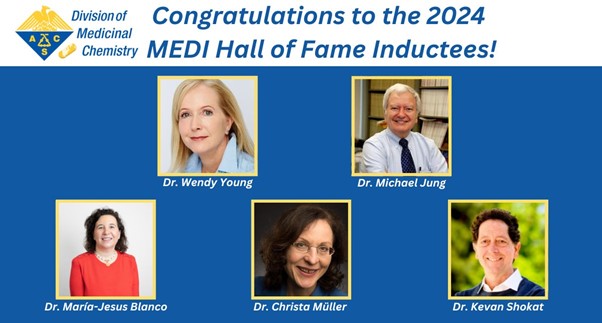
CHRISTA MÜLLER INDUCTED INTO THE 2024 ACSMEDI HALL OF FAME
Prof. Christa Müller (University of Bonn, Germany) has been announced as one of the five 2024 MEDI Hall of Fame Inductees!
Congratulations to her and to Dr Wendy Young, Prof. Michael Jung, Dr Maria-Jesus Blanco and Prof. Kevan Shokat.
The inductees will be honoured at a reception at the Fall ACS national meeting in Denver.
2ND EFMC INTERNATIONAL SYMPOSIUM ON CHEMICAL BIOLOGY (EFMC ISCB 2025)
The European Federation for Medicinal chemistry and Chemical biology (EFMC) and the Swiss Chemical Society, Division for Medicinal Chemistry & Chemical Biology (DMCCB) will be organising the 2nd International Symposium on Chemical Biology (EFMC-ISCB) on January 29-31, 2025 in Basel, Switzerland.
Confirmed Plenary Speakers:
- Prof. Cynthia J. Burrows
University of Utah, United States
- Prof. Benjamin Davis
Oxford University, United Kingdom
Have a look at the list of confirmed speakers and topics.
Deadline for Early-bird registration and Oral Communication submission is October 9!
More info and registrations on www.efmc-iscb.org.
LITERATURE SPOTLIGHT
The “literature spotlight” section of the newsletter will bring you a summary of recently published research in a concise and accessible way. A variety of themes from different journals will be highlighted thanks to the valuable contribution of members of the EFMC working groups.
This contribution will focus on the recently published article on “Alkylamine-tethered molecules recruit FBXO22 for targeted protein degradation” by Winter G.E et al., published in Nature Communications https://doi.org/10.1038/s41467-024-49739-3
This article presents an innovative approach leveraging the ubiquitin-proteasome system for targeted protein degradation. Winter’s lab has successfully developed alkylamine-tethered molecules capable of recruiting the E3 ubiquitin ligase adaptor protein FBXO22, which selectively targets proteins for degradation. This method demonstrates significant promise for developing new therapeutic agents, particularly for diseases where the elimination of specific proteins is advantageous. The described study involved synthesizing small molecules with alkylamine groups designed to bind selectively to FBXO22. The alkylamine-tethered molecules function by bridging the target protein and FBXO22, facilitating the transfer of ubiquitin molecules from the E2 enzyme to the target protein and marking it for degradation by the proteasome.
Experimental validation included comprehensive in vitro studies, which displayed the binding affinity of the tethered molecules to FBXO22 and the subsequent ubiquitination of target proteins. Furthermore, cell-based assays assessed the effectiveness of these molecules in degrading target proteins, showing a significant reduction in specific protein levels in the presence of the tethered molecules, indicating successful recruitment of FBXO22 and target degradation. Quantitative data were obtained through Western blot analysis, revealing a dose-dependent decrease in target protein levels with increasing concentrations of the alkylamine-tethered molecules. The study provided evidence of exquisite specificity and selectivity of these molecules.
The therapeutic potential of this strategy was highlighted in various disease models. For instance, targeting oncogenic proteins in cancer cells resulted in reduced cell proliferation and increased apoptosis, suggesting potential applications in cancer therapy. Additionally, this approach could be tailored to degrade disease-causing proteins in neurodegenerative disorders, infectious diseases, and other conditions where protein accumulation poses a problem. The development of alkylamine-tethered molecules that recruit FBXO22 for targeted protein degradation represents a significant advancement in the field of proteolysis-targeting chimeras (PROTACs). This strategy offers a versatile and effective means of controlling protein levels within cells, with promising implications for treating a wide range of diseases. The ability to selectively degrade specific proteins using this method could pave the way for novel therapeutic approaches that are more targeted and have fewer side effects compared to traditional drugs. COURSE MATERIAL ON BEST PRACTICES IN MEDICINAL CHEMISTRY
Wonder how researchers work in other companies or in academia? Are there important trends or new technologies that you may have missed? Looking for general guidelines or tips and tricks on important topics in drug discovery?
EFMC is tackling this challenge with a team of experienced practitioners from industry and academia, and is sharing training and course materials in several formats: freely accessible webinars on the EFMC YouTube channel, educational slide decks and case studies.
These are freely accessible for personal use or for use in further training or teaching material, so have a look and spread the news!
The hit to lead phase is a critical phase of drug discovery programs. The first set of compounds, or hits, that demonstrate promising activity against a target of interest are further characterized. Through limited medicinal chemistry efforts, the aim is to turn these hits into leads: compounds that we believe can be optimized into drug candidates.
Link to the material.
- Validating Chemical Probes
What are chemical probes and why are they important? Chemical probes are designed to selectively address a biological question; this is distinctly different from a drug, which is designed to produce a clinical outcome! Simple guidelines can be used to generate high-quality chemical probes and obtain reliable data to further our understanding of human biology and disease.
Link to the material.
- Phenotypic Drug Discovery (PDD)
Recent years have seen a renaissance of phenotypic drug discovery (PPD) with novel screening technologies and a track record that is thought to match or surpass that of target-centric approaches. We present a view on best practices to consider when running phenotypic drug discovery campaigns to increase the chance of success of these black box approaches.
Link to the material.
Hit Generation is a crucial step of all drug discovery campaigns that will determine the speed and chance of success of identifying drug candidates.
We cover the essential approaches for hit generation and the opportunities and challenges they come with. We then provide guidance on how to validate hits to ensure medicinal chemistry is only performed on compounds and scaffolds that engage the target of interest and have the desired mode of action. Finally, we discuss the design of integrated hit generation strategies that combine several approaches to maximize the chance of identifying high quality starting points.
Link to the material.
GET TO KNOW LUC BRUNSVELD (TU EINDHOVEN, THE NETHERLANDS)
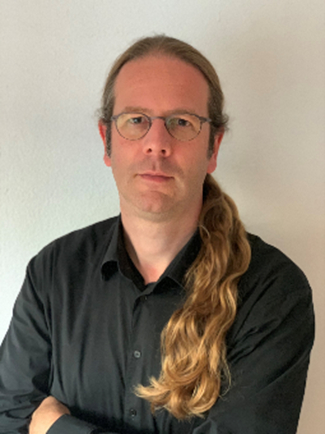
In this edition, our MedChemBioConversations is with Dr Luc Brunsveld from TU Eindhoven, The Netherlands
Get to know him better by reading the interview below:
How did you get interested in Medicinal Chemistry and Chemical Biology?
Interest in Chemical Biology surfaced during the end of my PhD project with Bert Meijer around the year 2000. My PhD project dealt with supramolecular chemistry in water and the similarities of the self-assembly of synthetic molecules with that of biomolecules made me pursue post-doctoral training in Chemical Biology.
In the lab of Herbert Waldmann at the Max Planck Institute in Dortmund I got immersed in chemical biology and its natural connection to Medicinal Chemistry. This inspired me to move into the pharmaceutical industry and I was fortunate to join Organon in the Netherlands as group leader lead optimization, working on projects related to Nuclear Receptor drug discovery.
All these experiences and places were enormously educational and allowed me to “brew” a research line on supramolecular chemical biology, dedicated to investigating stabilization of protein-protein interactions.
Where are you currently working and what is your current position?
Our group focusses on chemical biology approaches to study the fundamentals of protein-protein interactions by, particularly with a focus on drug discovery and supramolecular signalling systems. We combine synthetic and supramolecular chemistry with chemical biology to allow exact molecular modulation of biological systems. As a particularly relevant direction, we focus on the stabilization of protein-protein interactions, with small molecules (molecular glues) and via (synthetic) platforms such as engineered proteins. These approaches are aimed towards long term impact in drug discovery and molecular diagnostics.
What do you like best about your work?
I work as a professor at a university, which means that my main job is teaching, via research projects. The main goal of our research activities is thus to provide a lab-based training ground for young students and early career scientists to learn analytical thinking, problem solving, molecular engineering, etc. via challenging research projects. Besides this being our main job as professors, it is also the most fulfilling aspect of our job to see young people develop into independent scientists and critical thinkers.
Are you currently looking for a new PhD student or a postdoc?
We almost never advertise vacancies, but hope to inspire, via our scientific work, prospective PhDs and PDs to apply out of their own initiative.
What do you consider your greatest achievement in your scientific career?
My main responsibility is that those who join our lab for training as master student, PhD, or PD, develop as such that they can achieve the next step in their career that they aspire. Seeing this happen successfully is, and contributing a bit to this, is highly satisfying.
What are the features of a successful PhD student or postdoc?
Pro-active, slightly opportunistic, positive attitude, driven, strong analytical skills, down-to-earth, anti-dogma, collegial.
Have you experienced any unfair situations during your scientific career? How would you advise scientists facing similar situations?
Like life itself, also in science you will inevitably run into situations which sometimes are or appear (somewhat) unfair. Deal with these like you should/would also deal with them in life outside science; with an open mind, realizing that the person whose actions you can influence the most is yourself, but also take rapid and fair action if the situation requires it.
What are your recommendations for a book, podcast, website, blog, YouTube channel or film?
- It is always healthy to expose yourself to insights, analyses and opinions that go against (your own) dogmas, be it in science or politics. As such, any podcast, book, or blog that does so, is valuable to at least occasionally read or listen to.
- Some of the most impressive books I have read were those by Primo Levi; an impressive documentation of his life, pivoting around the holocaust, written in a manner that very clearly describes the horrors that mankind is capable of, whilst also displaying a mildness and humour under extremely difficult situations.
What would you expect to be the next breakthrough in medicinal chemistry?
Medicinal chemistry remains a hugely exciting and creative field to work in. Maybe even more so than ever, however with concomitant challenges that require us to more quickly adapt to changes. Like those in many other fields, we as medicinal chemists also have to deal with drug discovery strategies that are suddenly en vogue but maybe not the most logical for all disease areas, with new legislation shifting focus away from small molecules, and off course with highly promising novel, but competing, technologies. This demands a high level of flexibility of medicinal chemists, both in terms of diversity of chemical expertise (molecules beyond Rule of 5), as well as in our ever-changing roles. The broader and stronger we remain educated at the forefront of science, in part via incorporation of chemical biology strategies, the more medicinal chemists will be in the driver’s seat to shape the new drugs of the future. A tough, but exciting challenge. SHOWCASING THE NEXTGENMEDCHEM OF THE GERMAN CHEMICAL SOCIETY (GDCh)
- Organization of the MedChemCASES webinar series: the MedChemCASES were the first activity established by our group back in 2020 and the webinars have received significant attention. We have hosted many excellent speakers from industry and academia presenting case studies covering various facets of Medicinal Chemistry. Lately, we have been able to offer MedChemCASES on an almost monthly basis.
- Job shadowing program: We have initiated a job shadowing program to give young scientist in Medicinal Chemistry and related fields the opportunity to learn more about the job as a Medicinal Chemist in industry and to discover what a Medicinal Chemist's day looks like. The opportunity to participate in this program was offered to the poster price winners of the Frontiers in Medicinal Chemistry (FiMC) conference. In the last years, the job shadowing took place at Sanofi & Merck (2022) and Boehringer Ingelheim (2023) while the job shadowing 2024 will take place at Bayer & Nuvisan.
- Building networks with other Medicinal Chemistry societies: we have organized several shared events with the EFMC Young Scientist Network, e.g. a common MedChemCASES special event and a round table discussion at the FiMC conference. We look forward to expanding our relationships with the EFMC and young networks of its the adhering societies within the Young Researchers Council.
- Organization of local networking events: we recently started organizing informal local networking events (“MedChem Stammtisch”) to connect young scientists and the local Medicinal Chemistry community. The first two events have taken place in Frankfurt and Darmstadt, respectively and further events at other locations are planned.
- Co-organization of the FiMC conference: our group has supported the organization of the FiMC throughout the last years. We were part of the scientific committee and among other activities, we organized our own NextGenMedChem session entitled “Next Generation Drugs” and wrote a conference report published in ChemMedChem.
Besides this, we are actively supporting the social media presence (e.g. on LinkedIn) as well as the board of the GDCh Division of Medicinal Chemistry.
SPOTLIGHT ON GERMANY!
The NextGenMedChem group of the Medicinal Chemistry Division of the German Chemical Society (GDCh) is pleased to highlight a paper entitled “First-in-class MKK4 inhibitors enhance liver regeneration and prevent liver failure” recently featured as the cover story in Cell (see https://doi.org/10.1016/j.cell.2024.02.023). This research, conducted by the teams of Stefan Laufer (University of Tübingen), Scott Nyberg (Mayo Clinic, Rochester), Lars Zender (Tübingen University Hospital), and the Tübingen-based startup HepaRegeniX, culminated in the discovery of the clinical candidate HRX-215, which has recently successfully completed phase I trials. The study represents a beautiful example of how the interaction between clinician scientists and medicinal chemists can stimulate high-level academic drug discovery.
Liver diseases are a significant global health problem, causing over two million deaths per year, with numbers steadily rising. While healthy hepatocytes possess an almost unlimited capacity for regeneration, the loss of this property is a hallmark of both acute and chronic liver diseases. This can result in a failure to restore sufficient functional liver mass, particularly after liver resection or the transplantation of small grafts, defining a strong medical need.
By employing short hairpin RNA (shRNA)-based in vivo screens, the researchers initially discovered that silencing of the dual specificity protein kinase MKK4 (mitogen-activated protein kinase kinase 4) restores the regenerative potential of hepatocytes in injured livers. After showing that sustained suppression of MKK4 signaling is well tolerated in transgenic mouse models, a drug discovery program was initiated for MKK4 inhibitor development. Here, a combination of literature searches and screening identified the BRAFV600E inhibitor vemurafenib, which has off-target activity on MKK4, as a starting point for optimization.
Initial SAR studies focusing on vemurafenib’s ring systems as well as its sulfonamide-linked side chain led to the development of reasonably potent and selective MKK4 inhibitors, which were used as chemical probes to validate the target in murine in vivo models. While only limited structural information could be derived from X-ray crystal structures, NMR-based elucidation of binding modes provided a solid basis for rational drug design. Optimization of potency and selectivity as well as physicochemical and PK/PD properties resulted in the identification of HRX215, which showed robust activity in cells, favorable ADMET properties, and restored liver regeneration in murine models of liver resection or damage.
HRX215 was further assessed in a porcine hepatectomy model, which is highly predictive for humans, where it boosted liver regeneration and prevented lethal post-hepatectomy liver failure (PHLF). Recently, the compound successfully completed phase I clinical trials, where it showed favorable oral pharmacokinetics while being well tolerated in heathy volunteers. Phase II clinical trials are supposed to start soon. REPORT OF THE 4th RSC-BMCS SYNTHESIS IN DRUG DISCOVERY AND DEVELOPMENT CONFERENCE
The 4th RSC-BMCS Synthesis in Drug Discovery and Development conference was held in June 2024. This event celebrates the crucial role of synthetic chemistry in the success of drug, and agrochemical, discovery and development. Taking on positive feedback from successful events in the past, this conference remains an online event with a global audience of attendees from across five continents enjoying presentations, this year, from locations across Europe and the US.
There were many highlights during the event, held over two half-day sessions. Opening the event, Pavel Mykhailiuk presented Enamine’s recent work optimising chemistry towards non-classical isosteres live from Kyiv. Topics also included anti-infective drug discovery (Anna Hirsch, Helmholz Institute) and biocatalysis (Helen Hailes, UCL). Later in the day, discussion turned to the synthetic optimisation required to develop the agrochemical Rimisoxafen, presented by FMC’s Thomas Stevenson. The first session closed with Mark Levin, of the University of Chicago, discussing his approaches to single-atom skeletal editing to access pharmacologically-relevant scaffolds.
On the second day, speakers from across pharma (Katherine Wheelhouse of GSK, Scott Lamont of AZ and Scott Bagley of Pfizer) discussed a variety of challenges in scale-up and process development of clinical candidate molecules. These talks were complemented by high-throughput experimentation presentations from Pablo Gabriel of Novartis, and Mimi Hii of Imperial College London. The conference was wrapped up in style by Kevin Lam of the University of Greenwich with his talk “Your Chemistry has got Potential: Highly reactive intermediates without the “bang”!” NEWS FROM THE SOCIETY FOR MEDICINES RESEARCH (SMR)
The Society for Medicines Research (SMR) is happy to announce the upcoming meeting: “The Quest for New Medicines to Slow the Progression of Disability in Neurodegenerative Disorders”. Jointly organised with the British Neuroscience Association, it will take place on November 18 at the AstraZeneca Biomedical Campus, Cambridge, UK.
Neurodegenerative disorders affect the structure and function of the central nervous system, leading to the progressive loss of cognitive, motor, and sensory abilities. They include Alzheimer’s disease, Parkinson’s disease, motor neuron disease, multiple sclerosis, Huntington’s disease, stroke and traumatic brain injury. Neurodegenerative disorders pose a major challenge for public health as they affect millions of people worldwide. Moreover, they are associated with a high burden of disability, morbidity, mortality, and socioeconomic costs. And yet, there are no medicines to slow the progression of disability.
This symposium will review the progress made in the quest to discover new medicines to slow the progression of disability associated with neurodegenerative disorders.
Further information will follow at the SMR website (www.smr.org.uk) or the BNA website (www.bna.org.uk). NEWS FROM THE BIOLOGICAL AND MEDICINAL CHEMISTRY SECTOR (BMCS) OF THE ROYAL SOCIETY OF CHEMISTRY (RSC)
The BMCS is happy to announce several upcoming events.
3rd RSC / SCI New Therapeutics for Global Health
9th – 11th September 2024, Cranfield Management Development Centre, Cranfield University, Milton Keynes
Abstract submissions are now open!
Website: https://www.rscbmcs.org/events/ntgh24/
Synopsis: Tuberculosis, malaria and diseases caused by a diverse range of pathogens, including flaviviruses (e.g. dengue, West Nile), kinetoplastids (causative agents of Chagas disease, leishmaniasis, etc) and gut pathogens (worms, bacteria, parasites), remain a cause of high mortality across the globe. Fortunately, an ever-improving understanding of the complex life-cycles of these disease-causing pathogens is presenting increasing opportunities for those seeking to tackle these global health problems. This meeting will focus on medicinal chemistry approaches to developing new medicines for diseases affecting global health. Keynote talks from international experts from industry and academia, alongside perspectives detailing case histories in drug discovery, will highlight the latest developments in the field whilst also showcasing the opportunity for creativity and innovation.
7th RSC-CICAG/RSC-BMCS Artificial intelligence in Chemistry
16th – 18th September, Churchill College, Cambridge
Registration is now open!
Website: https://www.rscbmcs.org/events/aichem7/
Synopsis: Artificial Intelligence is experiencing a renaissance in the development of new methods and practical applications to ongoing challenges in Chemistry. Following the successes of five annual “Artificial Intelligence in Chemistry” meetings starting in 2018, we are pleased to announce that the Biological & Medicinal Chemistry Sector (BMCS) and Chemical Information & Computer Applications Group (CICAG) of the Royal Society of Chemistry are once again organising a conference to present the current advances in AI and machine learning in Chemistry. The meeting will be held over two days and combine aspects of artificial intelligence and deep machine learning methods to applications in chemistry. The programme will include a mixture of keynote talks, panel discussion, oral presentations, flash presentations, posters and opportunities for open debate, networking and discussion.
This year’s meeting has changed format to two and half days and will include workshop on first day, please keep checking website for updates.
9th RSC/SCI Symposium on GPCR’s in Medicinal Chemistry
2nd – 4th October 2024, Evotec Campus Levi-Montalchini, Verona, Italy
Registration and Abstract submissions are now open!
Website: https://www.rscbmcs.org/events/gpcrs24/
Synopsis: The key role of G protein-coupled receptors (GPCRs) in human disease underpins their importance to modern medicine. We were pleased to hold this 9th meeting in the series on GPCR drug discovery, which combined cutting edge medicinal chemistry with innovative structural biology and novel drug design approaches.
RSC-BMCS/SCI Targeting Protein Degradation 4
15th 16th October, Cranfield Management Development Centre, Cranfield University, Milton Keynes
Registration and Poster Abstracts submissions are open!
Website: https://www.rscbmcs.org/events/protdeg24/
Synopsis: One of the most exciting new therapeutic modalities to emerge in the 21st century has been Targeted Protein Degradation (TPD). In 2021, the Targeted Protein Degradation Market size was valued at USD 400.5 million and is poised to grow from USD 507.0 million in 2022 to USD 3,300.0 million by 2030 and so has attracted interest from academia, non-profit organisations through to CROs and small and large pharma. This multidisciplinary meeting aims to present the latest developments in the design, biology, chemistry and ADME in TPD within the general themes of PROTACS (including non-oncology targets), Molecular Glues and non-PROTAC degraders. We aim to highlight the newest in enabling technologies such as computational techniques, Direct to Biology, HT synthesis (click, photochemistry etc) and structural biology methods.
BMCS Postgraduate Symposium XVIII
12th December 2024, University of Oxford, Oxford, UK
Registration and abstract submissions are now open!
Website: https://www.rscbmcs.org/events/psxviii/
Synopsis: This face-to-face meeting will comprise an oral and poster presentations from PhD students and post-doctoral workers researching in biological or medicinal chemistry. In addition, the agenda will feature invited keynote speakers from industry and academia.
Meetings in 2025:
8th RSC-BMCS / SCI Symposium on Ion Channels as Therapeutic Targets
31st March – 1st April, 2025, Hinxton Hall Conference Centre, Cambridge
A date for your diary!
Website: https://www.rscbmcs.org/events/ionchannels25/
11th RSC/SCI Symposium on Kinase Inhibitor Design
Monday 12 – Tuesday 13 May, 2025, Royal College of Physicians of Edinburgh, Edinburgh
A date for your diary!
Website: https://www.rscbmcs.org/events/kinase2025/
4th RSC Anglo-Nordic Medicinal Chemistry Symposium,
10th-13th June 2025, Hotel Comwell Borupgaard, Snekkersten, Denmark
A date for your diary!
Website: https://www.rscbmcs.org/events/anmc-4/
RSC-BMCS / SCI 23rd Medicinal Chemistry Symposium
Sunday – Wednesday, 14th-17th September 2025, Churchill College, Cambridge
A date for your diary!
Website: https://www.rscbmcs.org/events/cammedchem25/ |
|
|
|
|
|
EFMC ORGANISED EVENTS
September 1-5, 2024
Rome, Italy
XXVIII EFMC International Symposium on Medicinal Chemistry (EFMC-ISMC 2024)
September 5-6, 2024
Rome, Italy
11th EFMC Young Medicinal Chemists' Symposium (EFMC-YMCS 2024)
January 29-31, 2025
Basel, Switzerland
2nd EFMC International Symposium on Chemical Biology (EFMC-ISCB 2025)
EFMC SPONSORED EVENTS
July 22-23, 2024
Galway, Ireland
International Chemical Biology Ireland Conference
September 16-17, 2024
Cambridge, United Kingdom
RSC-CICAG/RSC-BMCS 7th Artificial intelligence in Chemistry
September 22-26, 2024
Barcelona, Spain
24th EuroQSAR
September 24, 2024
Webinar
4th Munich-Leiden Virtual ChemBio Talks
December 8, 2023
Verona, Italy
9th GPCR’s in Medicinal Chemistry
EFMC CERTIFIED SCHOOLS
August 25-29, 2024
Bergün, Switzerland
Swiss Summer School 2024 in Chemical Biology
October 13-18, 2024
Leysin, Switzerland
15th Swiss Course on Medicinal Chemistry 2024
EFMC SPONSORED SCHOOL
September 18-20, 2024
Rimini, Italy
Summer School on Pharmaceutical Analysis 2024 (SSPA2024)
JOB PORTAL
Head of Biology, Aqemia, FRANCE
Read more
Senior Computational Chemist, Aqemia, FRANCE
Read more
|
|