En
The European Federation for Medicinal Chemistry and Chemical Biology (EFMC), through its Young Scientists Network (YSN), is pleased to announce the 2027 edition of the EFMC-YSN PhD Prize.
This annual Prize recognises outstanding achievements in postgraduate research in medicinal chemistry and chemical biology, celebrating scientific excellence and supporting the next generation of researchers across Europe.
The 2027 winner will receive:
Both events will take place in Edinburgh, United Kingdom, from August 30 to September 2, 2027 and September 2-3, 2027, respectively.
In addition, the most meritorious runner-up will receive a 500€ prize in recognition of their outstanding research.
Candidates must meet the following eligibility criteria:
Applications must include the following documents:
Eligible candidates are invited to submit their application through the dedicated online form.
APPLICATION DEADLINE
January 31, 2027
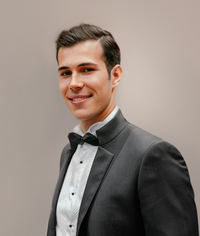
The selection committee designated Dr Tony Georgiev (Philochem AG, Switzerland) as the winner of the 2026 EFMC-YSN PhD Prize, sponsored by Selvita.
Tony Georgiev obtained his MSc in Chemistry from ETH Zürich in 2018. He completed his doctoral studies in 2024 as part of the Philochem AG/IUSS Pavia Industrial PhD Program, working in the Small Molecule Therapeutics Team on the discovery of novel therapeutics against metastatic prostate cancer. The highlight of his PhD work was the discovery and development of OncoACP3 – the first-in-class ultra-high affinity small molecule ligand, targeting prostatic acid phosphatase (Acid Phosphatase 3, ACP3), derived from a DNA-Encoded Chemical Library. The results of this venture were published in Nature Biomedical Engineering, and the asset was licensed by RayzeBio (a BMS company), highlighting its pharmaceutical relevance. Following his PhD, Tony remained at Philochem AG to continue his career as a Research Scientist, focusing on translational oncology research and the initiation of new programs on oncological targets of interest.
Dr Jaka Dernovsek (University of Ljubljana, Slovenia) has been designated as the most meritorious runner-up.

The selection committee designated Dr Rebecca Stevens (GSK) as the winner of the 2025 EFMC-YSN PhD Prize, sponsored by Selvita.
Rebecca Stevens obtained her MSci in Chemistry from the University of Bristol in 2021. She is about to complete her doctoral studies as part of the GSK/University of Strathclyde Collaborative PhD Programme, where she has been primarily based in the Modality Platform Technologies group at GSK, focusing on developing new platform capabilities for direct-to-biology and their applications within targeted protein degradation. During her PhD she also performed two research placements, in the Burley group at the University of Strathclyde in 2023, and with Professor Stuart Conway at University of California, Los Angeles, in 2024. Following her PhD she will soon be joining the Medicinal Chemistry team at Bicycle Therapeutics.
Dr Giulia Antonini (Milan University) has been designated as the most meritorious runner-up.
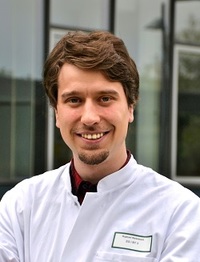
The selection committee designated Dr Raphael Steimbach (Servier) as the winner of the 2024 EFMC-YSN PhD Prize, sponsored by Selvita.
Raphael R. Steimbach received his Ph.D. with honors from Heidelberg University, Germany in 2023. His thesis work at the German Cancer Research Center (DKFZ) in the group of Dr. Aubry K. Miller resulted in the first selective histone deacetylase 10 inhibitor suitable as a chemical probe. Dr. Steimbach’s scientific background is in chemical biology with a Master’s degree in Life Science from the University of Konstanz, Germany. He gained additional experience at Cardiff University, Wales and in chemical process development at Boehringer Ingelheim. Since 2023, he pursues his passion for high-throughput experimentation and medicinal chemistry as a postdoctoral fellow at the Institut de Recherche et Développement Servier Paris-Saclay, France.
Dr Jennifer Müller (ETH Zürich) has been designated as the most meritorious runner-up. Following a decision from the jury, an extraordinary honorary mention was also given to Dr Sébastien Depienne (Ghent University).

The selection committee designated Zuzanna Kozicka (Friedrich Miescher Institute for Biomedical Research (University of Basel), Switzerland) as the winner of the 2023 EFMC-YSN PhD Prize.
Margarida Espadinha (University of Antwerp, Belgium) has been designated as the most meritorious runner-up.

The selection committee designated Dr Johannes Morstein (University of California, United States) as the winner of the 2022 EFMC-YSN PhD Prize.
Ms Vanesa Nozal Garcia (CIB - CISC, Spain) and Ms Eleonora Comeo (University of Nottingham, United Kingdom) are the most meritorious runners-up.

The selection committee designated Dr Nikolaj Sten Troelsen (ALK-Abelló, Denmark) as the winner of the 2021 EFMC-YSN PhD Prize.

The selection committee designated Dr Victor Sebastian Perez (CSIC, Spain) as the winner of the 2020 EFMC-YSN PhD Prize.
Mrs Marta Serafini (Università del Piemonte Orientale, Italy) is the most meritorious runner-up.
Selvita offers comprehensive drug discovery services from target validation to preclinical candidate nomination. We support a wide range of modalities, including small molecules, antibodies, and protein degraders, with expertise spanning medicinal chemistry, pharmacology, DMPK, and protein sciences. Our flexible model enables both standalone studies and fully integrated discovery programs, ensuring scientific rigor, fast decision-making, and full IP ownership.